
Ivana Milanovic, University of Hartford, USA
While covering the required fundamental material in undergraduate academic programs is the top priority, students require an extra set of knowledge and skills to flourish in the workforce. This is especially true in science, technology, engineering, and mathematics (STEM) fields, where there is rarely an abundance of time for inquiry-based learning and the development of field-specific skills. To address this issue, the University of Hartford integrated multiphysics modeling into their curricula. Using the Application Builder in the COMSOL Multiphysics® software, the university created simulation-based laboratory assignments through apps, which enhanced students’ physical intuition and their ability to visualize physical concepts.
Suggested Stories
Application Builder and COMSOL Server: A Review
William Vetterling, research fellow and manager of the Image Science Laboratory at Zink Imaging, created an intuitive ...
Defying Convention to Achieve Faster Signal and Simulation Speeds
As the demand grows for faster electronic devices in smaller packages, we need to develop optimized high-speed ...
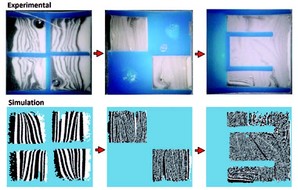
Modeling of Laminar Flow Static Mixers
Veryst Engineering, a company that provides consulting in engineering design and product manufacturing, has ...
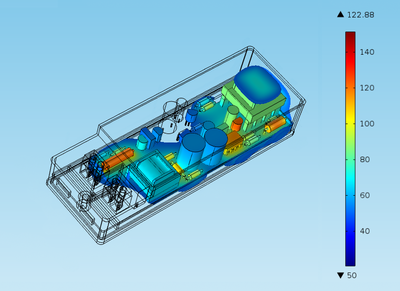
Keeping LEDs Cool Gets More Manageable Through Simulation
Light-emitting diodes (LEDs) offer many benefits over incandescent lighting, such as long life spans and high luminous ...


