
J. Knox, R. Coker
NASA Marshall Space Flight Center, AL, USA
To ensure astronaut safety on space missions, it is necessary to routinely revitalize the atmosphere in manned spacecraft. Jim Knox, Rob Coker, and a team of engineers at the NASA Marshall Space Flight Center have developed a water-saving system called an Isothermal Bulk Dessicant (IBD). The IBD is used to collect water from the atmosphere for re-use. It consists of packed beds lined with silica gel; as air flows through, water is adsorbed onto the silica gel and then transferred back to the atmosphere through desorption once the air has continued on to a CO2 removal system. Using a COMSOL Multiphysics model, Knox and Coker simulated the gas flow and heat transfer in a four-bed IBD. They tracked the flow rates, pressure conditions, and water concentration as water adsorbed and desorbed. Their model predicted that the IBD successfully saved 85% of the water from the atmosphere. As they use COMSOL to optimize their designs, they hope to offer NASA integrated systems that will enable farther space travel than ever before.
Suggested Stories
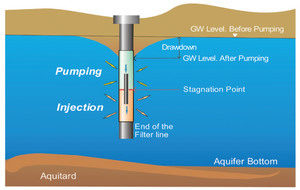
Pumping and Injecting from a Single Borehole
Professor Dr. Martin Sauter leads a group at the University of Göttingen in research on hydrogeology. Cooperating with ...
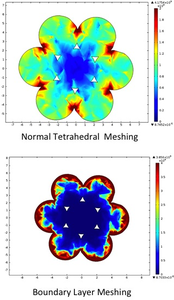
Optimized Induction Heating Techniques Improve Manufacturing Processes
Induction heating has become a valuable tool used by the steel industry for manufacturing various metal products. The ...
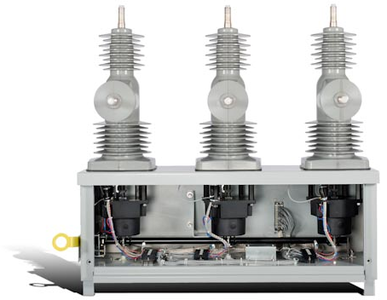
How Reclosers Ensure a Steady Supply of Power: It’s All in the Magnet
When a tree branch touches overhead cables and causes a momentary short circuit, your lights may flicker. A device ...
Dielectric Stress Simulation Advances Design of ABB Smart Grid-Ready Tap Changers
Consumers of power rely on fairly stable voltages. Transformers contain tap changers which vary the ratio of secondary ...


