
The Application Gallery features COMSOL Multiphysics® tutorial and demo app files pertinent to the electrical, structural, acoustics, fluid, heat, and chemical disciplines. You can use these examples as a starting point for your own simulation work by downloading the tutorial model or demo app file and its accompanying instructions.
Search for tutorials and apps relevant to your area of expertise via the Quick Search feature. Note that many of the examples featured here can also be accessed via the Application Libraries that are built into the COMSOL Multiphysics® software and available from the File menu.
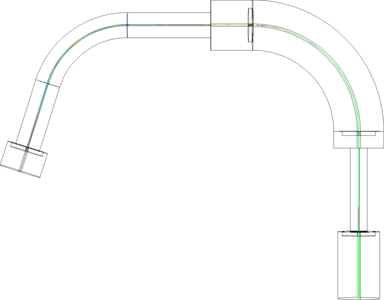
This tutorial utilizes the Particle Beam feature to examine the performance of a high-precision spectrometer. An ion beam is subjected to electric and magnetic forces, and only a fraction of the incoming beam is transmitted to the detector. The Particle Counter feature is used to compute ... Read More
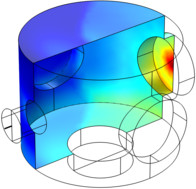
Differentially pumped vacuum systems use a small orifice or tube to connect two parts of a vacuum system that are at very different pressures. Such systems are necessary when processes run at higher pressures and are monitored by detectors that require UHV for operation. In this model, ... Read More
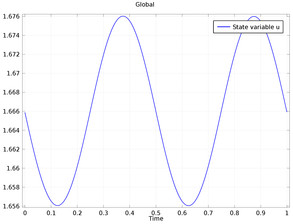
This tutorial demonstrates how to compute the periodic steady-state solution of a nonlinear model problem using an optimization solver. The solver modifies the initial conditions at the beginning of a period to match the solution at the end of the period. The model solves much faster ... Read More
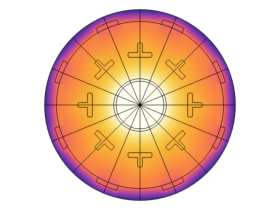
This model illustrates an application that maximizes surface-to-surface radiative fluxes and minimizes conductive heat fluxes. A thermo-photo-voltaic (TPV) cell generates electricity from the combustion of fuel and through radiation. The fuel burns inside an emitting device that ... Read More
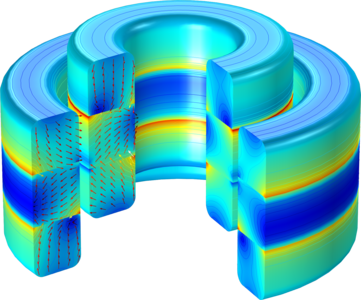
Permanent magnet bearings are used in turbomachinery, pumps, motors, generators, and flywheel energy storage systems, to mention a few application areas; contactless operation, low maintenance, and the ability to operate without lubrication are some key benefits compared to conventional ... Read More
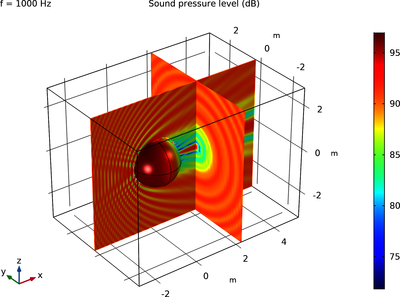
In this classical benchmark model, a spherical scatterer is placed in a plane wave background field. When the sphere is modeled as sound hard, the problem has an analytical solution. The model compares the results using the Pressure Acoustics, Boundary Elements interface with the ... Read More

This tutorial model shows how to model car cabin acoustics using a hybrid FEM-ray approach. The particular example is that of a tweeter located in the dashboard of the car near the windscreen. A FEM based sub-model of the speaker and its immediate surroundings is used to compute a ... Read More
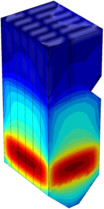
This model uses the discrete-ordinates method (DOM) to analyze the radiative heat transfer in a utility boiler with internal obstacles. DOM is one of the most useful radiation models for prediction of radiative heat fluxes on the furnace walls of a combustion chamber. With this model, ... Read More
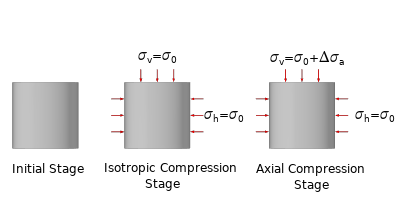
In this example, monotonic and cyclic triaxial tests are simulated using the Hardening Soil Small Strain material model. The model captures the effects of small strain stiffness and hysteresis under cyclic loading. The stress-strain relationship matches the hyperbolic curve reported in ... Read More
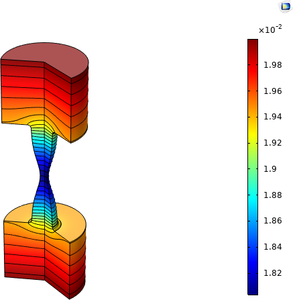
This model demonstrates the "butterfly" filling mechanism for copper electrodeposition in a Through-Hole (TH) via exposed to an electrolyte containing halide-suppressor additives. The Tertiary Current Distribution, Nernst Planck interface in combination with Deformed Geometry is used ... Read More


