
The Application Gallery features COMSOL Multiphysics® tutorial and demo app files pertinent to the electrical, structural, acoustics, fluid, heat, and chemical disciplines. You can use these examples as a starting point for your own simulation work by downloading the tutorial model or demo app file and its accompanying instructions.
Search for tutorials and apps relevant to your area of expertise via the Quick Search feature. Note that many of the examples featured here can also be accessed via the Application Libraries that are built into the COMSOL Multiphysics® software and available from the File menu.
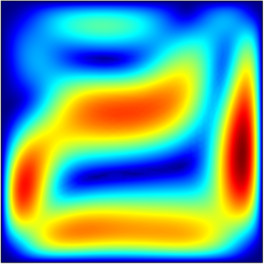
This example treats the modeling of sub-surface flow where free convection in porous media is analyzed. The results are compared with published literature in the field. The model couples the momentum balance to an energy balance through an equation, dependent on temperature, being ... Read More
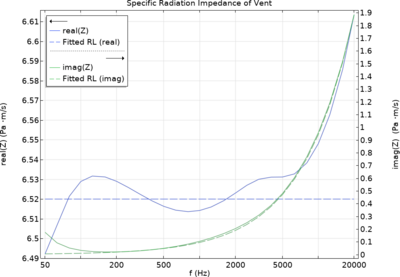
This model computes the specific acoustic radiation impedance of a very small circular vent in a flanged configuration. The model includes thermoviscous losses. The radiation impedance is fitted using a simple RL circuit which gives a simple lumped representation. The results are used ... Read More
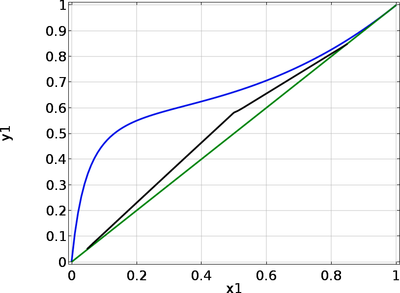
This example shows how to make a simple model for a binary distillation process. A thermodynamics property package, available in the Chemical Reaction Engineering Module, is created to study the separation of a nonideal mixture of ethanol and water. The required equilibrium relationship ... Read More
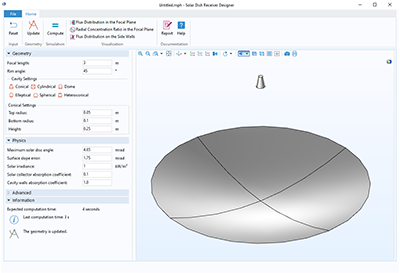
Solar concentrator/cavity receiver systems can be used to focus incident solar radiation into a small region, generating intense heat which can then be converted to electrical or chemical energy. A common figure of merit in solar thermal power systems is the concentration ratio, or the ... Read More
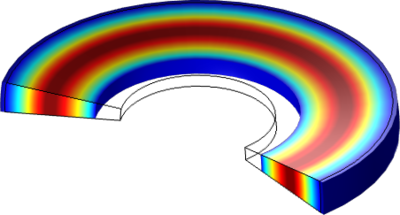
This example illustrates how to combine different Creep material models. Here a Norton–Bailey model (primary creep) is combined with a Norton model (secondary creep). This example is a continuation of the model thermally induced creep. Read More
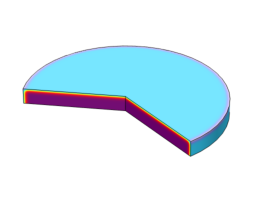
When cooking food, such as a patty, in convection ovens there is a trade off in the heating method. If the patty is heated at a low oven temperature the cooking is slow and the patty dries out, resulting in a poor taste. If the patty is heated rapidly at a high temperature, it is ... Read More
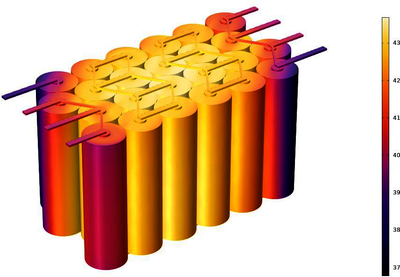
This app demonstrates the following: Dynamic help system using card stacks Multiple components (1D and 3D) in a single app Toggle buttons in the ribbon for showing different input, hiding/showing geometry selections, and for dynamic help Geometry parts and parameterized geometries ... Read More
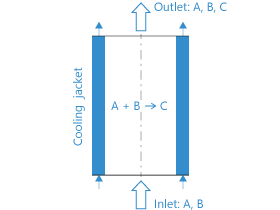
This alternative version of the Tubular Reactor app demonstrates how computational speed can be significantly increased by using a surrogate model instead of a full finite element model. A surrogate model is a simplified, computationally efficient approximation of a more complex and ... Read More
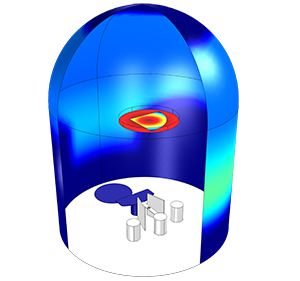
This model shows how to compute the thickness of a thermally evaporated gold film. The thickness of the deposited film is computed both on the walls of the chamber and on the sample. Read More
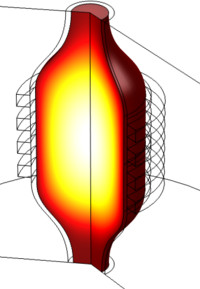
This model simulates a plasma at medium pressure (2 torr) where the plasma is still not in local thermodynamic equilibrium. At low pressures the two temperatures are decoupled but as the pressure increases the temperatures tend towards the same limit. Read More