
The Application Gallery features COMSOL Multiphysics® tutorial and demo app files pertinent to the electrical, structural, acoustics, fluid, heat, and chemical disciplines. You can use these examples as a starting point for your own simulation work by downloading the tutorial model or demo app file and its accompanying instructions.
Search for tutorials and apps relevant to your area of expertise via the Quick Search feature. Note that many of the examples featured here can also be accessed via the Application Libraries that are built into the COMSOL Multiphysics® software and available from the File menu.

In this model, the scattering coefficient of a Schroeder diffuser is calculated. This coefficient can then be used as input to express boundary conditions in typical room acoustic simulations. The effect of periodicity is also investigated by studying the responses from different ... Read More
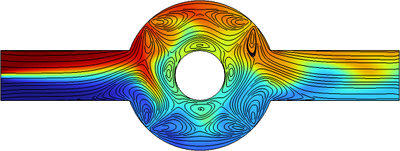
Microlaboratories for biochemical applications often require rapid mixing of different fluid streams. At the microscale, flow is usually highly ordered laminar flow, and the lack of turbulence makes diffusion the primary mechanism for mixing. While diffusional mixing of small ... Read More
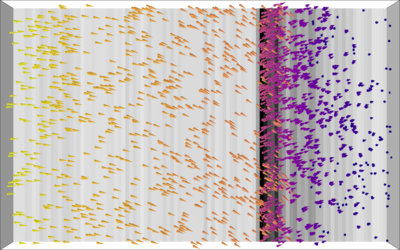
Multipaction can occur when electrons are accelerated by a high frequency RF field into surfaces. At certain frequencies, the number of electrons in a cavity can grow exponentially. This exponential growth cannot continue indefinitely because space charge effects in the cavity can ... Read More
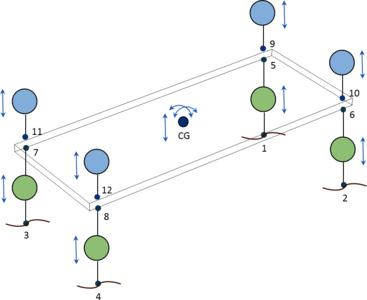
In this example, a lumped model of a vehicle suspension system having 11 degrees of freedom is analyzed. The Mass, Spring, and Damper nodes of the Lumped Mechanical System interface are used to model the wheels, including suspension system as well as the seats with a passenger. The ... Read More
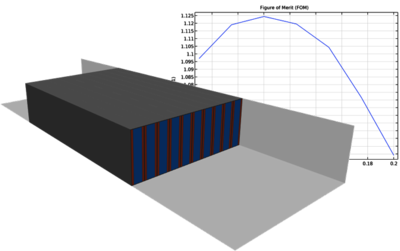
This example computes the effectiveness of a porous microchannel heat sink over a conventional microchannel heat sink. The model is fully parameterized. A parameter study on the thickness of the porous substrate is used to determine the optimal configuration. Read More
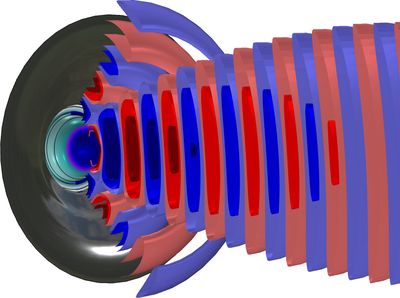
A tweeter is a high frequency driver used in loudspeaker systems. An ideal tweeter will produce a constant sound pressure level at a given distance in front of the driver independently of frequency, that is, a flat response. Ideally the tweeter will also, to a certain degree, maintain ... Read More
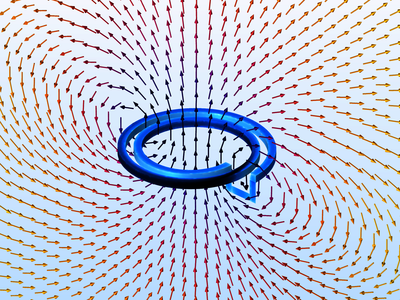
RF coils are important in numerous applications ranging from wireless technology to MRI scanning equipment. This introductory tutorial model demonstrates how to find the fundamental resonance frequency of an RF coil as well as how to perform a frequency sweep to extract the coil's Q ... Read More
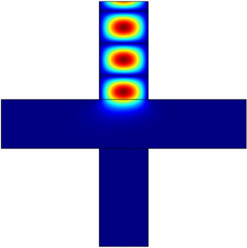
Wave heated discharges may be very simple, where a plane wave is guided into a reactor using a waveguide, or very complicated as in the case with ECR (electron cyclotron resonance) reactors. In this example, a wave is launched into reactor and an Argon plasma is created. The wave is ... Read More
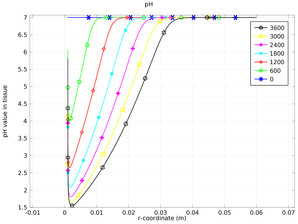
This model incorporates the transport and electrolytic reaction in the treatment of tumor tissue. Oxygen evolution at the anode produces protons, which lowers the pH, while chlorine production also leads to lowered pH through the hydrolysis of chlorine. One effect of a low pH is the ... Read More
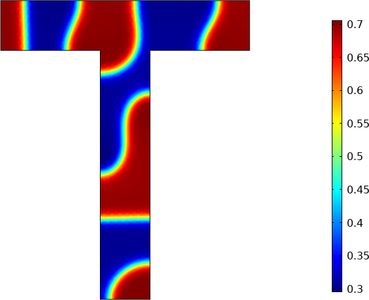
Many important processes in the mesoscale can be described by phase-field models. One of the oldest phase-field problems is the spinodal decomposition. Several standardized benchmark problems have been developed by the phase-field community. In this entry, these problems are solved using ... Read More


