
See How Modeling and Simulation Is Used Across Industries
Multiphysics modeling and simulation drives innovation across industries and academia — as is evidenced by the many uses showcased in the technical papers and posters presented by engineers, researchers, and scientists at the COMSOL Conference each year.
Draw inspiration from the recent proceedings collected below, or, to find a specific presentation or filter by application area or conference year/location, use the Quick Search tool.
View the COMSOL Conference 2025 Collection

The release of hydrogen from Liquid Organic Hydrogen Carriers (LOHC) is a highly volume-expanding, multiphase reaction with a high heat demand [1]. Platinum on porous alumina support is used as the catalyst for dehydrogenation. Since reactor design requires a deep understanding of the ... Read More

Nuclear fusion represents a promising solution for providing clean and sustainable energy. However, to support fusion reactions, tritium, a rare isotope, must be continuously produced within the reactor. Breeding blankets, which surround the plasma, produce this tritium. These components ... Read More

Silicon epitaxy (EPI) is an important process in semiconductor industry. We investigate the gas flow and gas composition in a complex 3D EPI reactor using the COMSOL's Laminar Flow, coupled with Transport of Concentrated Species, as well as the gas mixture properties provided by the ... Read More

Microwave heating for CO_2 desorption provides fast, low-temperature desorption, lowering energy requirements in carbon capture. According to studies, microwaves generate selective heating, dramatically increasing desorption rates compared to traditional approaches. This new technique ... Read More

Power-to-gas is an important area of research for reducing greenhouse gases and seasonal energy storage. Methane, with a Lower Heating Value of 50 MJ/kg, is already a commonly used gas, and its synthesis using green hydrogen production (electrolysis of renewable energy) is a remarkable ... Read More
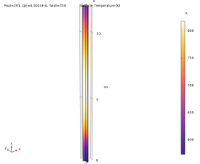
A well-designed isothermal laminar flow tubular reactor (LFTR) can be used as a source of high-quality kinetic rate data provided conditions are such that the plug flow idealization can be applied to its performance. In practice, meeting the necessary criteria for constant temperature ... Read More

An electrically heated fixed bed (19 mm diameter, 200 mm length) is investigated regarding its electrical conductivity. Various electrically conductive activated carbons are used. The fixed bed is constructed from activated carbon pellets and/or activated carbon fabric. Electrical ... Read More
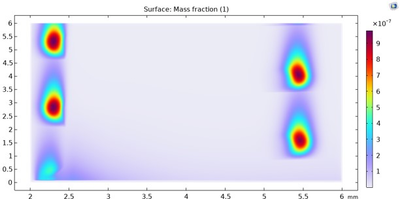
Increasing energy demands in society have led to intensive fossil fuel usage, resulting in increasing carbon dioxide (CO2) emissions, one of the most significant greenhouse gases and major contributors to global warming. Considerable efforts have been made towards CO2 capture, storage, ... Read More

The "Power to Gas" technology is a promising alternative for storing renewable electrical energy through energy carriers. This technology involves using surplus energy from renewable sources to obtain green hydrogen through water electrolysis. Since hydrogen storage and transportation ... Read More
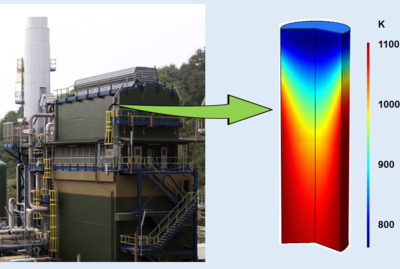
Figure 1 shows a simplified scheme of a typical industrial steam methane reforming (SMR) reactor, which is a top-fired, packed-bed multi-tubular chemical reactor, consisting of a series of catalytic tubes arranged within a furnace. The tubes contain two adjacent catalytic sections filled ... Read More


