
See How Modeling and Simulation Is Used Across Industries
Multiphysics modeling and simulation drives innovation across industries and academia — as is evidenced by the many uses showcased in the technical papers and posters presented by engineers, researchers, and scientists at the COMSOL Conference each year.
Draw inspiration from the recent proceedings collected below, or, to find a specific presentation or filter by application area or conference year/location, use the Quick Search tool.
View the COMSOL Conference 2025 Collection

Ongoing engineering design studies at Oak Ridge National Laboratory are exploring the feasibility of converting the High Flux Isotope Reactor (HFIR) from highly enriched uranium (HEU) to low-enriched uranium (LEU) fuel. HFIR is a pressurized light water-cooled and moderated research ... Read More

Ultrasonic flow-cell reactors are used for many industrial applications, where fluid substrate is sonicated in a small region, where very high ultrasonic acoustic power is present. The electromechanical transducer (converter) that drive the sonotrode inside the flow-cell is designed in ... Read More

The transition to sustainable production includes the reduction of fossil material usage. Vegetable oil can be used as a reagent to form polyurethane by epoxidation through three major reaction steps, epoxidation, carbonation, and aminolysis. Many attempts have been made to model these ... Read More

Mist chemical vapor deposition (mist-CVD) has recently attracted interest as a facile, cost-effective, and environmentally friendly method for depositing thin films of various materials. In this method, mist droplets containing the reactant solution are injected into the reactor and ... Read More

Many industrial processes involving chemical reactions rely on heat addition, which accounts for approximately 50% of all energy consumed in the United States' industrial sector. Examples include metallurgical processes, chemical processing, and heating process fluids. Traditionally, ... Read More

The significance of electrification of industry increases with the growing influence of renewable electricity as a primary energy source on earth. In this sense, microwave heating is a well-established electricity-based and market-mature technology employed on the commercial scale in ... Read More
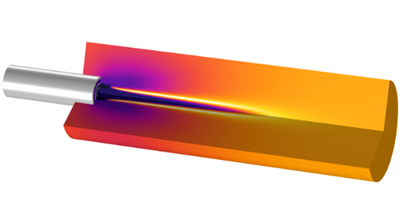
In the nuclear fuel industry, the dry conversion process is employed to transform crystalline UF6 to UO2 powder, in order to produce fuel pellets. The quality of the finished product highly depends on the process input parameters, and it is imperative to understand accurately the full ... Read More
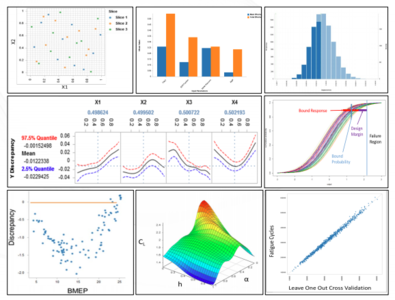
The use of computer simulations to analyze systems during the design process is a popular approach for validating and optimizing designs. But simulations are deterministic in nature and do not consider the uncertainty in design, manufacturing, and use of the product. Using predictive ... Read More

Air core reactors are commonly used as shunt reactors, fault current limiting reactors, tuning reactors in capacitor banks. The absence of the iron-core results in a simple and lightweight construction. Consequently, the magnetic field of an air-core reactor is not guided within a ... Read More

Laser Powered Homogenous Pyrolysis (LPHP), a non-isothermal wall-less plug flow reactor using cw-IR CO2 laser heating by fast vibrational–translational (V–T) energy transfer, is a common technique for high temperature pyrolysis in the gas phase with minimal catalytic effect of hot ... Read More


