
See How Modeling and Simulation Is Used Across Industries
Multiphysics modeling and simulation drives innovation across industries and academia — as is evidenced by the many uses showcased in the technical papers and posters presented by engineers, researchers, and scientists at the COMSOL Conference each year.
Draw inspiration from the recent proceedings collected below, or, to find a specific presentation or filter by application area or conference year/location, use the Quick Search tool.
View the COMSOL Conference 2025 Collection

Pasteurisation and sterilisation are crucial thermal processes for insuring microbiological safety and stability of foods. In the food industry, microwave (MW) heating enables treatment of food products in their final packaging, thus limiting post-process recontamination. During the ... Read More
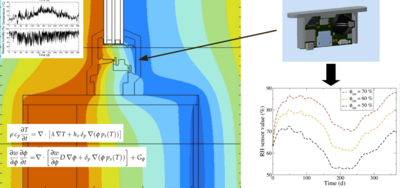
The material wood is frequently used in construction industry for several elements such as window frames. However, as a hygrothermal material, wood is sensitive to moisture induced damage. In this context, the moisture uptake of wood based windows logged with an integrated relative ... Read More

Wearable devices are drastically transforming the healthcare industry by enabling continuous, real-time monitoring of physiological and biochemical properties outside clinical settings. One particularly important application is the monitoring of stress; a significant factor linked to ... Read More

Increased traffic and load on railway infrastructure require regular inspection of track components. Railway track elements such as fasteners, insulation joints, and weld joints are subjected to extreme loading conditions, making their regular inspection essential for ensuring the safety ... Read More
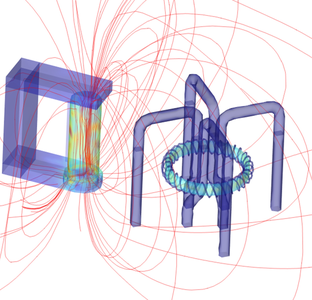
The paper describes how the fluxgate current sensor works and how it is built in the COMSOL Multiphysics® software. Four COMSOL® modules were used: -AC/DC Module: the magnetic field physic is used in order to apply the Ampere-Maxwell’s law to the different sensor components and to the ... Read More
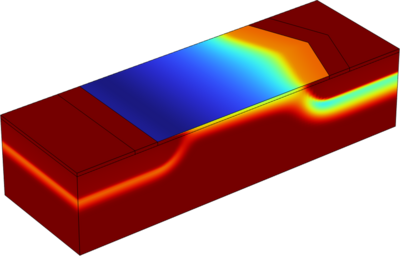
Field-effect transistors (FETs) exhibit favourable characteristics for biological and chemical sensing applications, including multi-parameter response, tunable sensitivity, and inherent amplification [1], [2]. As sensors, FETs employ their gate or active channel as a sensing area, where ... Read More
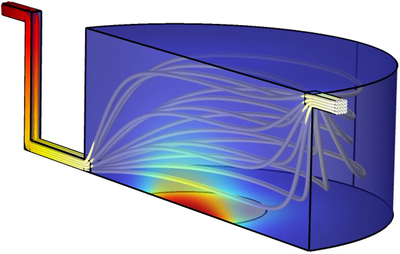
Organs-on-Chips (OoCs) are microfluidics-based systems that aim to recapitulate the in-vivo behaviour of specific organs. Using a network of microfluidic channels, OoCs provide a biophysical and biochemical environment to sustain complex 2D and 3D cell cultures systems that recapitulate ... Read More

Diabetes is a metabolic disorder that is on a rising tide. Diabetic patients must regularly monitor their blood glucose levels. One method for designing such a device is using electrochemical principles, specifically amperometry to determine glucose concentration. It is essential to ... Read More
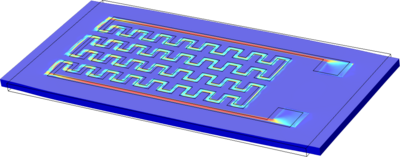
In recent years, conventional rigid and planar sensor devices are gradually substituted by flexible and stretchable alternatives. This paradigm shift has paved the way to entirely new applications, particularly in the field of personalized health monitoring or environmental sensing. ... Read More
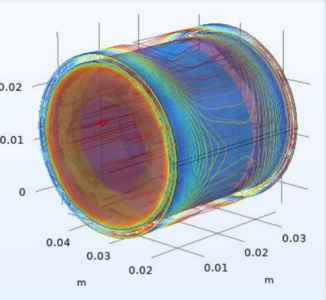
Piezoelectric materials are substances that can convert mechanical energy into electrical energy and vice versa. This is called the piezoelectric effect. When a piezoelectric material is squeezed or stretched, it creates an electric charge. This is because the material's atoms are ... Read More


