
Explore the innovative ways multiphysics simulation is being used worldwide to advance research
Multiphysics modeling and simulation drives innovation across industries and academia — as is evidenced by the many uses showcased in the technical papers and posters presented by engineers, researchers, and scientists at the COMSOL Conference each year.
Draw inspiration from the recent proceedings collected below, or, to find a specific presentation or filter by application area or conference year/location, use the Quick Search tool.
View the COMSOL Conference 2025 Collection
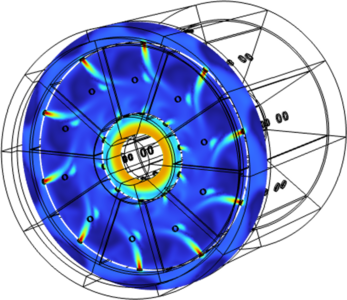
Modern micro-jet engines remain limited by anisotropic temperature distributions and over-reliance on legacy analytical design methods, which fail to capture relevant viscous effects and impose bold geometry approximations, restricting efficiency, durability, and integration with UAV ... Read More

Arterial oxygen partial pressure, PaO₂, is a critical physiological marker for respiratory assessment, hypoxia detection, and critical care management, yet its measurement typically requires invasive arterial blood gas sampling [1], [2]. Transcutaneous oxygen monitoring offers a ... Read More
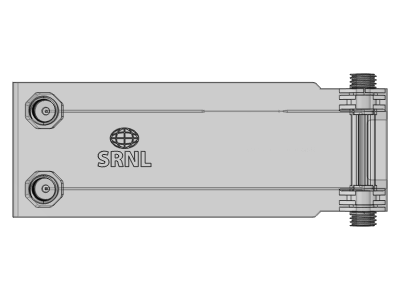
COMSOL simulations were designed to replicate a novel 3D-printed microfluidic device (MFD) used for online monitoring of rare earth element (REE) separation via ion exchange. Combination of modeling and experimental efforts are critical to quickly and effectively produce efficient ... Read More
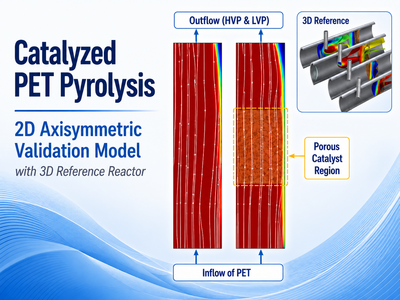
Plastic waste management remains a critical global challenge due to the continuous increase in polyethylene terephthalate (PET) production and the limitations of conventional recycling methods. Chemical recycling through pyrolysis represents a sustainable alternative for converting PET ... Read More
Lightweight polymeric cellular solids are central to transportation, impact protection, thermal isolation, packaging, soft robotics, and biomedical systems, yet conventional foam manufacturing remains constrained by molds, multistep processing, high external energy demand, and limited ... Read More

The release of hydrogen from Liquid Organic Hydrogen Carriers (LOHC) is a highly volume-expanding, multiphase reaction with a high heat demand [1]. Platinum on porous alumina support is used as the catalyst for dehydrogenation. Since reactor design requires a deep understanding of the ... Read More

Problem Description Sorption heat storage systems are attracting growing interest due to their high energy density and loss-free heat storage capability, making them a promising solution for storing surplus solar energy in summer for use in winter in residential buildings. However, these ... Read More

Integrating exothermic and endothermic reactions within a single reactor offers a promising strategy to enhance overall thermal efficiency. However, existing systems often suffer from limited heat transfer performance due to design and heat transfer constraints. To overcome this ... Read More

Mist chemical vapor deposition (mist-CVD) has recently attracted interest as a facile, cost-effective, and environmentally friendly method for depositing thin films of various materials. In this method, mist droplets containing the reactant solution are injected into the reactor and ... Read More

Electroformed Ni-based 3D electrodes (NiE3) offer a novel approach to enhancing alkaline electrolysis performance by increasing surface area and active sites, leading to intensified electrolysis reactions and improved efficiency. However, inefficient bubble release from the produced ... Read More


