
Explore the innovative ways multiphysics simulation is being used worldwide to advance research
Multiphysics modeling and simulation drives innovation across industries and academia — as is evidenced by the many uses showcased in the technical papers and posters presented by engineers, researchers, and scientists at the COMSOL Conference each year.
Draw inspiration from the recent proceedings collected below, or, to find a specific presentation or filter by application area or conference year/location, use the Quick Search tool.
View the COMSOL Conference 2025 Collection

Shielded transportation casks are commonly used for transportation and storage of radioactive waste materials. Design approval of such casks by regulatory authority is subject to its compliance with a thermal test (among other tests) Due to exposure of cask to fire , there is a ... Read More
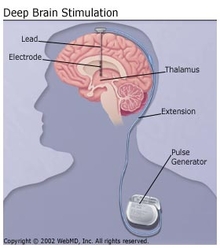
Deep Brain Stimulation (DBS) is a surgical technique that involves surgically implanting Platinum electrode to create an electric field to activate the targeted nerve cells and fibers with minimized side effects. Important stimulation parameters to monitor include temperature, electric ... Read More
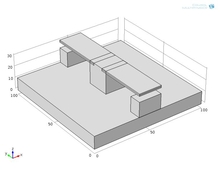
There has been growing demand for high performance micro sensors capable of detecting nuclear radiations being released from various industries, Nuclear reactors. Radiations emitted from the radioactive materials are invisible and not directly detectable by human senses. Thus it is ... Read More

Gallium Nitride (GaN) is a very interesting and highly promising material system for both optical and microwave high-power electronic applications. It plays a crucial role today in the most promising technology for high power, high-frequency circuits: AlGaN/GaN HEMTs. GaN HEMTs ... Read More
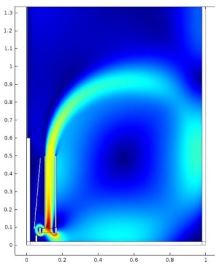
In heating upgrades, most attention is paid to the boiler. When upgrading to HR++-boilers (eff of 107%) however, difficulties may occur since the high efficiency boilers are designed for water temperatures around 40°C, while the old radiators are designed for water temperatures higher ... Read More
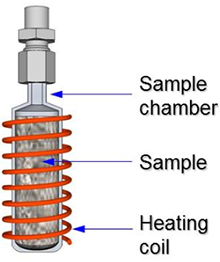
A COMSOL Multiphysics® model of our apparatus has been created in order to simulate the pressurizations of our nanoparticles by Deuterium. Using reference measurements during a cooling process, we calibrated the model so that its thermal aspects reflect the ones of our experimental set ... Read More

Geometries with heterogeneous material properties are typically defined as a set of multiple parts, each part representing a different material. However, assembling or defining the individual parts of complex geometries can be difficult. A practical method based on image-based mesh ... Read More

Perspiration during intense physical activity is an essential part of human thermoregulation. Clothing affects the cooling rate of the body. Heat and water vapor are coupled through evaporation and transported through the fabric. A model of the above system was developed for fabrics of ... Read More


