
Explore the innovative ways multiphysics simulation is being used worldwide to advance research
Multiphysics modeling and simulation drives innovation across industries and academia — as is evidenced by the many uses showcased in the technical papers and posters presented by engineers, researchers, and scientists at the COMSOL Conference each year.
Draw inspiration from the recent proceedings collected below, or, to find a specific presentation or filter by application area or conference year/location, use the Quick Search tool.
View the COMSOL Conference 2026 Collection

A flow sensor based on calorimetric principle is designed using COMSOL Multiphysics® software. The sensor is capable of measuring the velocity from 0 to 1 m/s with a resolution of 0.001m/s. The system works with intrusive type mechanism in which the fluid flows across the sensor and ... Read More

The Lab -on - chip (LOC) application integrates multiple functionality on a single chip which readily manipulate and delivers the result. Micro Electro Mechanical Systems (MEMS) micro heater is widely used in heating the various Lab -on-a- chip (LOC) application, which offers great ... Read More

Array-based technologies are important for many applications in drug discovery, microbiology and cell biology. A large-scale array of single cells allows high-throughput monitoring of behaviors of individual cells in parallel, avoiding the lack of cell specificity inherent to bulk ... Read More

We have created and optimized a multiphysics model using COMSOL Multiphysics® software that incorporates the Free and Porous Media Flow and Heat Transfer in Porous Media interfaces to simulate the temperature profile of a chromatographic system under external heating and cooling ... Read More
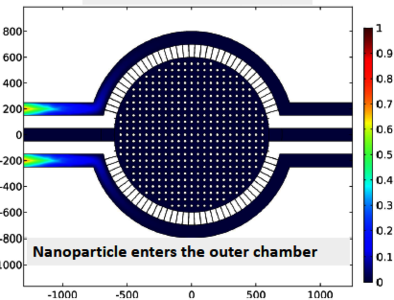
A simulation was performed to investigate the flow behaviors of drug delivery nanoparticles in a tumor-on-a-chip microfluidic device, which mimics a tumor cell having endothelial cells with micro-sized gaps. The Navier-Stokes equation and the convection-diffusion equation were used to ... Read More
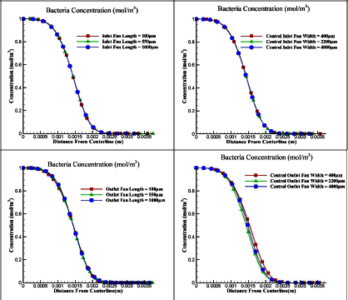
The ubiquitous nature of biofilms has led to a growing need to be able to detect, control, and maintain or remove them. Therefore a robust testing platform that allows for multiple analytical techniques is required to better understand their multitude of properties. The development of ... Read More
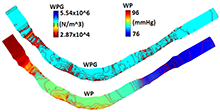
Three dimensional mathematical models are developed to simulate the blood flows in patient specific right coronary arteries with two stenoses. Simulations are carried out with various flow parameters under physiological conditions. Both Newtonian and non-Newtonian blood viscosity models ... Read More

Organ-on-a-chip microdevices combine microfluidics, MEMS, and biotechnology techniques to mimic the multicellular architectures, tissue-tissue interfaces, physicochemical microenvironments, and vascular perfusion of the body.[1] Such devices are being developed to provide better levels ... Read More


