
Explore the innovative ways multiphysics simulation is being used worldwide to advance research
Multiphysics modeling and simulation drives innovation across industries and academia — as is evidenced by the many uses showcased in the technical papers and posters presented by engineers, researchers, and scientists at the COMSOL Conference each year.
Draw inspiration from the recent proceedings collected below, or, to find a specific presentation or filter by application area or conference year/location, use the Quick Search tool.
View the COMSOL Conference 2026 Collection
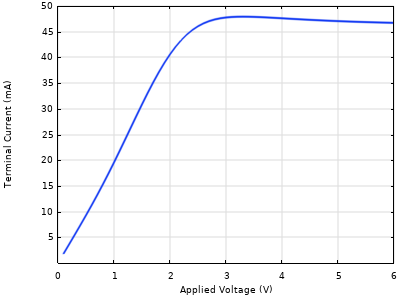
Planar Gunn devices can generate microwave-to-terahertz oscillations through the transferred-electron effect or Gunn effect: above a threshold electric field, intervalley electron transfer produces negative differential mobility and negative differential resistance (NDR), supporting self ... Read More

Duplex stainless steels are commonly used in oil and gas production due to their high mechanical properties and good resistance to stress corrosion cracking. In particular, URTM 2507 (EN 1.4410) exhibits good resistance to stress corrosion cracking in an acidic environment containing ... Read More

The earth dam problem, in its simplest form, is a classic example as is has been studied for over a century using various modelling approaches: experimental, analytical, numerical and statistical. One reason for this surely is its importance for real embankments, which play a crucial ... Read More
Empirical investigations allow for the characterization of physical systems under controlled conditions using systematic measurement protocols. However, experimental methods are often limited by high time and financial costs, safety risks, or the practical impossibility of reproducing ... Read More
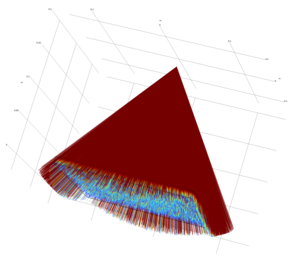
X-ray imaging is widely used in nondestructive testing, industrial inspection, and medical diagnostics. Virtual radiography enables rapid evaluation of imaging configurations, object visibility, and material-dependent contrast without requiring repeated physical experiments. While Monte ... Read More
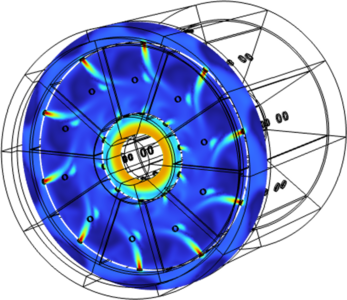
Modern micro-jet engines remain limited by anisotropic temperature distributions and over-reliance on legacy analytical design methods, which fail to capture relevant viscous effects and impose bold geometry approximations, restricting efficiency, durability, and integration with UAV ... Read More
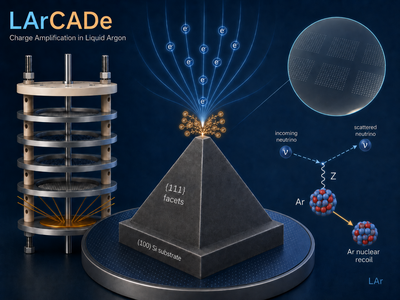
Particle physics increasingly lives at the edge of what a detector can see, and novel detector concepts that harness localised, enhanced electric fields offer one way to push that edge further out - provided the underlying geometry, electric field, and ionisation transport are understood ... Read More
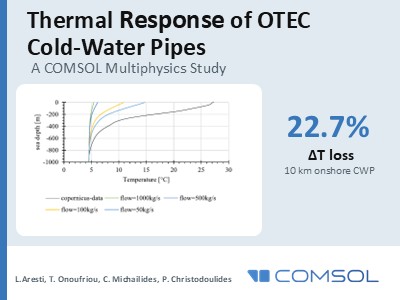
Ocean Thermal Energy Conversion (OTEC) systems exploit the temperature difference between warm surface seawater and cold deep seawater to produce electricity or useful by-products. Because OTEC cycles operate with relatively small temperature differences, even minor heat gains in the ... Read More
Nuclear fusion offers the potential to provide a carbon-free, high-power, and sustainable energy source. Among the different fusion approaches, Inertial Confinement Fusion (ICF) relies on high-power laser beams irradiating a small spherical deuterium-tritium (DT) fuel capsule, inducing ... Read More
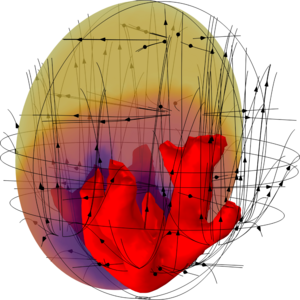
The generation of eruptible magma from long-lived, crystal-rich mush reservoirs is a central problem in volcanology. Many volcanoes erupt frequently from storage regions where the interstitial melt fraction sits below the eruptibility threshold of roughly 50 vol%, which implies that ... Read More


