
See How Modeling and Simulation Is Used Across Industries
Multiphysics modeling and simulation drives innovation across industries and academia — as is evidenced by the many uses showcased in the technical papers and posters presented by engineers, researchers, and scientists at the COMSOL Conference each year.
Draw inspiration from the recent proceedings collected below, or, to find a specific presentation or filter by application area or conference year/location, use the Quick Search tool.
View the COMSOL Conference 2025 Collection

The "Power to Gas" technology is a promising alternative for storing renewable electrical energy through energy carriers. This technology involves using surplus energy from renewable sources to obtain green hydrogen through water electrolysis. Since hydrogen storage and transportation ... Read More
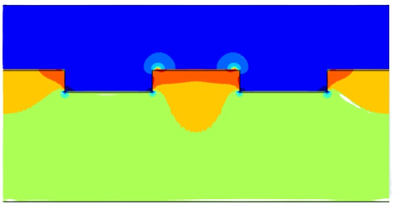
The advancement of battery technology plays a crucial role in achieving sustainable and electrified future with efficient energy storage. In recent years, all-solid-state lithium-ion batteries (ASSLIBs) have shown great potential, offering higher capacity, enhanced safety, and longer ... Read More

This research presents the design, simulation, and characterization of novel resonator structures based on the principles of coupling electric fields using periodic metamaterial-inspired configurations using COMSOL Multiphysics RF module. The resonators are meticulously crafted to ... Read More
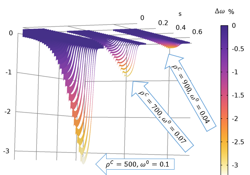
Package material for liquid food packages typically features a multilayered structure with paperboard as a core material and protective polymer layers towards the product and the ambient. Aseptic food packages require an additional barrier layer comprising a thin aluminum layer. Aluminum ... Read More
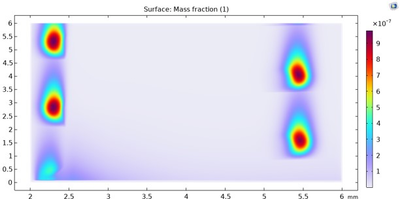
Increasing energy demands in society have led to intensive fossil fuel usage, resulting in increasing carbon dioxide (CO2) emissions, one of the most significant greenhouse gases and major contributors to global warming. Considerable efforts have been made towards CO2 capture, storage, ... Read More

Alkaline Electrolysis (AEL) technology is known and used in industries for half a century. It is a key technology for large-scale hydrogen production powered by renewable energy for example chemical industries. Flows of 99.999% pure hydrogen up to 20’000 Nm³/h with an electrical power of ... Read More

A series of ferroelectric ceramic models with grain and grain-boundary structures of different sizes are established via Voronoi tessellations. The relation between the electric displacement and electric field and the hysteresis loop are calculated using a finite element method based on ... Read More

Convective drying of fruits and vegetables is a widely used preservation method and serves to reduce food waste, to make them available off-season and to reduce weight-related transport costs. However, the high energy consumption and impact of the process set-up and process settings on ... Read More
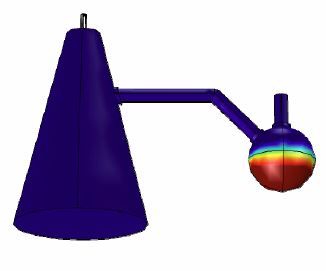
The search for energy saving is nowadays mandatory because of the constant growth of CO2 emissions caused by an inefficient energy management. Thermal Energy Storage (TES) has an important role in designing of energy efficient systems, including solar energy storage (daily or seasonal) ... Read More
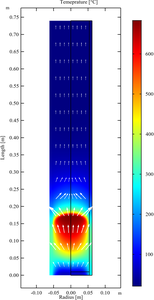
Smouldering is flameless combustion which depends on an exothermic surface reaction occurring within a porous medium. It is harnessed by engineers to destroy organic liquid wastes in soil as the technology Self-sustaining Treatment for Active Remediation (STAR). During this remediation ... Read More