
See How Modeling and Simulation Is Used Across Industries
Multiphysics modeling and simulation drives innovation across industries and academia — as is evidenced by the many uses showcased in the technical papers and posters presented by engineers, researchers, and scientists at the COMSOL Conference each year.
Draw inspiration from the recent proceedings collected below, or, to find a specific presentation or filter by application area or conference year/location, use the Quick Search tool.
View the COMSOL Conference 2025 Collection

Over the past two decades, extensive research has been conducted on ultraviolet (UV) photodetectors (PDs) because of their potential applications across various fields including military, medicine, environmental monitoring, and deep space explorations. To fabricate solar-blind UV PDs ... Read More

Electrokinetic (EK) techniques have been broadly implemented in a variety of fields, including microfluidics and lab-on-a-chip, and are seeing increased interest to miniaturize and optimize fluid pumping and mixing systems. While EK techniques such as electro-osmosis and ... Read More

Realization of an efficient coupling between photonic sub-micrometer size modes and hundred micrometer wide free-space beams remains a main engineering hurdle to a wider acceptance of miniaturized chip-scale atomic and bio systems. The major obstacle comes from a gigantic mode mismatch ... Read More
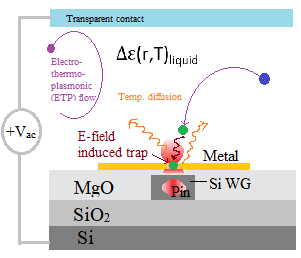
In recent years, with the rise of quantum optical technologies, there has been a spurring research interest growing on single-photon emitters (SPE). To date, the focus in engineering improved SPE has been mainly towards better enhancement overlooking the tenuous manufacturing process ... Read More
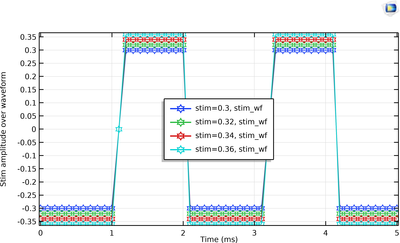
Modeling the effects of electromagnetic fields on biological structures on the order of the body and tissues to the micro (1e-6)-and nano (1e-9) level of cells and sub-cellular structures presents formidable challenges. We share the major lessons we have learned using COMSOL ... Read More
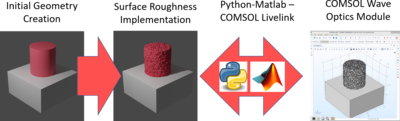
Optical devices are generally simulated using ideal structures. These ideal geometries are critical in finding major features of the optical response. Unfortunately, fabrication of such devices rarely results in structures that are ideal.[1] In particular, surface roughness is rarely ... Read More
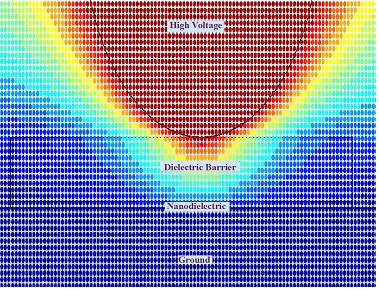
Current research focus on improvement of electrical, mechanical, surface characteristics of polypropylene films by incorporation of nanoparticles into the polymer matrix of the film. We built 3D model of polypropylene Nanocomposites made of polypropylene matrix and incorporating various ... Read More
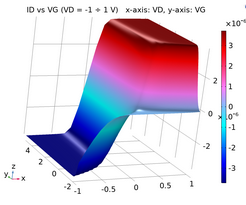
Transition metal dichalcogenides (TMDCs) have attracted the interest of researchers because of their physical properties, such as tunabilitiy, non-zero bandgap, gas sensing and superconductivity. One of the most studied TMDC is monolayer MoS2, for this reason we present how COMSOL can be ... Read More
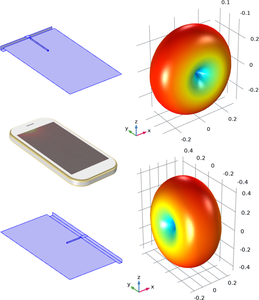
With the Release 14, the Third Generation Partnership Project (3GPP) [3GPP TR 38.913 V0.4.0, 2016] paved the way to the possibility of delivering digital television services on mobile terminals, such as smartphones and tablets, overcoming all the limitations which characterize the ... Read More
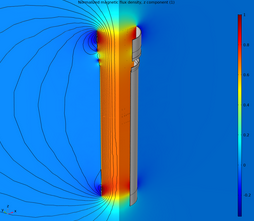
The vacuum arc remelting is a refining process used to melt reactive metals like titanium, zirconium or hafnium. Melting is performed under vacuum to avoid reactions between liquid metal and oxygen which could be a source of pollution. This process is particularly well suited to purify ... Read More


