
See How Modeling and Simulation Is Used Across Industries
Multiphysics modeling and simulation drives innovation across industries and academia — as is evidenced by the many uses showcased in the technical papers and posters presented by engineers, researchers, and scientists at the COMSOL Conference each year.
Draw inspiration from the recent proceedings collected below, or, to find a specific presentation or filter by application area or conference year/location, use the Quick Search tool.
View the COMSOL Conference 2025 Collection
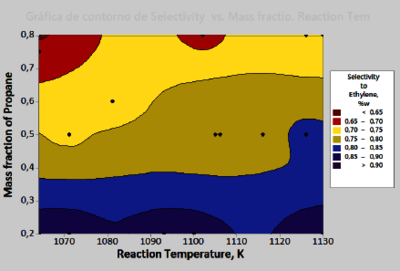
This study allows to establish the possibility to carry out the pyrolysis of mixtures of ethane-propane in an existing steam-cracking reactor (SCR) originally designed for ethane pyrolysis. The final goal of this study was to minimize new investments, e.g. a purchase of new equipment, ... Read More
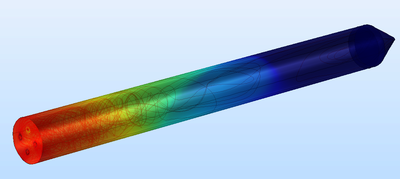
Oxygen delignification is a technology established worldwide and a common operation in pulp mills that use Kraft cooking. The reasons for using this technology are the reduction of organochlorine compounds in the effluents, and economy of chemicals in the bleaching stage. The objective ... Read More

Intermediate heat exchanger (IHX) in a pool-type liquid metal cooled fast breeder reactor is an important heat exchanging component as it transfer heat from the radioactive primary sodium in the pool to the non-radioactive secondary sodium. The secondary sodium ultimately heats up water ... Read More

A general purpose stainless steel micro reactor setup for methane conversion is being designed for research purposes. We intend to design and build a modular device that would be able to manage different types of reactions depending on the installed modules. The device should be able to ... Read More

Gas to liquid (GTL) technology can convert methane from the natural gas to liquid fuels and other valuable hydrocarbons which can then be quickly and efficiently transported. The catalytic Fischer-Tropsch (FT) synthesis is the most critical step of the GTL process, as it is in this step ... Read More

A defining characteristic of atomic layer deposition (ALD) is the sequential exposure of a surface to self-limiting, saturating reactions. Temporal ALD operates through intermittent purge cycles, while spatial ALD relies on physical separation accomplished by delivering reactants through ... Read More

In the poster you can see a project where using computational tools like the COMSOL Multiphysics® software, hydrodynamics of a photo electrocatalytic reactor was studied. It was evident that the influential factor is the geometry of inlet and exit header. Therefore, these changes were ... Read More

Nitrogen oxides are one of the more dangerous ingredients contaminating the atmosphere. They are considered to be almost ten times more harmful than carbon monoxide, and sulfur dioxide several times. A whole range of photochemical reactions involving nitrogen oxides are responsible for ... Read More
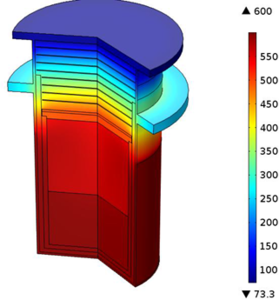
Chlorine reactor is used to dry molten LiCl-KCl eutectic salt before it is put to use in electrorefining operation. Molten salt electrorefining is a pyrochemical method of separation of heavy elements from spent metallic nuclear fuel. It is a high-temperature process which uses molten ... Read More

Hydrodynamics of fixed bed reactors involve complex interactions of gas and liquid phases with packed solids. Such complex interactions manifest in different flow regimes occurring in trickle-bed reactors. A comprehensive CFD model was developed to predict measured hydrodynamic ... Read More


