
Explore the innovative ways multiphysics simulation is being used worldwide to advance research
Multiphysics modeling and simulation drives innovation across industries and academia — as is evidenced by the many uses showcased in the technical papers and posters presented by engineers, researchers, and scientists at the COMSOL Conference each year.
Draw inspiration from the recent proceedings collected below, or, to find a specific presentation or filter by application area or conference year/location, use the Quick Search tool.
View the COMSOL Conference 2025 Collection

Dr. R. N Singh is currently a INSA Senior Scientist. Prior to this appointment, he was a CSIR Emeritus Scientist at the National Geophysical Research Institute (NGRI), Hyderabad. He has been the Scientist-in-Charge of CSIR Centre of Mathematical Modeling and Computer Simulation, ... Read More

As a part of a lab-on-chip-device, more often it is required to measure dielectric constant of the fluid. For this purpose it is necessary to develop a sensor whose size is compatible with microfluidic channel. The work, presented in this paper, studies effect of the parameters ... Read More
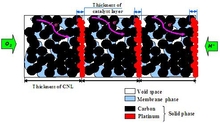
We present a novel multi-layered electrode fabrication technique for polymer electrolyte membrane fuel cells (PEMFCs). This method consists of alternate layers of Pt deposition (0.05 mg/cm²) by sputtering on the painted multi-walled carbon-Nafion layer (CNL) with larger concentration of ... Read More
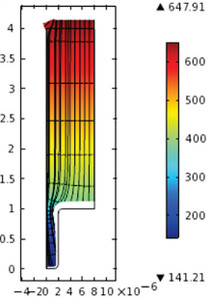
Electroplating is a vital technology widely employed for many technological applications ranging from decorative or anti-corrosion coatings to high precision nanotechnology passive electromagnetic cloaking devices. This 2D Axisymmetric Electroplating Model demonstrates one of the ... Read More
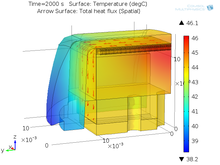
Self-heating is a problem to consider for Ultrasound Imaging probes. Since the probe is in contact with the skin, it’s necessary to find a solution to lower the front face temperature in order to avoid patient discomfort, even at the most demanding operating condition. One solution ... Read More
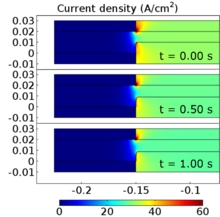
In the Collaborative Research Centre 692 at TU Chemnitz several academic institutions work on aluminum matrix composites (AMCs). These materials consist of an aluminum matrix, which is reinforced by SiC or Al2O3 particles with dimensions less or equal 1 µm. One main task is finishing ... Read More

Usually, in integrated circuits, the chip is brazed on leadframe and then, a polymer resin is molded around to create the packaging. On the first hand, the molding process at high temperatures will induce thermomechanical stress on the chip. As the leadframe, the chip and the braze have ... Read More
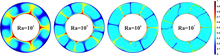
For the numerical solving of the equations, Comsol has been applied. Simulations have been modeled in 2D Cartesian, in cylindrical coordinate system and in a “mantle-like” cylindrical-shell. Mantle dynamics is controlled by the Rayleigh number (Ra), which is the ratio of the buoyancy ... Read More
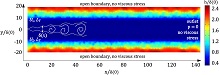
The finite element method applied to the k-epsilon turbulence model is used to investigate the two-stream turbulent mixing layer. Whereas the model is known as one of the most popular of the turbulence models to date, the model has yet to be applied to the classical mixing layer problem ... Read More

Using COMSOL Multiphysics, studies were performed showing that thermomagnetic siphoning (TMS) is a sufficient manner of regulating the temperature of a bundle of current-carrying wires wrapped with a magnetorheological fluid (MRF) jacket. Because of Curie’s Law, the cooler MRF on the ... Read More


