
See How Modeling and Simulation Is Used Across Industries
Multiphysics modeling and simulation drives innovation across industries and academia — as is evidenced by the many uses showcased in the technical papers and posters presented by engineers, researchers, and scientists at the COMSOL Conference each year.
Draw inspiration from the recent proceedings collected below, or, to find a specific presentation or filter by application area or conference year/location, use the Quick Search tool.
View the COMSOL Conference 2025 Collection

Microplastic contamination in sediment samples presents analytical challenges, as microplastic concentrations typically remain below 1% in environmental matrices [1]. Current analytical workflows require cost-effective and rapid pre-separation methods to concentrate microplastic ... Read More

The transfer molding process is a widely used method for encapsulating microelectronics and power semiconductor devices. In power electronics, it is gaining increasing importance, particularly in the automotive sector [1]. In transfer molding, an epoxy mold compound (EMC) is injected ... Read More
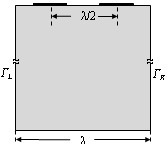
In this paper, we present study on the mass loading effect of the interdigital transducer (IDT) on surface acoustic wave (SAW) velocity in SAW devices, using COMSOL Multiphysics. We have simulated a one port SAW resonator made on YZ lithium niobate substrate and investigated the ... Read More

Corals are symbiotic marine organisms greatly dependent on the dynamic gradients of light, temperature and chemical species, all affected by the water flow in their surroundings. We developed a multiphysics modelling approach to simulate the microscale spatial distribution of light, ... Read More

The aim of this work is the Finite Element Analysis (FEA), by using COMSOL Multiphysics®, of the convective heat transfer and working temperature field of a photovoltaic module under different wind conditions. Read More

This study presents a combined simulation and experimental investigation of mixing performance in a batch mixer, with the goal of validating simulation results and identifying optimization potential. The focus is on evaluating mixing times and flow fields to enhance process efficiency, ... Read More

The lymphatic system plays a crucial role in immune surveillance, fluid balance, and the transport of immune cells. Lymph nodes, acting as filtration and immune activation hubs, are essential in detecting and responding to pathogens. Computational modeling of lymph node function offers ... Read More
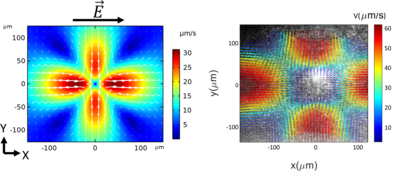
Efficient mixing and pumping of liquids at the microscale is a technology that is still to be optimized. The combination of an AC electric field with a small temperature gradient leads to a strong electrothermal flow that can be used for multiple purposes. Combining simulations and ... Read More
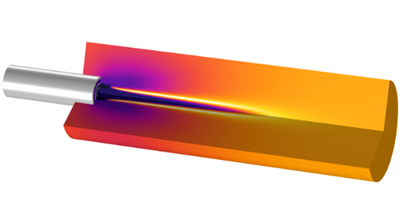
In the nuclear fuel industry, the dry conversion process is employed to transform crystalline UF6 to UO2 powder, in order to produce fuel pellets. The quality of the finished product highly depends on the process input parameters, and it is imperative to understand accurately the full ... Read More

Ultrasonic levitation is a novel technology for contactless handing of various objects. It is already used in various manufacturing processes where it is important to keep untouched surface. In this paper we introduce a model of so-called near-field ultrasonic levitation which allows ... Read More


