
India's National Chemical Laboratory Optimizes Fuel Cells via Modeling
Ashish Lele, National Chemical Laboratory, India
Inefficient and potentially harmful diesel generators are still the prevailing method of decentralized power generation for telecommunications in urban and rural India. Researchers at the National Chemical Laboratory are investigating proton exchange membrane (PEM) fuel cells, which are strong candidates for this industry because of their cleanliness, compatibility, and efficiency exceeding 30% (with work underway to further increase this value). Using multiphysics modeling and simulation, the researchers are working to determine an optimal configuration of fuel cell properties that yields maximum efficiency and performance.
Suggested Stories

Modeling Lined Rock Caverns for Underground Hydrogen Storage
Lined rock caverns can store hydrogen, but their safety depends on interactions between hydrogen gas, rock masses, and ...
3D Parametric Full Eye Model Gives 20+ Years of Better Vision
To correct presbyopia, researchers at Kejako, a medical device company in Switzerland, are developing a noninvasive ...
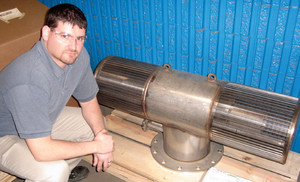
The Science of Water Screening
Johnson Screens® are the manufacturers of steel screens that impede debris from lakes and rivers from entering pipes ...
Forecasting Fruit Freshness with Simulation Apps
Swiss research organization Empa built multiphysics models and compiled a simulation application that feeds results ...


