
Explore the innovative ways multiphysics simulation is being used worldwide to advance research
Multiphysics modeling and simulation drives innovation across industries and academia — as is evidenced by the many uses showcased in the technical papers and posters presented by engineers, researchers, and scientists at the COMSOL Conference each year.
Draw inspiration from the recent proceedings collected below, or, to find a specific presentation or filter by application area or conference year/location, use the Quick Search tool.
View the COMSOL Conference 2025 Collection
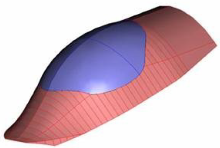
Chocolate is a pleasurable product largely consumed over the world. It is known that ingredients, process and particle size distribution largely impact the chocolate sensory perceptions. It was hypothesized that a suitable choice of chocolate size and geometry modifies in-mouth melting ... Read More
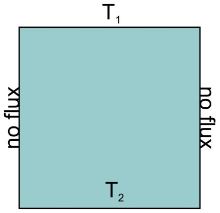
Nowadays all branches in modern science and industry tend to solve ever complicating problems. As the result the computational time increases considerably and it become very important to reduce the processing time and use available resources more efficiently. Parallelizing problem proves ... Read More
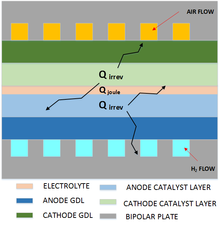
In this paper a 3D geometry of a single HT PEFC with all the components (membrane, cathode, anode & bipolar plate with flow field) was modelled for heat transfer. The source of heat within the fuel cell is the internal heat generated from electrochemical reactions. Heat source terms ... Read More
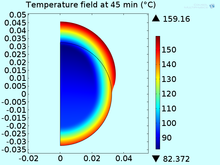
Bread is a food product which various complex physico-chemical phenomena occur during the cooking process. Thus, phenomena of heat and mass transfer are coupled to the deformation. In addition, bread is a multiphase product (solid, liquid and vapor) and composed of various components ... Read More

Reformer and catalytic burners are common components in fuel cell systems, crucial for efficient preparation of fuel and exhaust gases of the fuel cell stack. We intend to show the influence of radiation to the temperature distribution inside of a reformer unit. The model consists of an ... Read More

The paper investigates the hydrodynamic performance of a hierarchical parallel channel network for the objective of optimal thermal coupling to heat released in the adsorption processes, as in adsorption heat pumps. More specifically, the uniformity of the fluid flow over the network is ... Read More

Aim of the study is to determine the influence of some of the most important operating variables, especially humidity and temperature, of drying air on the performance of cooking process of pork meat. The process is simulated using finite elements software COMSOL Multiphysics®. The ... Read More

This work falls into the framework of an ESA experiment, which consists of observing the behavior of patterns and structures that can be formed after instability onset in a HFE7100 liquid layer, evaporating into a nitrogen gas flow. This study is performed by a three-dimensional ... Read More


