
Explore the innovative ways multiphysics simulation is being used worldwide to advance research
Multiphysics modeling and simulation drives innovation across industries and academia — as is evidenced by the many uses showcased in the technical papers and posters presented by engineers, researchers, and scientists at the COMSOL Conference each year.
Draw inspiration from the recent proceedings collected below, or, to find a specific presentation or filter by application area or conference year/location, use the Quick Search tool.
View the COMSOL Conference 2026 Collection
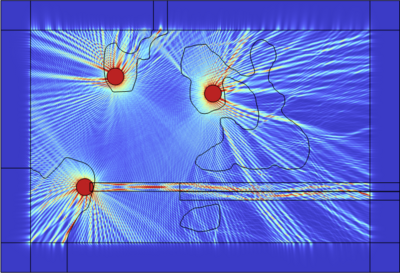
Biophotons are ultraweak photons emitted by living cells as a byproduct of metabolic activity [1]. Elevated biophoton production in neurons has led to speculation that photons may play a role in intercellular communication [2-3]. For such signaling to occur, photons must be able to ... Read More

Macroscopic modeling of fluid flow and thermal diffusion in porous media relies on the accurate estimation of equivalent properties such as permeability and effective thermal conductivity. These properties are strongly influenced by the complex 3D topology of the microstructure and the ... Read More

The performance and rechargeability of zinc-air batteries are found to be significantly influenced by the microstructure of the zinc anode [1]. It is evident that features such as porosity, connectivity, and spatial distribution of solid phases exert a considerable influence on ionic ... Read More

Proton and Radiotherapy are leading particle therapy tactics used to combat chronic and malignant cancers [1]. Ultra-high dose rate (UHDR) flash therapy is a new treatment modality that is currently being studied by several groups. The treatment delivers high doses in a short period of ... Read More

Modelling solid oxide fuel cells(SOFCS), involves these complex physicochemical interactions: electrochemical reactions, fluid flow, heat transfer, and charge carrier transport inside porous microstructures. The existing models often do simplify the electrodes structures and decouple the ... Read More

Thermal flow meters represent a vast range of sensors for applications in oil and gas, sustainable energy, food and medical care markets, where precise control of the mass flow is required. As a part of the MEMS production process, testing is performed after product assembly. Due to high ... Read More

Among the different uses of primary energy in the industrial and residential sectors, refrigeration and air conditioning systems consume around 17% of the electricity produced worldwide [1], reaching dissipated powers of approximately 2000 TWh [2]. These devices are based on the vapor ... Read More

Perovskite solar cells (PSCs) are a promising photovoltaic technology but their performance remains limited by incomplete absorption of incident photons, primarily due to reflection at the transparent front electrode [1]. To address this issue, interface engineering with graphene-based ... Read More


