
See How Modeling and Simulation Is Used Across Industries
Multiphysics modeling and simulation drives innovation across industries and academia — as is evidenced by the many uses showcased in the technical papers and posters presented by engineers, researchers, and scientists at the COMSOL Conference each year.
Draw inspiration from the recent proceedings collected below, or, to find a specific presentation or filter by application area or conference year/location, use the Quick Search tool.
View the COMSOL Conference 2025 Collection
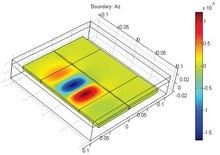
A 3D model of a magnetic rotor both rotating and translationally moving at high-speed over a conductive guideway is modeled in steady-state using the convective A*-Φ formulation. The presence of the magnetic rotor (source field) is incorporated into the formulation via the boundary ... Read More
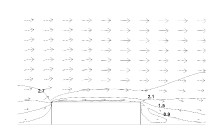
Heat and mass transfer involved in drying is studied by using COMSOL 3.4. The effect of air temperature on the performance of the drying process applied to fresh food slices is scrutinized. COMSOL’s flexible formulation is exploited by using special drying kinetics for the substrate, ... Read More

In karst terrain, the interaction between the fast moving, highly turbulent conduit flow and the slow moving, laminar flow through porous media is largely unknown. Yet the dual nature of the karst system impacts the residence time of solutes in the groundwater supplies of over 25% of the ... Read More
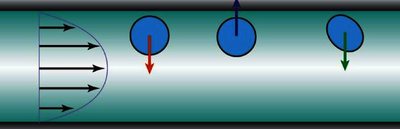
Bubbles trajectories in microchannel laminar flow can be controlled with fluidic forces. This effect finds applications in the field of electrochemical engineering. In this study, we investigate the bubble motion at moderate Reynolds number (1 Read More
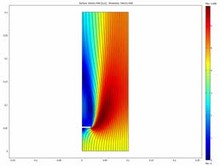
The collection efficiency of aerosol particles on a ribbon in a turbulent flow is analyzed using COMSOL Multiphysics. The flow field is solved using Chemical Engineering module and particle tracing plots are obtained using equations of motion including Khan and Richardson drag force. A ... Read More
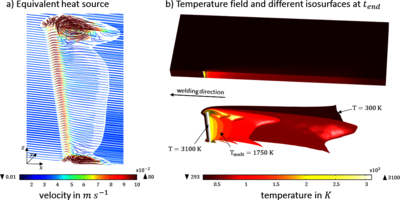
The Finite Element Method (FEM) has become an established numerical tool used for different academic and industrial purposes. It allows the prediction of weld pool geometry, thermal cycle, final distortion and residual stress field during and after fusion welding. The capability of the ... Read More

Gaseous exhaust of different industries contains dust particles of different chemical precipitates that are harmful for the environment. Electrostatic Precipitators are very often used in industries like power plant to filter their gaseous exhaust and to prevent the atmosphere to being ... Read More
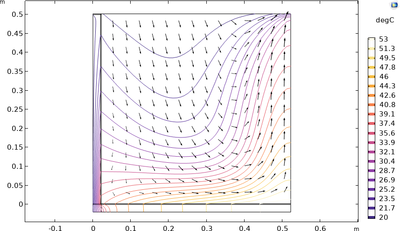
In view of an energy system based on fluctuating renewable sources, the use of thermal energy storage (TES) systems plays a crucial role. In particular, large-scale underground water-based TES represent a promising solution as demonstrated by a number of cases currently being established ... Read More
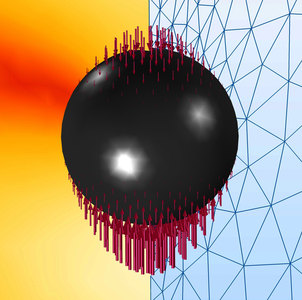
Introduction: Acoustic levitators are used to levitate small samples (ca. 0.01 - 6 mm) at a stable position in a gas or liquid environment. Acoustic levitators were first developed und used for experiments in space (1970s, by NASA / ESA), the application later became terrestrial (1990s). ... Read More

Temperature of sesame paste flowing through a screw-expeller was studied. Screw-expeller used consisted of a rotating tapered screw and a constant-inner-diameter stationary barrel. Since screw diameter was much larger than the sesame paste thickness, an unwrapped model was employed with ... Read More


