
All posts by Bjorn Sjodin
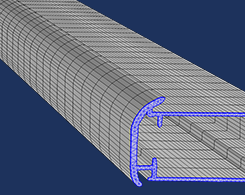
How to Use an Add-In to Convert Images to Geometry Models
Did you know that you can draw an image, import it into COMSOL Multiphysics®, and the Image to Curve add-in will create an interpolation curve from a contour plot of the image?
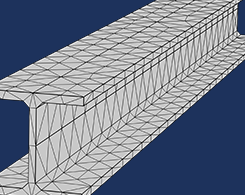
How to Customize Your Model Builder Workflow Using Add-Ins
By creating and using add-ins, as well as building your own add-in libraries or using the built-in library in COMSOL Multiphysics®, you can customize and streamline your Model Builder workflow.

Recursion and Recursively Defined Geometry Objects
Broadband antennas and metamaterials are 2 fields of engineering in which recursively defined geometry objects are a useful modeling capability. Writing methods makes this task easier.
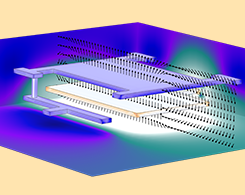
How to Create Electrostatics Models with Wires, Surfaces, and Solids
Here’s a guide to building models that combine wires, surfaces, and solids using the electrostatics features based on the boundary element method that are available with the AC/DC Module.
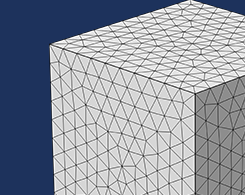
How to Generate Randomized Inhomogeneous Material Data
Did you know there is a way to take randomized material data with specified statistical properties determined by a spectral density distribution and use it to generate and visualize results?
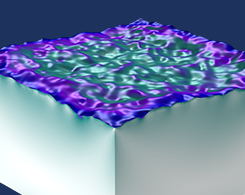
How to Generate Random Surfaces in COMSOL Multiphysics®
Get a comprehensive background and step-by-step guide to generating random surfaces in COMSOL Multiphysics®, such as rough surfaces and microstructures.
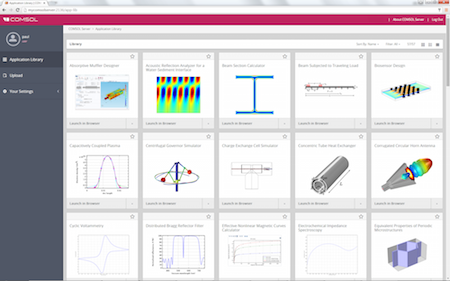
COMSOL Server™ Version 5.2 Supports Faster, Focused Apps
As of version 5.2 of the COMSOL® software, there are major improvements to COMSOL Server™: launch apps much faster and configure the browser to run only one dedicated app.
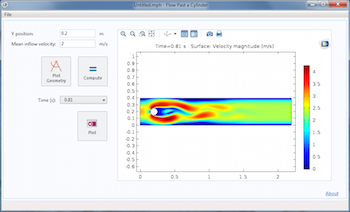
Use Editor Tools to Simplify Your App-Building Process
Get a demonstration of how to create an app using a simple simulation example, as well as how to perform common user interface creation tasks more easily in the Application Builder.


