
All posts by Walter Frei
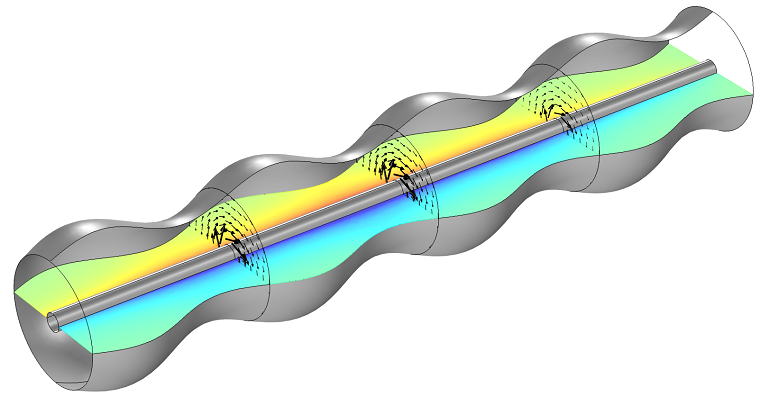
Computing the Impedance of a Corrugated Waveguide
Did you know that you can compute the effective impedance for waveguides with nonuniform cross sections (such as corrugated waveguides) in COMSOL Multiphysics®? We demonstrate how here >>

Optimizing Heater Power for Thermal Processing
We demonstrate a useful approach for process control modeling and optimization using COMSOL Multiphysics® and the Optimization Module.

Implementing a Simple Temperature Controller with a Component Coupling
Learn how to implement a simple temperature controller (a feedback loop) in a thermal process simulation in COMSOL Multiphysics®. We demonstrate with a silicon wafer example >>

Computing and Controlling the Volume of a Cavity
See a method for modeling enclosed volumes containing incompressible fluids (under the additional assumption that the momentum and energy transfer via the fluid is small) in COMSOL Multiphysics®.
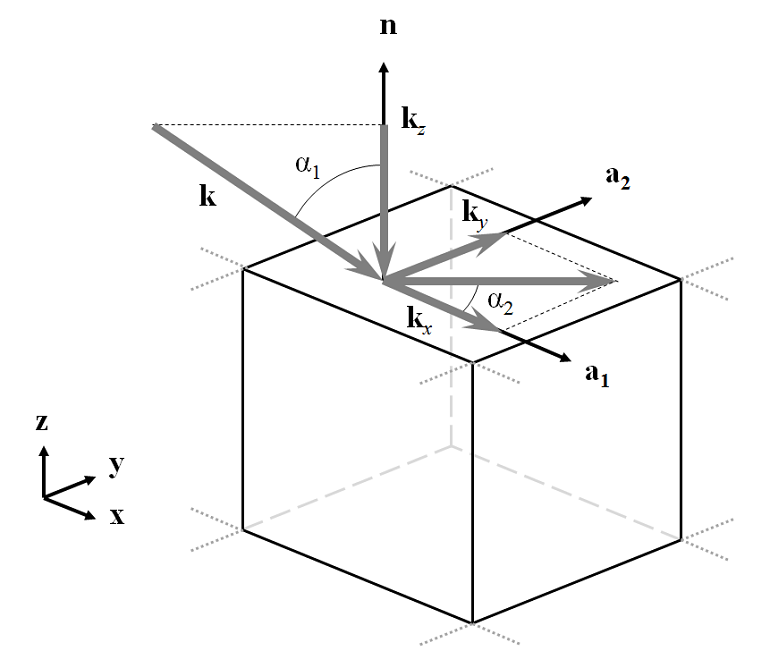
Modeling Electromagnetic Waves and Periodic Structures
Oftentimes, it is of interest to model an EM wave (light, microwaves) incident upon periodic structures, such as diffraction gratings, metamaterials, and frequency selective surfaces.
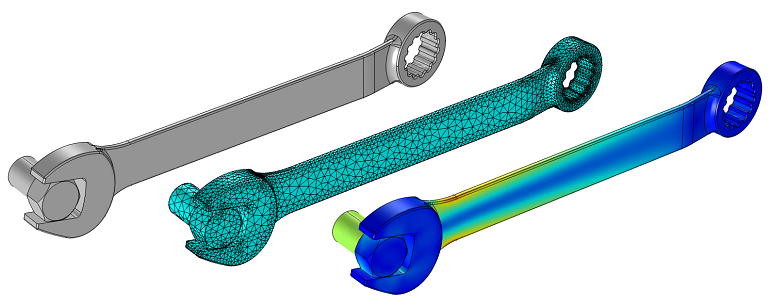
Parameterizing the Dimensions of Imported CAD Files
Learn how to modify an imported geometry with some clever usage of the Deformed Geometry interface in COMSOL Multiphysics®.

Using Adaptive Meshing for Local Solution Improvement
One of the perennial questions in finite element modeling is how to choose a mesh. We want a fine enough mesh to give accurate answers, but not too fine, as that would lead to an impractical solution time. As we’ve discussed previously, adaptive mesh refinement lets the software improve the mesh, and by default it will minimize the overall error in the model. However, we often are only interested in accurate results over some subset of the entire model space. […]
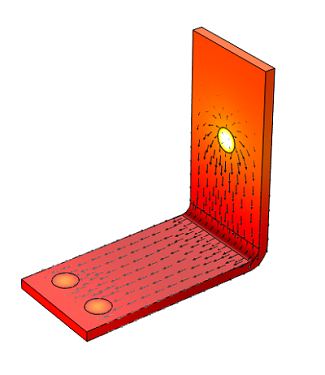
Learning to Solve Multiphysics Problems Effectively
One of the questions we get asked often is how to learn to solve multiphysics problems effectively. Over the last several weeks, I’ve been writing a series of blog posts addressing the core functionality of the COMSOL Multiphysics software. These posts are designed to give you an understanding of the key concepts behind developing accurate multiphysics models efficiently. Today, I’ll review the series as a whole.
Improving Convergence of Multiphysics Problems
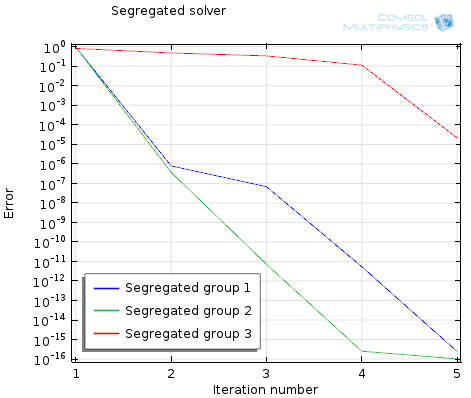
In our previous blog entry, we introduced the Fully Coupled and the Segregated algorithms used for solving steady-state multiphysics problems in COMSOL. Here, we will examine techniques for accelerating the convergence of these two methods.
Solving Multiphysics Problems
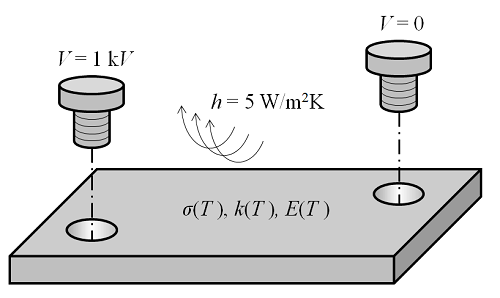
Here we introduce the two classes of algorithms used to solve multiphysics finite element problems in COMSOL Multiphysics. So far, we’ve learned how to mesh and solve linear and nonlinear single-physics finite element problems, but have not yet considered what happens when there are multiple different interdependent physics being solved within the same domain.

Thermal Modeling of Surfaces with Wavelength-Dependent Emissivity
Whenever we are solving a thermal problem where radiation is significant, we need to know the emissivities of all of our surfaces. Emissivity is a measure of the ability of a surface to emit energy by radiation, and it can depend strongly upon the wavelength of the radiation. This is very relevant for thermal problems where the temperature variation is large or when there is exposure to a high-temperature source of radiation such as the sun. In this post on […]
Meshing Considerations for Nonlinear Static Finite Element Problems
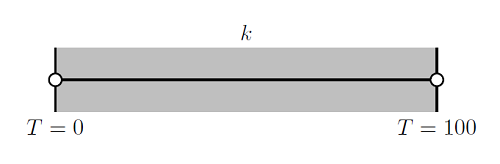
As part of our solver blog series we have discussed solving nonlinear static finite element problems, load ramping for improving convergence of nonlinear problems, and nonlinearity ramping for improving convergence of nonlinear problems. We have also introduced meshing considerations for linear static problems, as well as how to identify singularities and what to do about them when meshing. Building on these topics, we will now address how to prepare your mesh for efficiently solving nonlinear finite element problems.


