
Structural & Acoustics Blog Posts
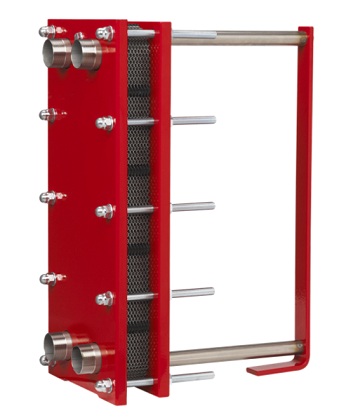
Simulating Plate Heat Exchangers
It’s not always obvious what a major role temperature control plays in modern technology, as the interchange happens in the background. Plate heat exchangers, made up of successions of metal plates and various coiled pipes, regulate and manipulate temperature, and they get the job done quickly — thanks to an active surface that is large with respect to their volume.

A Multidisciplinary Approach to Electronics Design
Sharp is a powerhouse in the electronics industry, involved in televisions, liquid crystal displays, LED lighting systems, solar cells, multi-function business machines, and many other electronics-based products. One of a global network of Sharp R&D laboratories, Sharp Laboratories of Europe (located in Oxford, England), has been busy researching and developing LED lighting, display technology, microfluidic lab-on-a-chip, and energy systems for incorporation into Sharp’s products.
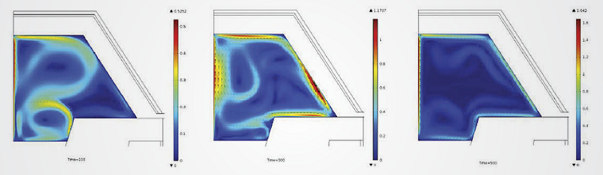
Thermal Analysis Measures Blistering Heat
If you roast a turkey for dinner and you need to check the temperature, the technology exists to find it. But what happens if the temperature is so hot that a consumer-grade thermometer, or any man-made device, really, would instantly melt and be destroyed? This might not be a common occurrence in your kitchen, but it is a real concern in blast furnaces, where temperatures can reach close to 1,500°C. Simply guessing is far from safe. Luckily, by simulating with […]

Modeling a Helicopter Swashplate Mechanism
A swashplate mechanism, used in a helicopter to control the pitch of the rotor blades, can be easily simulated using the Multibody Dynamics Module available in COMSOL Multiphysics. This module enables simulation of an assembly of flexible and rigid bodies, together with physical phenomena from fluid, heat, and electrical applications, among others. Here, we will show you a model to convey how a swashplate mechanism works and at the same time analyze the stresses and deformation in the flexible rotor […]
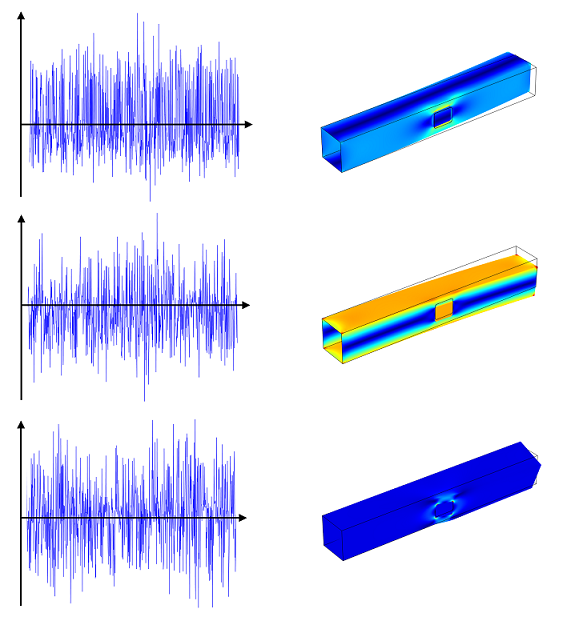
Random Load Fatigue
In many applications, loads applied to structures are random in nature. The sampling results of the structural response will differ depending on the data collection time. Although the stress experienced is not always high, the repeated loading and unloading can lead to fatigue. The engineering challenges in these types of applications are defining the stress response to the random load history in the critical points, and predicting fatigue damage. This is simulated with the Cumulative Damage feature in the Fatigue […]
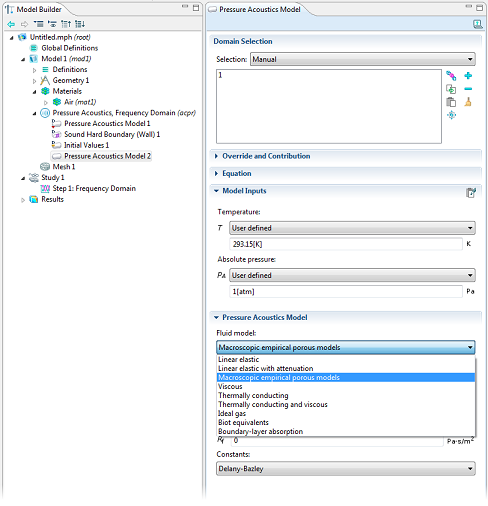
Modeling Acoustic Damping Processes
Mufflers are often located in exhaust systems or on heat, ventilation, and air conditioning (HVAC) systems, where their key functionality is to dampen the noise that is emitted from the system. A correct description of the acoustic damping (absorption and attenuation) processes in the muffler is important when designing and modeling these systems.
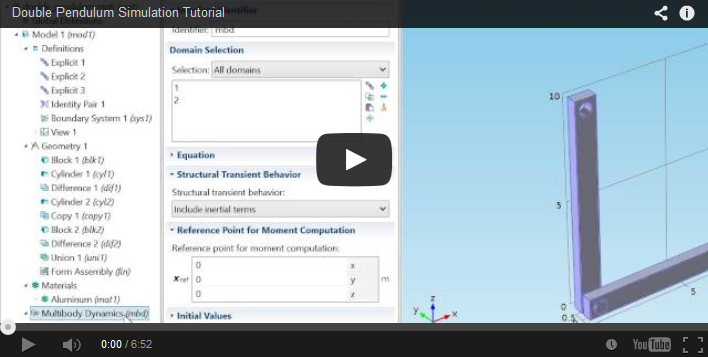
Double Pendulum Simulation Tutorial
Dynamic simulation of a double pendulum system can easily be performed using the Multibody Dynamics Module available in COMSOL Multiphysics. This module enables the mechanical simulations of assemblies of flexible and rigid bodies, often coupled with other phenomena such as from heat, electrical, and others.
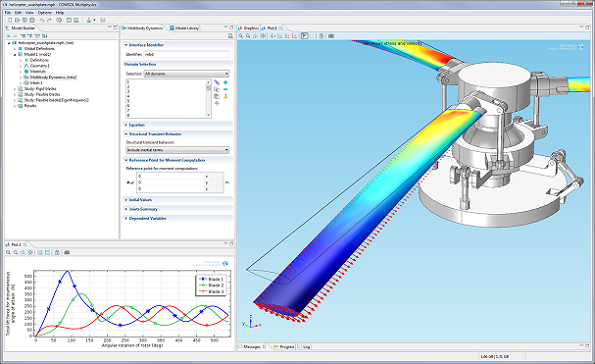
Simulate Mechanical Systems with the Multibody Dynamics Module
The new Multibody Dynamics Module provides engineers with an advanced set of tools to design and optimize mechanical systems to reduce product development costs. This module enables simulation of an assembly of flexible and rigid bodies, along with physical phenomena like structural, heat, electrical, and others. One of the key capabilities included in this module is an easier and faster way of building connections between different bodies using various types of predefined Joints. The objective of multibody analysis is to […]


