
Blog Posts Tagged Electrochemistry Module

Modeling Nonidealities in Electrochemical Impedance Spectroscopy
In this blog post, we explore how to model nonidealities in electrochemical impedance spectroscopy (EIS), often used in the study of electrochemical systems.
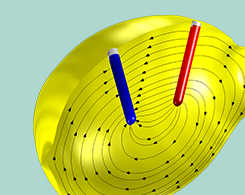
Approaching an Electrochemical Model from Scratch: Lemon Battery
The lemon battery: A high school chemistry experiment, and a great example when learning the general process for how to set up electrochemistry and battery models from scratch.

Electrode Balancing of a Lithium-Ion Battery with COMSOL®
Electrode balancing is an important consideration for battery cell engineers. Get an overview and mathematical framework of this phenomenon and learn how to analyze it in a lithium-ion battery.
Taking a Look at Electrochemical Treatment for Tumors via Modeling
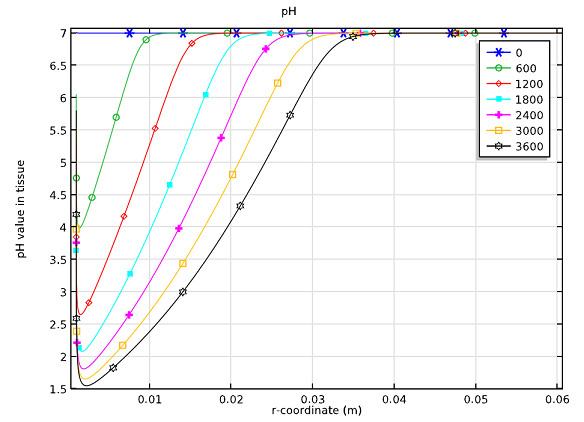
EChT offers many benefits for the treatment and removal of cancerous tumors, so why isn’t it a widely accepted method yet? First, we need a better understanding of tumor destruction mechanisms.
Digital Twins and Model-Based Battery Design
By combining high-fidelity multiphysics models with lightweight models and measured data, engineers can create digital twins to understand, predict, optimize, and control real-world systems.
How to Model Ion-Exchange Membranes and Donnan Potentials
Get an introduction to the theory behind the Nernst-Planck-Poisson equations, Donnan potentials, and how to model ion-exchange membranes in batteries and fuel cells.
Analyzing Cyclic Voltammetry at a Microdisk Electrode with Simulation
What is cyclic voltammetry, and why is it important in the design of microdisk electrodes? We discuss all of this and more in this electrochemical engineering blog post.
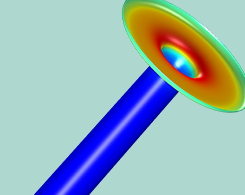
Pulsed Electrochemical Machining: A Multiphysics Model
Industries that manufacture metal parts are concerned with precision machining and quality of surface finish. Optimizing the pulsed electrochemical machining process can improve these factors.
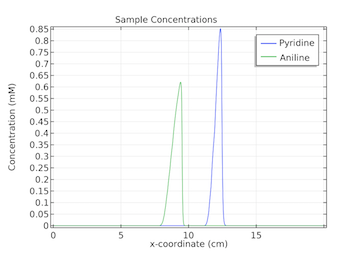
Studying Zone Electrophoresis with COMSOL Multiphysics®
Zone electrophoresis enables scientists to study nucleic acids, biopolymers, and proteins in a wide range of areas. COMSOL Multiphysics® can be used to take a closer look at this process.
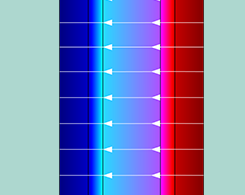
Analyzing Reverse Electrodialysis Units with Multiphysics Modeling
Pass the salt…for a clean energy solution. Salinity gradient power relies on osmosis between fresh- and saltwater to generate power, and simulation can help analyze and optimize such systems.
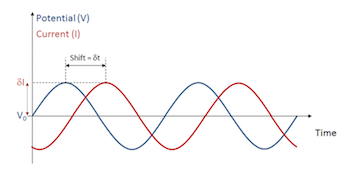
Electrochemical Impedance Spectroscopy: Experiment, Model, and App
Experience the phenomenon of electrochemical impedance spectroscopy (EIS) in 3 ways: experiment, model, and simulation application.
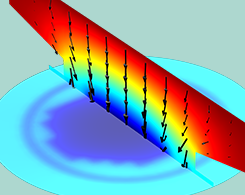
How to Model Electrochemical Resistance and Capacitance
Get an overview of the theory and modeling considerations for resistive and capacitive effects, which are fundamental to the understanding of electrochemical systems.
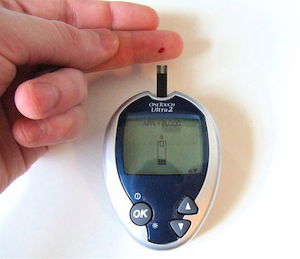
Modeling Electrochemistry for Managing Diabetes
An estimated 350 million people worldwide are living with diabetes. By modeling electrochemical processes, biomedical engineers can analyze and optimize the glucose sensing process.
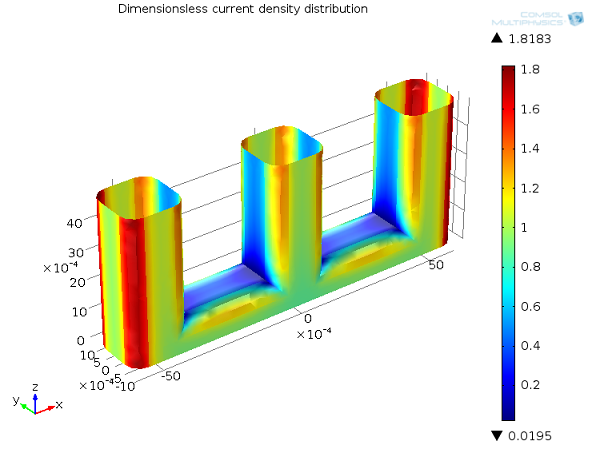
Which Current Distribution Interface Do I Use?
See the different current distributions with a wire electrode example to help you choose between the current distribution interfaces in COMSOL Multiphysics® for your electrochemical simulations.
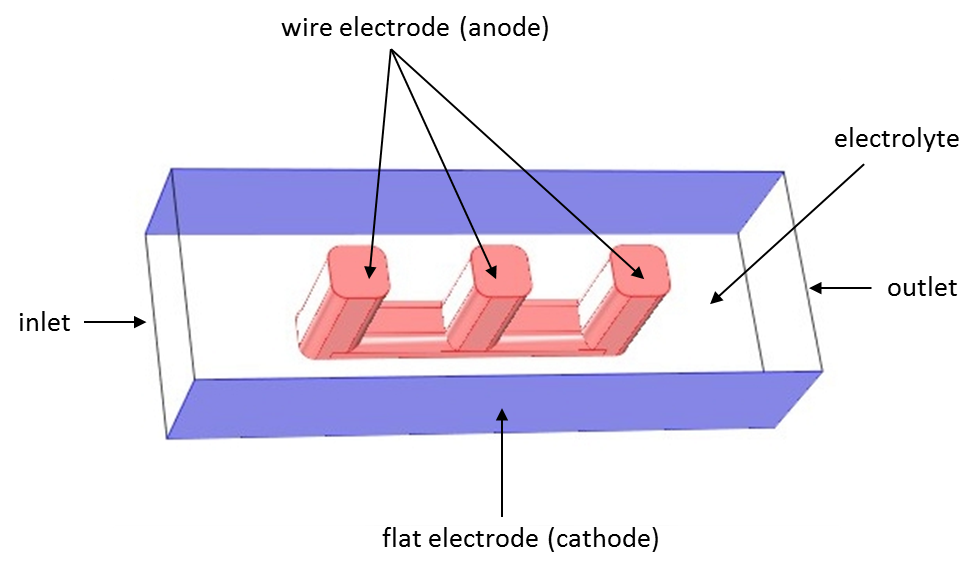
Theory of Current Distribution
Here, we discuss one of the building blocks that make up hybrid parallel computing, namely shared memory computing, as well as when and how to use shared memory with COMSOL Multiphysics®.
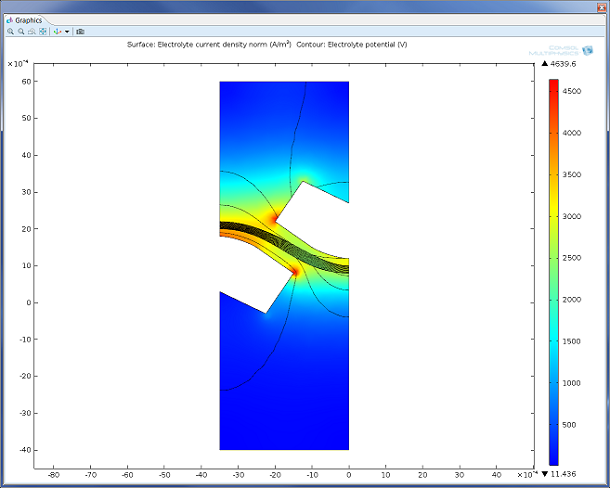
Electrochemistry, from Electroanalysis to Industrial Electrolysis
My colleague, Edmund Dickinson, recently blogged about cyclic voltammetry, and how this can be modeled. It was a fantastic blog entry, as it really described the application, and how to implement such models in COMSOL Multiphysics. While Edmund has a background in electroanalysis, where cyclic voltammetry, potentiometry, and electrochemical impedance are important tools, I had a different but similar life before COMSOL, working within industrial electrolysis. For both of us, the new Electrochemistry Module would have been the perfect tool […]
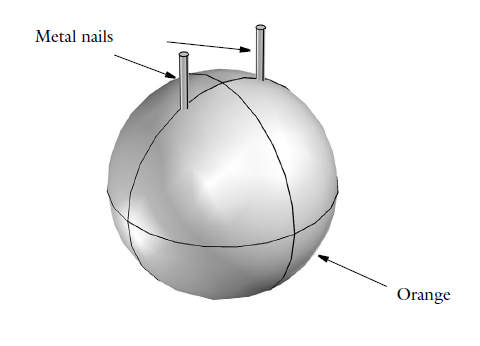
Learn How to Model Electrochemistry with an Orange Battery Tutorial
Did your chemistry teacher use an orange or lemon to demonstrate the concept of a battery, back in the day? You might remember how she magically produced electricity by sticking a couple of metal nails into the citrus fruit, as the whole class watched in awe. What if we now used simulation tools to demonstrate how an orange battery works, and then use that as an intro to electrochemistry modeling?
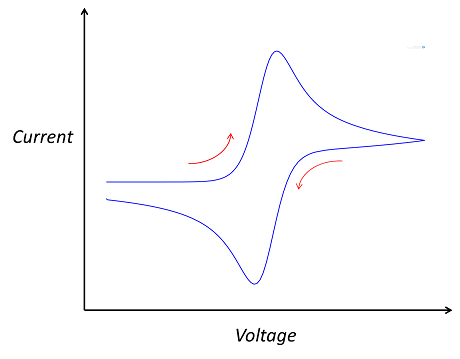
Modeling Electroanalysis: Cyclic Voltammetry
If you’re not an electrochemist, chances are you’ve never come across cyclic voltammetry. But look at any electrochemical journal, conference proceedings, or company website for manufacturers of electrochemical sensors. Somewhere near the front, you’ll see a distinctive “double-peaked” graph.
Why Model Electrochemical Applications?
It’s always been hard to place the field of electrochemistry into a more traditional engineering field. Departments and institutions that focus on electrochemical applications can be found within the faculties of Chemical Engineering, Physics, Materials Science, Physical Chemistry, and even Civil Engineering and Electrical Engineering. I believe this is because electrochemistry is heavily involved in applications that are quite varied — and in some ways quite new. Electrochemical applications need to be studied before they can be understood and optimized, […]


