
Blog Posts Tagged Structural Mechanics Module
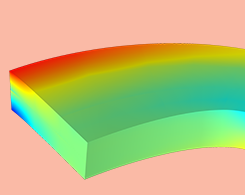
What Is the Difference Between Plane Stress and Plane Strain?
We go over the formulations and constitutive models that you can use to study plane stress, plane strain, and generalized plane strain in your solid mechanics problems.

Modeling Thermomechanical Fatigue in COMSOL Multiphysics®
You can analyze thermomechanical fatigue in COMSOL Multiphysics® using experimental data from fatigue testing and material parameters from literature. A guest blogger demonstrates…
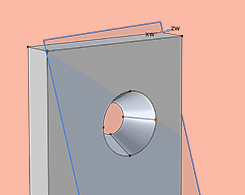
Modeling Parts Without Constraints in Your Structural Analyses
When building a solid mechanics model, there may be parts with prescribed loads but no constraints that can be reasonably applied. Learn different approaches and considerations for this scenario.

The North Pole Models Product Distribution Challenges for the Holidays
Today, a guest blogger from the North Pole discusses using simulation to find out if his boss will be able to fit down all of the chimneys this holiday season.
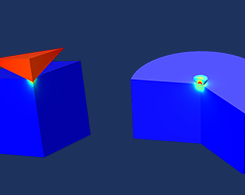
Exploring the Ambiguity of Hardness Numbers with COMSOL®
To help customers easily obtain stress-strain curves from indentation test data, this guest blogger turned to simulation applications and COMSOL Compiler™ — and created a brand new product.
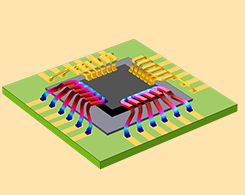
Course: Modeling Joule Heating with Thermal Expansion
Get an overview of the course on Joule heating and thermal expansion. Plus, access supporting material.
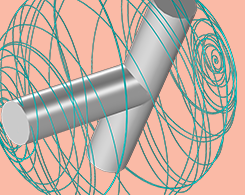
Why Do Tennis Rackets Tumble? The Dzhanibekov Effect Explained…
If you toss a cellphone, tennis racket, wingnut, cereal box, or any object with 3 axes of rotation in the air, it will demonstrate this interesting and unusual effect…

How Do Bicycle Pedals Stay On?
Ever wonder why the left pedal of a bike has left-handed threads and the right pedal has right-handed threads, yet the pedals stay on when riding?
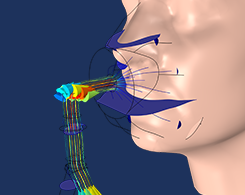
Optimizing an NIV Mask Design with Multiphysics Simulation
NIV masks offer a form of noninvasive monitoring and ventilation for COVID-19 patients, which lessens the need for ventilators and other mechanical respirators.
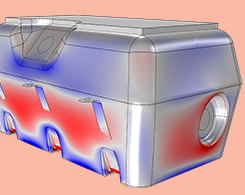
What Is the Best Way to Analyze Fuel Tank Vibration?
In a traditional approach for modeling a fuel tank, the fluid mass is dispersed through the tank’s wetted surface. A multiphysics method specifically models the acoustic pressure in the fluid.
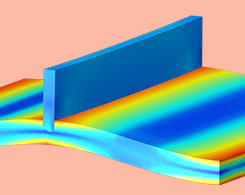
How to Predict the Fatigue Life of Welds
After an introduction to the welding process and weld geometries, we compare the nominal stress method, notch stress method, and hot spot stress methods for predicting the fatigue life of welds.
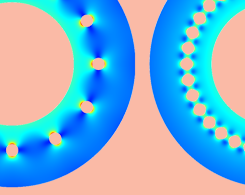
Making Structures Stronger by Removing Material
To make a structure stronger, sometimes you have to take material away instead of adding more. We go over concepts like fillets, load paths, and displacement control to demonstrate this concept.
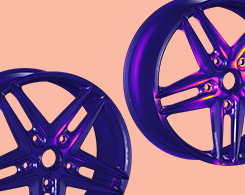
Optimizing Composite Wheel Rim Designs with COMSOL Multiphysics®
Composite wheel rims are stronger and lighter than their conventional steel and aluminum counterparts. Plus, they offer better acceleration, braking, and cornering on the road.
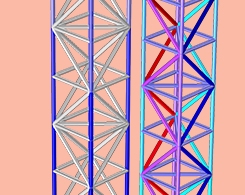
How to Perform a Sensitivity Analysis in COMSOL Multiphysics®
How do the parameters of your design affect its performance? Understanding this relationship is a valuable part of the design process. By performing a sensitivity analysis, you can do just that.
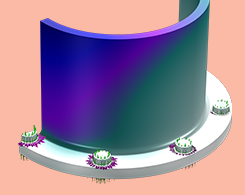
How to Use the Load Plots in Structural Analyses
You can use the load plots available in the COMSOL® software to get the best possible visualization of the loads acting on your structural mechanics models in various situations.

Evaluating Stress and Thermal Expansion in a Portal Crane
As extreme heat waves increase in frequency, it is important to consider thermal expansion when designing bridges. With COMSOL Multiphysics®, you can.
Optimizing Lubricated Systems with Numerical Simulation
Experts at SIMTEC designed a lubricated mechanical contact using numerical modeling and built an application for optimizing the use of lubrication in rolling and sliding bearings.
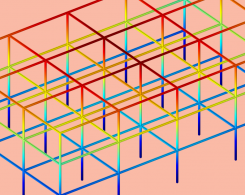
Predicting the Unpredictable: Simulating Earthquake Mechanics
In case of an earthquake, people regularly practice hiding under their desks. Another way to prepare? Using response spectrum analysis to determine the structural stability of a building subject to this type of seismic event.
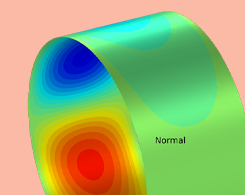
Analyzing Vibrations in Rotating Machinery Due to Bearing Misalignment
You can use structural analysis to compare the angular velocity, axial displacement, and bearing reaction moment on the shaft for rotating machinery with aligned and misaligned bearings.
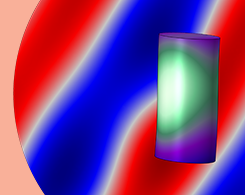
Introduction to Modeling Acoustic-Structure Interactions in COMSOL®
To model an ASI problem, you need to account for the behavior of elastic waves in solids, pressure waves in fluids, and their interaction. The COMSOL® software includes interfaces for doing so.
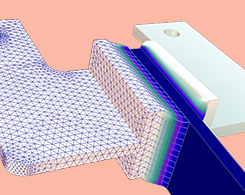
Frequency Response of Mechanical Systems
Read this blog post for a detailed look at damped mechanical systems, a guide to setting up frequency-response analyses in COMSOL®, and a discussion of how to interpret your results.
How to Use Lumped Elements to Model a Mechanical System
Modeling a large, complex system? You may want to simplify configurations in the model setup to better understand it, but how? Enter the Lumped Mechanical System interface in COMSOL Multiphysics.
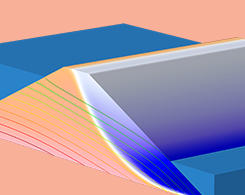
Analyzing Slope Stability Through the Shear Strength Reduction Method
Dams that are poorly designed or constructed are likely to fail. However, geotechnical engineers can account for the stability and reliability of a dam long before the structure is even built.
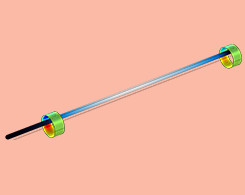
Evaluating the Impact of Bearing Misalignment on Rotor Vibration
Bearings are found in devices ranging from MEMS and turbines to electric motors and even ships. How we account for a bearing’s misalignment (and the resulting rotor vibration) depends on its use.


