
Blog Posts Tagged Structural Mechanics Module
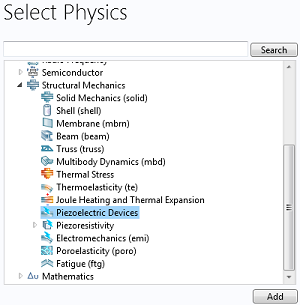
New Piezoelectric Modeling Interface in COMSOL 5.0
As of version 5.0 of COMSOL Multiphysics®, there is a new interface for simulating piezoelectric devices; it has predefined features that make it easy to set up and run a piezoelectric model.
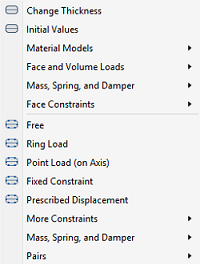
Membrane Interface Improvements in Version 5.0
As of version 5.0 of COMSOL Multiphysics®, the Membrane interface includes a restructured menu, new feature nodes, improvements to the Linear Elastic Material model, and more.
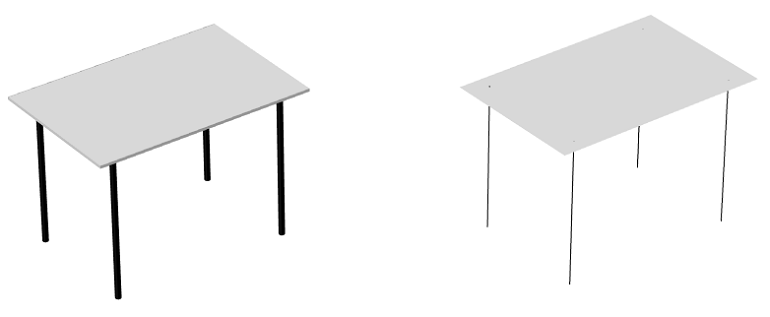
Coupling Structural Mechanics Interfaces
The Structural Mechanics Module consists of specialized interfaces: Solid Mechanics; Shell, Plate, and Membrane for modeling thin structures; and Beam and Truss for modeling slender structures.
Video Tutorial: Introduction to Modeling Structural Mechanics
Learn the fundamentals of simulating structural mechanics problems in the COMSOL® software: Get a quick overview in this blog post, with an embedded video tutorial included.
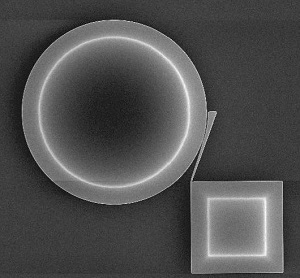
Using Effective Mass for Thermomechanical Calibration
Researchers from the University of Alberta use simulation for an efficient and noninvasive way to achieve thermomechanical calibration. Learn more about their research and its applications.
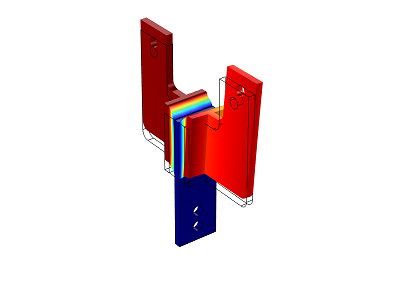
Reducing Vibrations with Viscoelastic Structural Dampers
Whether caused by an earthquake or everyday wind, when a structure undergoes vibrations, its components experience stresses and strains. Viscoelastic structural dampers can help >>
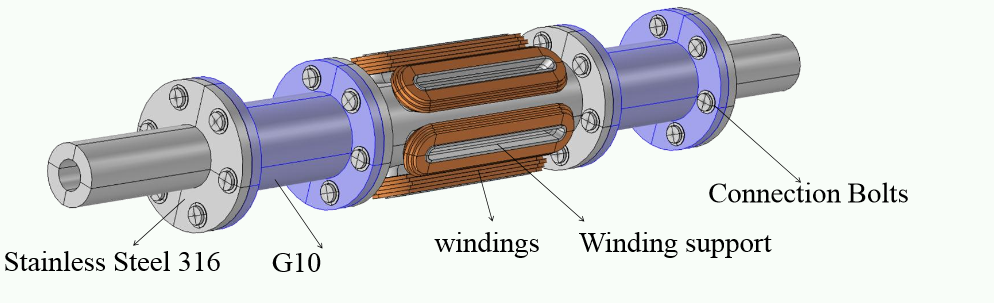
Designing Fully Superconducting Rotating Machines
Researchers from the Department of Mechanical Engineering at the University of Houston used simulation to investigate the stress and heat distribution in superconducting rotating machines >>
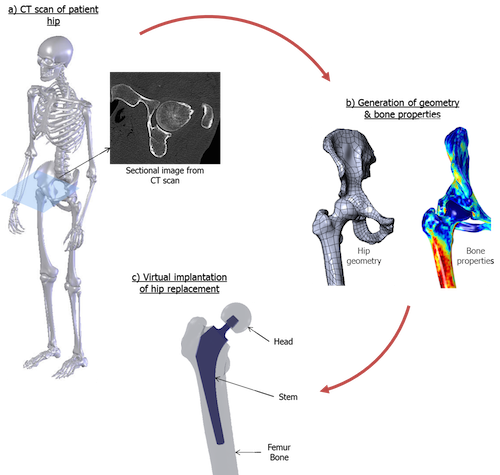
Stress and Fatigue in Modular Implants Used in Hip Joints
A crucial part of the design process for modular implants, such as replacement joints, is to study how the modular combination of parts will behave under dynamic loads and stresses.
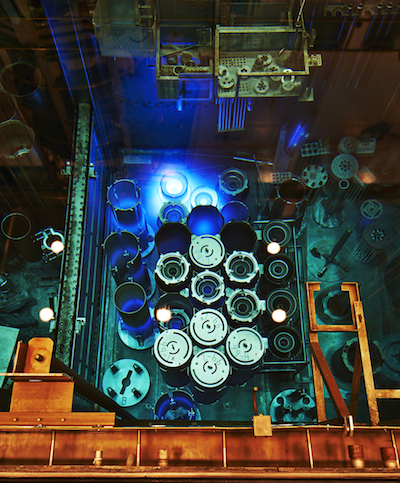
Converting the High Flux Isotope Reactor to LEU Fuel
Learn about an initiative that requires nuclear research reactors currently using highly enriched uranium fuel to be converted to low enriched uranium fuel — and how simulation can help.
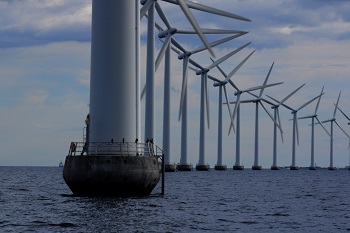
Seas of Change for Wind Turbines
One benefit of placing wind turbines offshore? They can’t be heard! Even better? High winds occur with more regularity offshore, making energy production more effective!
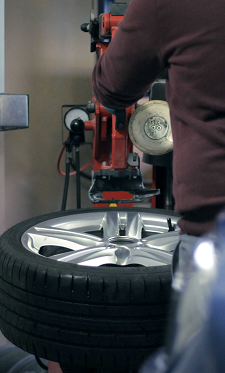
Air Pressure Sensor Performance Relies on a Solid Design
Ever wonder how your car can tell when there’s low pressure in a tire? Sensors are placed at the bottom of each tire hub and measure air pressure automatically while the car is in motion.

Improving Your Golf Swing with a Multibody Analysis
The outcome of a golf stroke is determined by the movement of the club head just prior to impact with the ball. Therefore, one theoretically could improve their golf swing via multibody analysis.
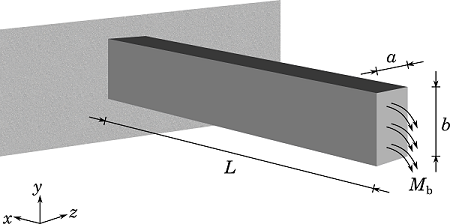
How to Model Residual Stresses Using COMSOL Multiphysics
Learn how to compute the residual stresses in your structural mechanics models. To demonstrate, we use the example of a deep metal drawing process. Read on…
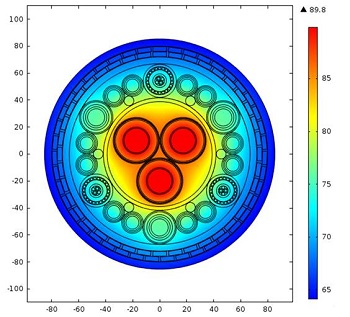
Cable Simulations Spark New Developments at Prysmian Group
The Prysmian Group, a leader in cable systems for many different industries, are using simulation to improve their development process, save resources, and optimize their cable designs.
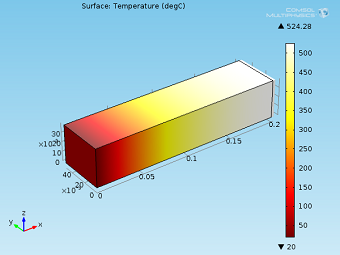
Heat Transfer in Deformed Solids
Learn how to model the physics that account for thermoelastic effects in immobile solids when coupling heat transfer and solid mechanics. Follow-up to an earlier post on conjugate heat transfer.
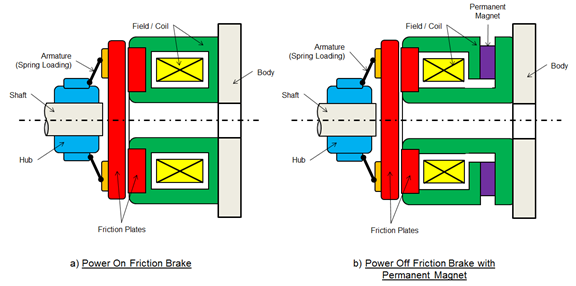
The Electromechanical Response of a Brake Design
A guest blogger from Continuum Blue demonstrates what the consultancy can do for clients in the electromechanical brake field by modeling the electromechanical response of a brake design.
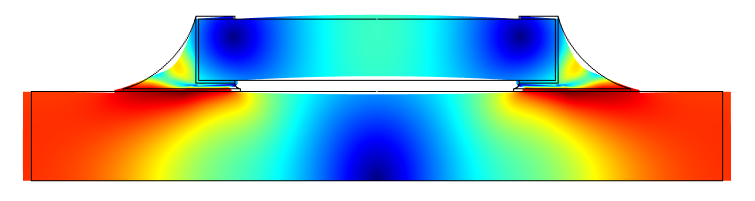
Modeling Thermal Fatigue in Nonlinear Materials
2 challenges when simulating fatigue in nonlinear materials: 1.) Correctly representing the material behavior and 2.) finding a fatigue model that captures the life-controlling mechanism.
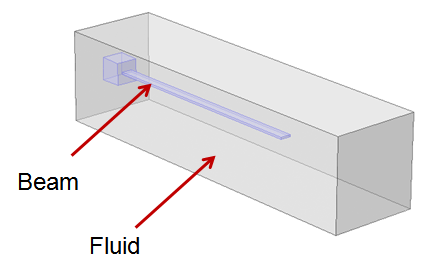
Natural Frequencies of Immersed Beams
A guest blogger from Veryst Engineering demonstrates the modeling of a cantilever beam immersed in a fluid to study its natural frequencies. Read it here >>

Modeling the Hydrostatic Pressure of a Fluid in a Deformable Container
Picture a water balloon being compressed at the center. As you squeeze the balloon, the locations of the highest point and depth of fluid change, altering the hydrostatic pressure distribution.
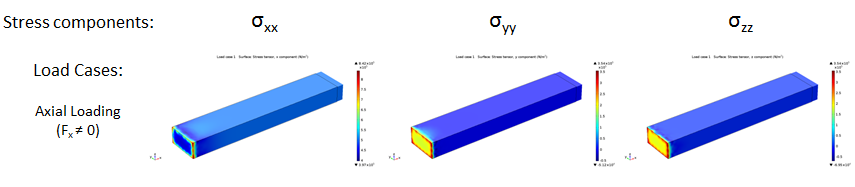
Computing Stiffness of Linear Elastic Structures: Part 2
Learn how to compute the stiffness of linear elastic structures in 2D and 3D with COMSOL Multiphysics® by implementing the Poisson effect. Part 2 of a 2-part series on computing stiffnesses.
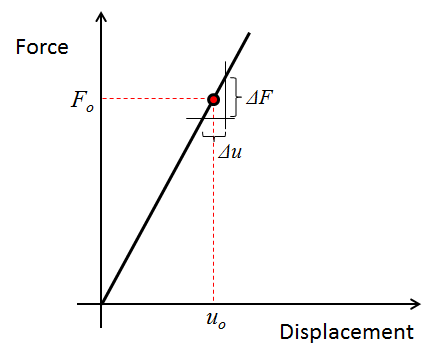
Computing Stiffness of Linear Elastic Structures: Part 1
Learn how to compute the stiffness of linear elastic structures in 1D and 2D by implementing the Timoshenko beam theory in COMSOL Multiphysics®. Part 1 of a 2-part series on computing stiffness.
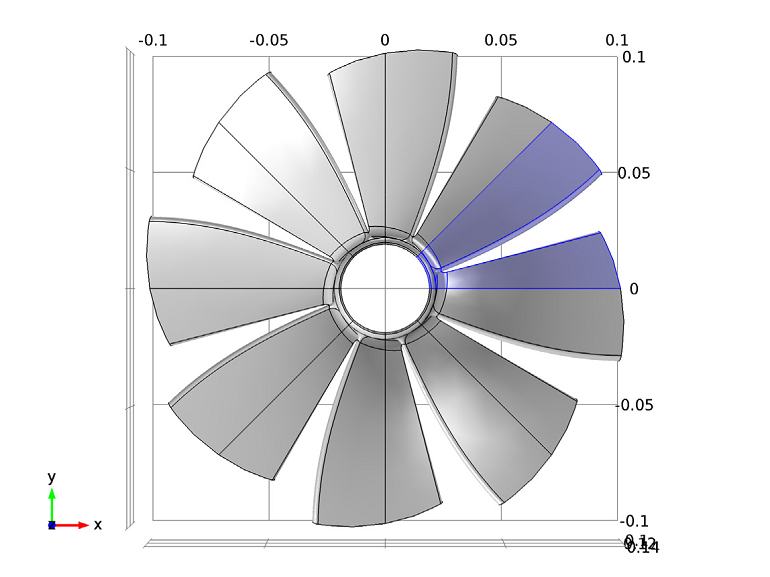
Using Cyclic Symmetry to Reduce Computation Time
Cyclic symmetry can be more complex for rotationally geometries than it can for axially symmetric geometries. Learn how to implement this feature to cut down on computational memory.
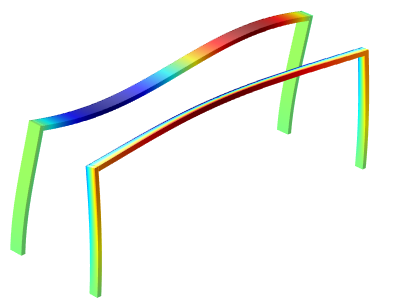
Buckling, When Structures Suddenly Collapse
The easiest way to approach a buckling problem — like a bridge collapse or crushed soda can — is by performing a linearized buckling analysis. See how to do so in COMSOL Multiphysics® here >>
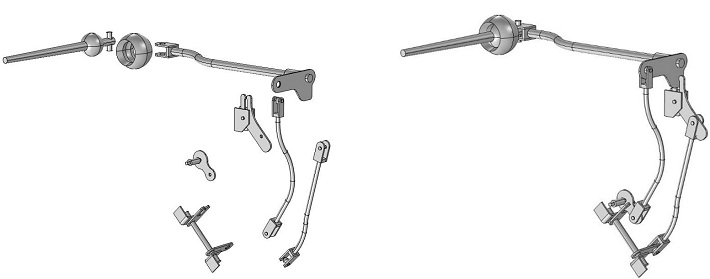
Selecting First Gear: Investigating a Classic Car Gearshift Mechanism
Follow along as we perform a multibody dynamics analysis of the gearshift mechanism in a classic car. Read to hit the road?


