
Peter Ciesielski, NREL, CO, USA
Pyrolysis is a pre-commercial thermochemical process that converts renewable, plant-based materials such as wood into liquid biofuels. To make pyrolysis a cost-effective method for biofuel conversion, researchers at the National Renewable Energy Laboratory (NREL) are using multiphysics simulation to better understand and optimize the process. Thus far, they have used COMSOL Multiphysics® to develop a computational model of the heat and mass transfer processes associated with pyrolysis, featuring the most accurate representation of biomass particle geometry to date. Ongoing development of the process involves adding chemical reactions and phase change to create a complete model of pyrolysis that can be used to improve the performance of large-scale reactors – an essential step in making the mass production of biofuels more efficient.
Suggested Stories
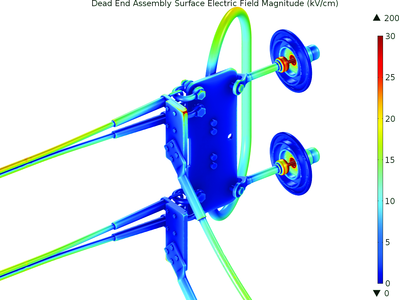
Enhancing Transmission Line Performance: Using Simulation to Optimize Design
Designing power transmission lines requires accounting for many factors: mechanical stress due to environmental ...
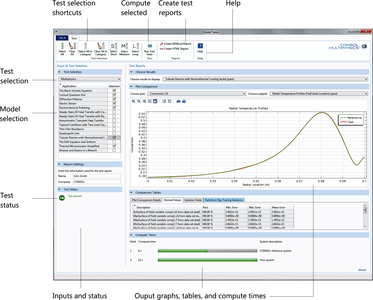
Nuclear-Safety-Related SQA Procedure Automation with Custom Applications
In an environment as highly regulated and potentially dangerous as the nuclear industry, software quality assurance ...

Modeling Lined Rock Caverns for Underground Hydrogen Storage
Lined rock caverns can store hydrogen, but their safety depends on interactions between hydrogen gas, rock masses, and ...
Multiphysics Simulation Drives Smart City Technology
Traditional power boxes are bulky and too large. To design a power box that is more space-conscious, modular, and ...


