
Electrochemistry Blog Posts
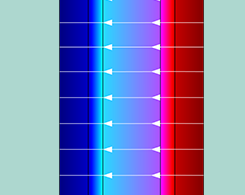
Analyzing Reverse Electrodialysis Units with Multiphysics Modeling
Pass the salt…for a clean energy solution. Salinity gradient power relies on osmosis between fresh- and saltwater to generate power, and simulation can help analyze and optimize such systems.
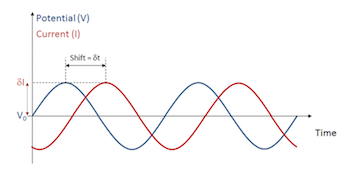
Electrochemical Impedance Spectroscopy: Experiment, Model, and App
Experience the phenomenon of electrochemical impedance spectroscopy (EIS) in 3 ways: experiment, model, and simulation application.
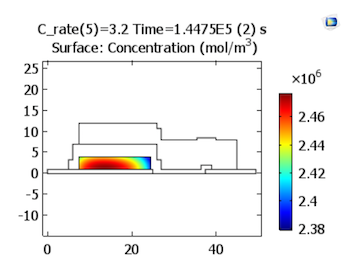
Modeling Electrochemical Processes in a Solid-State Lithium-Ion Battery
Lithium-ion batteries are found in everything from consumer electronics to aerospace technology. We discuss certain design challenges that have emerged over the years.
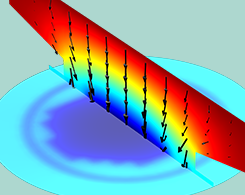
How to Model Electrochemical Resistance and Capacitance
Get an overview of the theory and modeling considerations for resistive and capacitive effects, which are fundamental to the understanding of electrochemical systems.
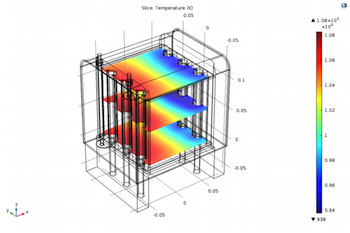
Building an App to Optimize the Design of an SOFC Stack
A guest blogger from resolvent ApS discusses creating a user-friendly simulation app to efficiently analyze a solid oxide fuel cell stack.
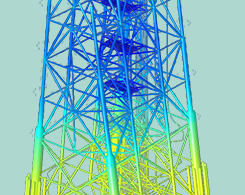
The Boundary Element Method Simplifies Corrosion Simulation
The boundary element method can be used when simulating corrosion to avoid needing a finite element mesh to resolve the whole 3D structure, saving time for large problems with slender components.
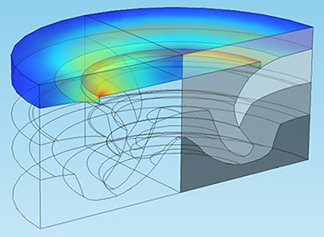
Using Simulation in the Race Against Corrosion
A German research institute and a well-known car manufacturer joined forces to investigate the corrosion occurring in automotive rivets and sheet metal. Get the full story.
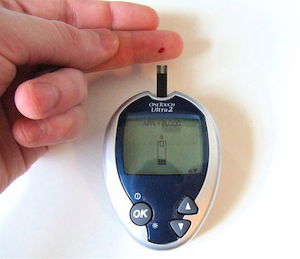
Modeling Electrochemistry for Managing Diabetes
An estimated 350 million people worldwide are living with diabetes. By modeling electrochemical processes, biomedical engineers can analyze and optimize the glucose sensing process.


