
Ray Optics Blog Posts
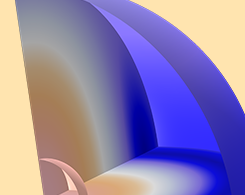
2 Methods for Simulating Radiated Fields in COMSOL Multiphysics®
2 ways to model radiated fields: the Far-Field Domain node and the Electromagnetic Waves, Beam Envelopes interface. Part 2 of a series on multiscale modeling in high-frequency electromagnetics.
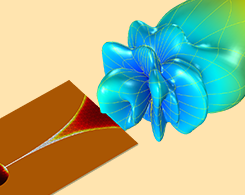
Introduction to Multiscale Modeling in High-Frequency Electromagnetics
Here’s an introduction to performing multiscale analyses of antennas and communication systems. Part 1 of a series on multiscale modeling in high-frequency electromagnetics.
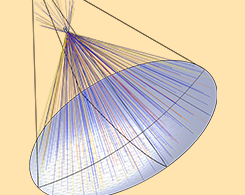
How to Model Solar Concentrators with the Ray Optics Module
Learn how to predict the concentration ratio for an idealized, parabolic solar reflector using Monte Carlo ray tracing in the Ray Optics Module, an add-on to COMSOL Multiphysics®.
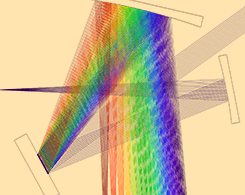
Using the New Ray Tracing Algorithm in COMSOL Multiphysics® 5.2a
The ability to trace rays in unmeshed domains, and even release and trace rays outside a geometry, has been available in the Ray Optics Module as of COMSOL Multiphysics® version 5.2a. Learn more.

Studying Laser-Material Interaction with Multiphysics Modeling
To mitigate damage to high-power laser systems, a research team from Lawrence Livermore National Laboratory used multiphysics simulation to investigate laser–material interactions.

Explaining the Pepper’s Ghost Illusion with Ray Optics
Pepper’s Ghost, the famous optical illusion used in theater and “hologram” concert performances, can be explained using ray optics. Learn more and see our homemade Pepper’s Ghost projector.
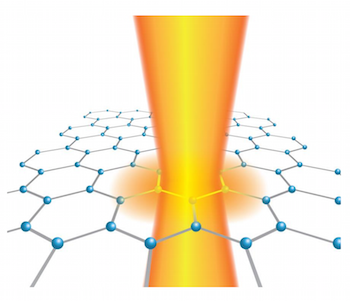
Should We Model Graphene as a 2D Sheet or Thin 3D Volume?
Graphene is a 2D sheet of carbon atoms that is 1 atomic layer thick. However, is graphene actually 2D or is it just incredibly thin, like a very fine piece of paper? How should it be modeled?
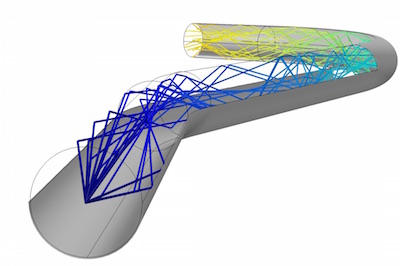
Simulating a Transparent Light Pipe to Optimize Transmittance
Transparent light pipes are used as an optimal source of natural light for underground areas, like subway stations, and areas without a lot of natural light, like prisons.


