
Blog Posts Tagged Food Science
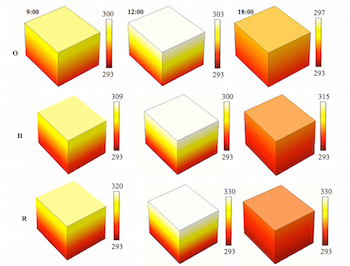
Analyze Solar Food Dryer Designs with Heat Transfer Modeling
You can use heat transfer simulation to analyze solar food dryer designs and identify optimal building materials, including phase-change materials, which conserve the solar heat.
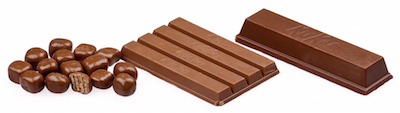
Nestlé Sweetens the Candy Production Process with Simulation
Question: How does a well-known candy company ensure that each of their signature chocolate bars has the same consistency, texture, and taste? Answer: Fluid flow simulation!

Tears of Wine and the Marangoni Effect
Have you ever noticed that when drinking a glass of wine, sometimes “tears” fall down in the inside of the wine glass? This is the Marangoni effect in action! Learn more and see examples…
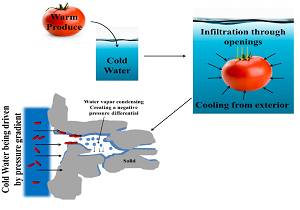
Hydrocooling Analysis for Fresh Produce Safety
During the hydrocooling process for tomatoes, bacteria can seep through and contaminate the food, making it unsafe to ingest. Researchers from Cornell University used simulation to investigate.
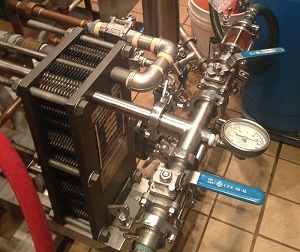
Improving the Beer Brewing Process with Simulation
Which side of home beer brewing are you more interested in: The culinary side, like the recipes and ingredients, or the engineering one, like the conjugate heat transfer and chemical reactions?

The Science of Composting
Compostable coffee pods in recyclable packaging are an environmentally friendly way to get your morning caffeine fix. But what exactly is the science behind the composting process?

Hygroscopy of Brown vs. White Sugar, the Banana Bread Test
Physics in the kitchen: We bake 2 loaves of vegan banana bread to compare the hygroscopic properties of white and brown sugar. Get details — and the recipe! — on the blog.
Eat First, Research Later: Exploring the Role of Eggs in Baking
Leavening, binding, moistening: 3 of the roles eggs typically play in baking. Learn more about the science behind baking with eggs, and how vegan baked goods compare, on the blog.
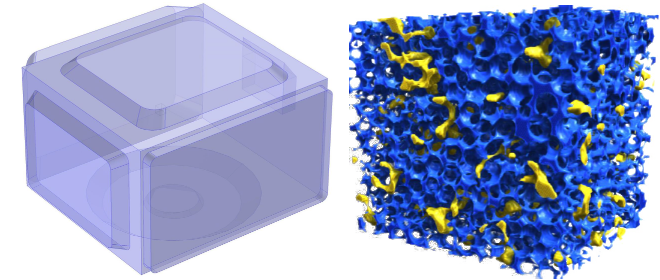
Predicting Microwave Drying of Potatoes
You may not think of reheating food in the microwave as a drying process, but as we saw at the COMSOL Conference 2013 Boston, microwave technology — the same technology used in domestic microwave ovens — can be used for drying fruits and vegetables. One poster presented at the conference featured microwave drying of potatoes and how the heat and mass transfer that occurs can be modeled to predict the drying process.
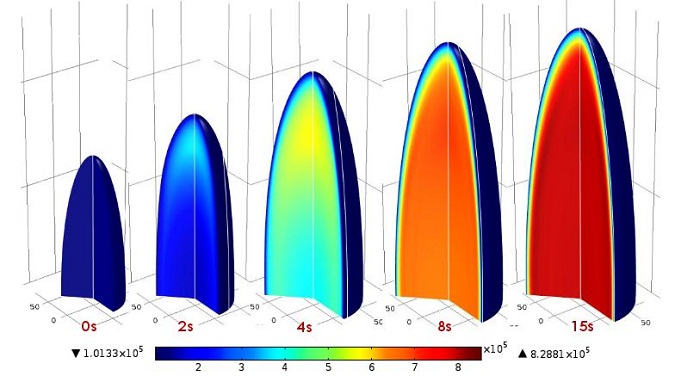
Coupling Transport and Solid Mechanics Models for Better Puffed Rice
In my work at COMSOL, it’s always interesting to see how broad the field of heat transfer can be. Far from being limited to steel ingots and CPU fans, researchers often use COMSOL Multiphysics to study heat transfer in food manufacturing. One good example of this is the study of thermal and mechanical effects in the production of puffed rice, which was presented at the COMSOL Conference 2013 in Boston.
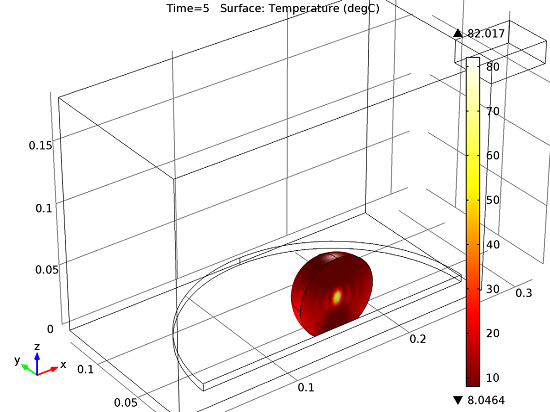
Why Does a Microwave Heat Food Unevenly?
It’s probably something we have all experienced. We get home, stick last night’s leftovers in the microwave, and sit down to have a nice meal — only to realize that the food is scalding hot one bite and freezing cold the next. This experience has prompted me on more than one occasion to wonder: Why does a microwave heat food so unevenly?
Food Science Leverages Simulations
As computer hardware becomes more powerful and affordable, simulations are becoming commonplace in new disciplines of science and engineering. Food science engineering is one such area, and there is no shortfall of publications using COMSOL Multiphysics for food-related simulations. Such kinds of analyses pretty much always require several types of physics to be practically relevant.