
Blog Posts Tagged Technical Content
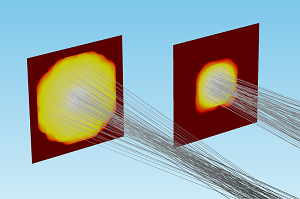
Modeling Thermally Induced Focal Shift in High-Powered Laser Systems
You can use the Ray Optics Module to create a fully self-consistent model of laser propagation that includes thermal and structural effects. Here, we take you through the process step by step.
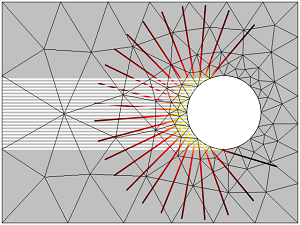
Introducing the Ray Optics Module
COMSOL Multiphysics version 5.0 introduced an add-on module for electromagnetics modeling: the Ray Optics Module. It can be used to perform ray tracing and geometrical optics studies.
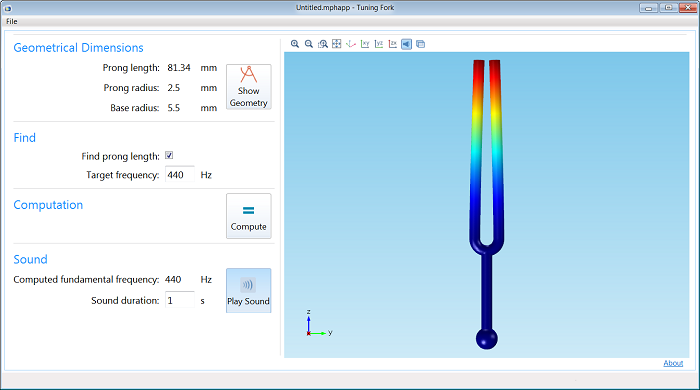
The Tuning Fork Application
Do re mi fa so la ti do! Did you know that the most common standard pitch for a tuning fork is 440 Hz, which forms the note A? See a tuning fork simulation app in action here >>
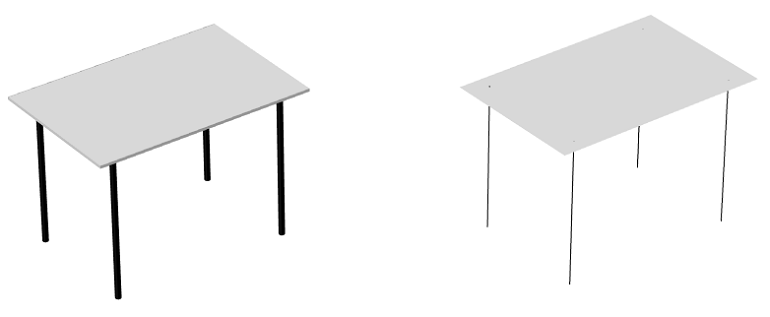
Coupling Structural Mechanics Interfaces
The Structural Mechanics Module consists of specialized interfaces: Solid Mechanics; Shell, Plate, and Membrane for modeling thin structures; and Beam and Truss for modeling slender structures.
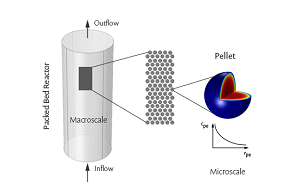
Multiscale Reactors: Cleaning the Flows
Packed bed reactors are used in chemical synthesis and for effluent treatment and catalytic combustion, are often required for heterogeneous catalysis, and commonly include catalyst pellets.
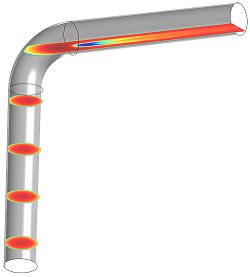
Using Slice Plots to Show Results on Cross-Sectional Surfaces
In this installment of our blog series on postprocessing your simulation results, we demonstrate slice plots, an easy way to visualize physics behavior on many different parts of your model.
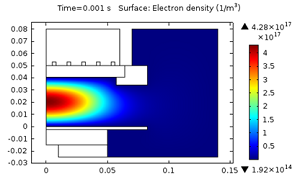
Ion Temperature in Inductively Coupled Plasmas (ICPs)
When modeling plasmas, your choice of ion temperature can affect your model results. We discuss the theoretical reasons behind this phenomenon using an inductively coupled plasma example.
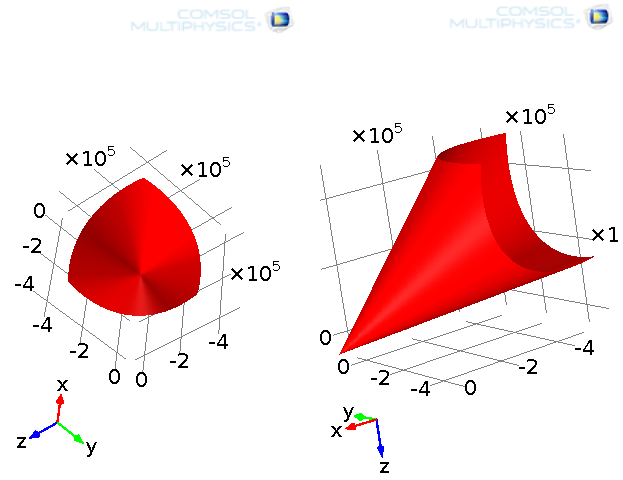
Yield Surfaces and Plastic Flow Rules in Geomechanics
Have you noticed that offshore structures are being constructed in deeper and deeper waters? See how geotechnical engineers are using numerical simulations to cope with this trend.


