
Blog Posts Tagged Technical Content
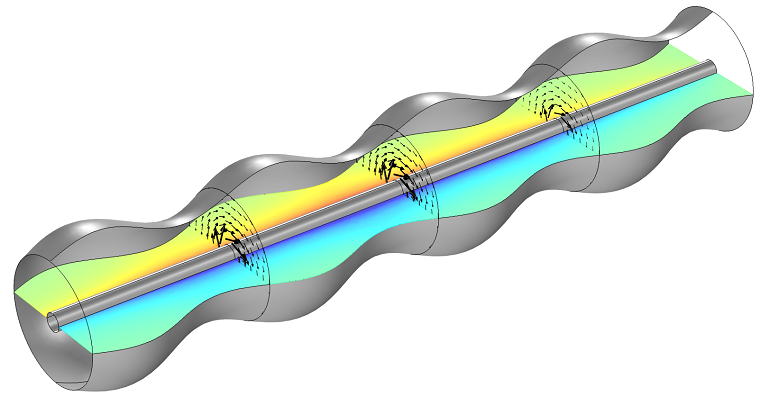
Computing the Impedance of a Corrugated Waveguide
Did you know that you can compute the effective impedance for waveguides with nonuniform cross sections (such as corrugated waveguides) in COMSOL Multiphysics®? We demonstrate how here >>
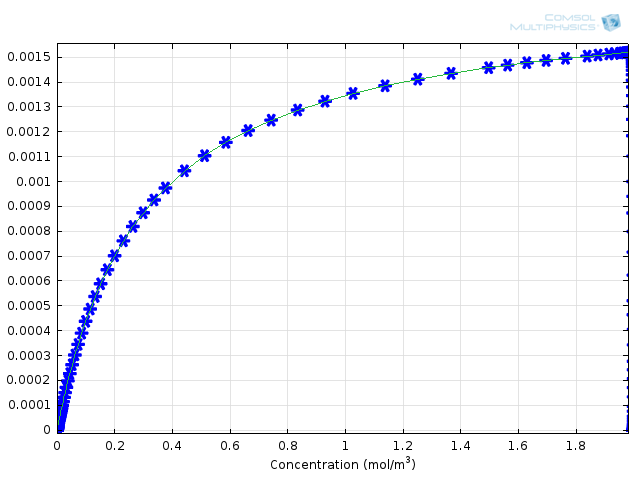
Enzyme Kinetics, Michaelis-Menten Mechanism
For the 100-year anniversary of the Michaelis–Menten mechanism, we honor the trailblazing publication the best way we know how — with simulation.
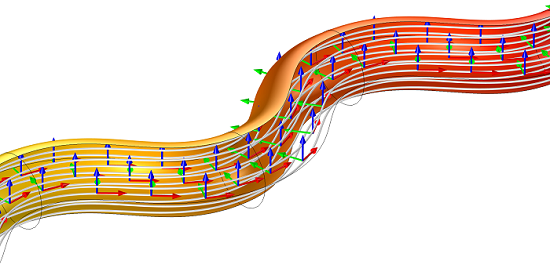
Defining Curvilinear Coordinates for Anisotropic Materials
Consider a carbon-fiber-reinforced polymer with woven fibers embedded in an epoxy matrix. How can you express the anisotropy by referring to the well-known Cartesian coordinate system?
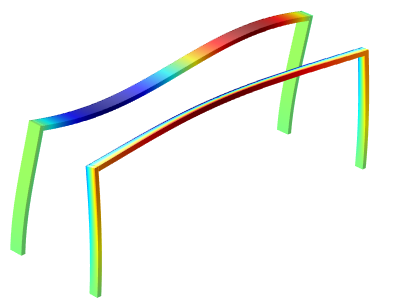
Buckling, When Structures Suddenly Collapse
The easiest way to approach a buckling problem — like a bridge collapse or crushed soda can — is by performing a linearized buckling analysis. See how to do so in COMSOL Multiphysics® here >>
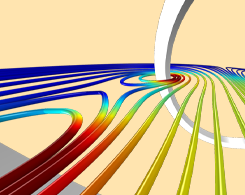
Plotting Spatial Derivatives of the Magnetic Field
Radiology, magnetophoresis, particle accelerators, and geophysics are all areas where it is useful to compute the spatial derivative of the magnetic field or magnetic flux density.
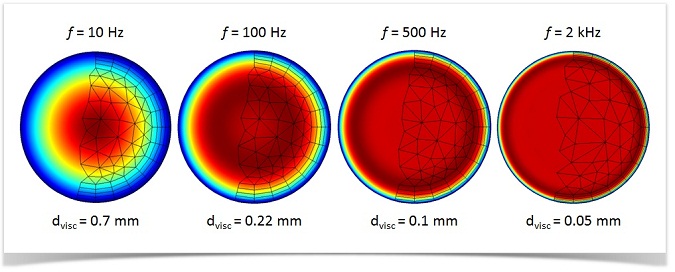
How to Model Thermoviscous Acoustics in COMSOL Multiphysics
Want to solve your acoustics model for acoustic pressure, velocity, or temperature variation? Enter the Thermoviscous Acoustics interface, which offers a simple and accurate way.
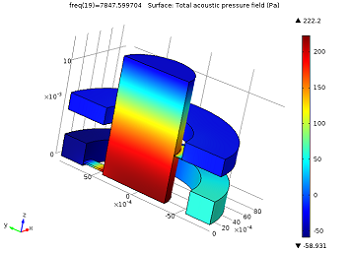
Theory of Thermoviscous Acoustics: Thermal and Viscous Losses
Here’s your comprehensive introduction to thermoviscous acoustics. Topics covered include theory, physics, boundary layers, bulk losses, attenuation, and narrow region acoustics.
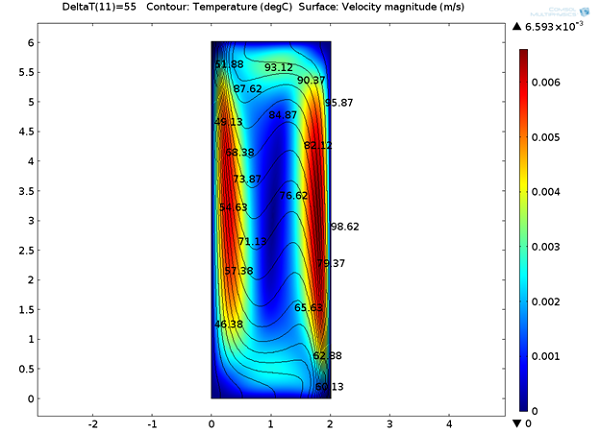
Buoyancy-Driven μPCR for DNA Amplification
True crime + simulation: The more DNA in a sample, the easier it is to accurately test and identify biomolecules, cells, and even an entire person during forensic investigations.


