
Latest Posts
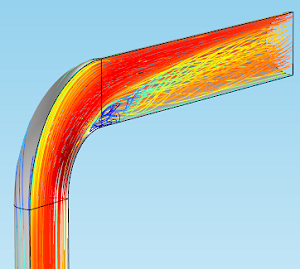
Visualizing Fluid Flow with Streamline Plots
As part of our blog series on postprocessing, we demonstrate the use of streamlines to visually describe fluid flow in your simulations. Learn how with an example of flow through a pipe elbow.
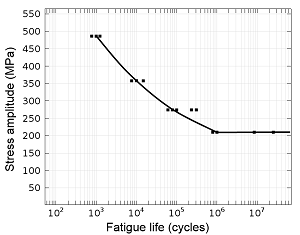
How to Obtain Fatigue Model Parameters
2 challenges when modeling fatigue: 1.) selecting a suitable fatigue model for your application and 2.) obtaining the material data for the selected model.

Ray Tracing in Monochromators and Spectrometers
Spectrometers are optical devices that measure some property of radiation as a function of its frequency, while monochromators transmit radiation of a specific frequency.
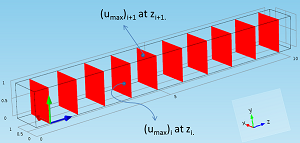
Maximum Evaluations on Parallel Sections
Postprocessing trick: You can evaluate and plot the maximum, minimum, average, or integration value of any variable at various parallel sections along the axial coordinate of your model.
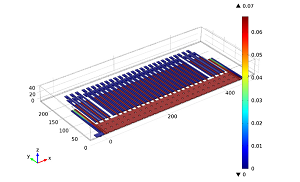
Modeling a Surface Micromachined Accelerometer
There are plenty of MEMS manufacturing techniques, but surface micromachining is preferred because it can merge electronic components and freely moving mechanical parts onto one substrate.

Photos from the COMSOL Conference 2014 Bangalore
Engineers and academics from across India gathered to participate in the COMSOL Conference 2014 Bangalore. Browse a slideshow of photos from the event here.
COMSOL Conference 2014 Bangalore Award Winners
Some of the award-winning research topics from the COMSOL Conference 2014 Bangalore include hydrodynamics, direct heating of uranium rods, microwave radiation, and more.
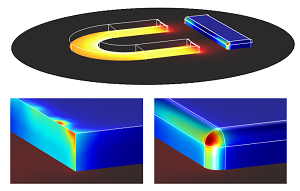
Fillet Away Your Electromagnetic Field Singularities
Did you know that you can use fillets and chamfers in your electromagnetics models to avoid electromagnetic field singularities? Learn how in this tutorial blog post.
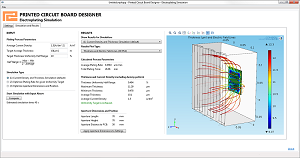
Electroplating Simulations for Printed Circuit Board Designers
The manufacture of a printed circuit board (PCB) often involves a process called electroplating, which can vary from design to design. A simulation app can make it easy to analyze this process.
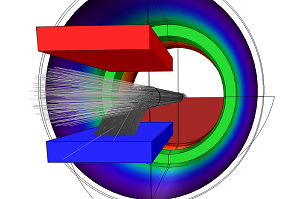
Modeling Beam Neutralization with a Charge Exchange Cell
A charge exchange cell refers to an area of high-density gas that is placed in the path of an ion beam. You can model a charge exchange cell to analyze its neutralization efficiency.
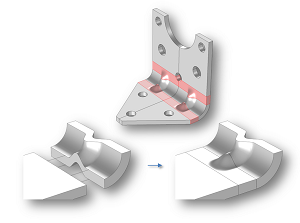
Introducing the Design Module
The Design Module has specialized features for advanced geometry modeling, including the ability to create fillets on 3D designs or generate shell approximations of imported geometric objects.
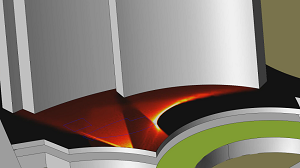
An Analysis of Caustic Surface Generation at the Vdara® Hotel
The Vdara® hotel on the Las Vegas strip has a unique crescent-shaped design that unfortunately contributed to the development of a caustic surface on the hotel’s pool deck.
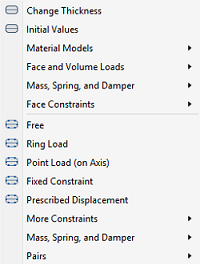
Membrane Interface Improvements in Version 5.0
As of version 5.0 of COMSOL Multiphysics®, the Membrane interface includes a restructured menu, new feature nodes, improvements to the Linear Elastic Material model, and more.
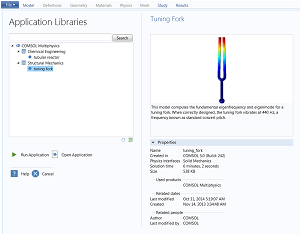
Where to Find Application Builder Tutorial Apps
Did you know that COMSOL Multiphysics® includes an Application Library full of tutorial models and demo apps? Learn how to access this helpful feature for modeling guidance and inspiration.
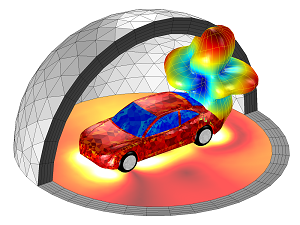
Automatic Meshing for Electromagnetic Simulations
Ever struggle to mesh the infinite elements or perfectly matched layers in your electromagnetics simulations? Automatic meshing can help >>
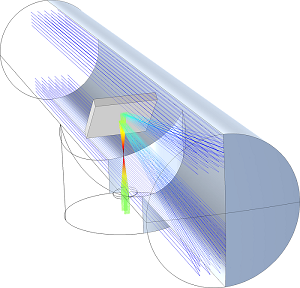
Modeling Ray Propagation in a Newtonian Telescope System
Ray optics trivia: The Newtonian telescope, recognized as the earliest operating reflecting telescope, was developed in 1668. Today, simulation can be used to trace rays through this device.
Keynotes from the COMSOL Conference 2014 Boston
The COMSOL Conference 2014 Boston featured 2 inspiring keynote presentations with speakers from Oak Ridge National Laboratory and WiTricity. Get an overview of what they discussed…
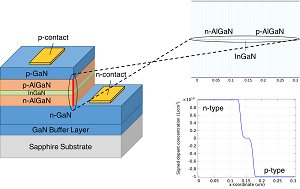
Investigating LED Efficiency via Multiphysics Simulation
Ever wonder how efficient LED lighting is, compared to traditional florescent lighting? In this blog post, we demonstrate how to analyze LED efficiency with multiphysics modeling.
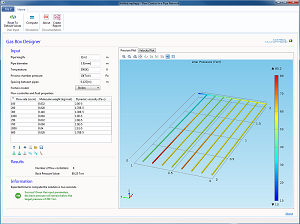
Creating an App for Modeling Flow Control in a Pipe Network
Simulation apps can be used as dedicated tools for modeling the flow and pressure distribution inside a network of connected pipes. This would be useful in, for example, semiconductor processing.
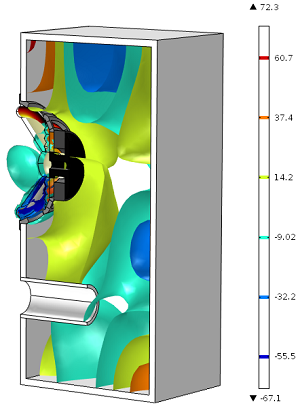
Making Waves with Contour and Isosurface Plots
In this installment of our blog series on postprocessing your simulation results, learn how to use contour and isosurface plots to show quantities on a series of lines or surfaces.
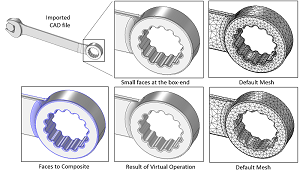
Using Virtual Operations to Simplify Your Geometry
CAD geometry: A set of data structures that provide a very precise method for describing the shapes of parts (called boundary representation, or B-rep).
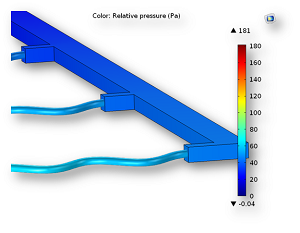
How to Easily Connect 1D Pipes to 3D Flow Domains
You can easily connect 1D pipes to 3D flow domains for your pipe flow simulations using a feature in the Pipe Flow Module available as of COMSOL Multiphysics® version 5.0.
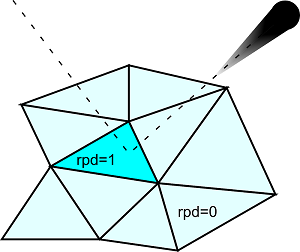
New Accumulators Boost Particle and Ray Tracing Functionality
Accumulators, a series of features available in the Particle Tracing Module, can be used to couple the results of a particle tracing simulation to other physics interfaces.
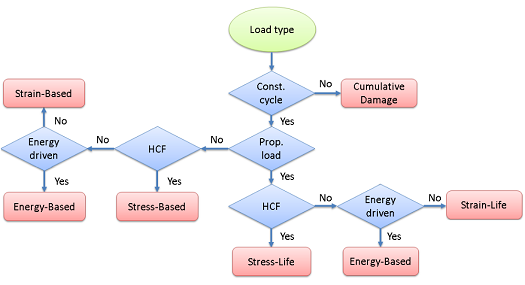
Which Fatigue Model Should I Choose?
Have you ever asked yourself, “Which fatigue model should I use in my simulations?” If so, read this blog post for a comprehensive overview of the available Fatigue Module models.


