
Blog Posts Tagged Chemical Reaction Engineering Module
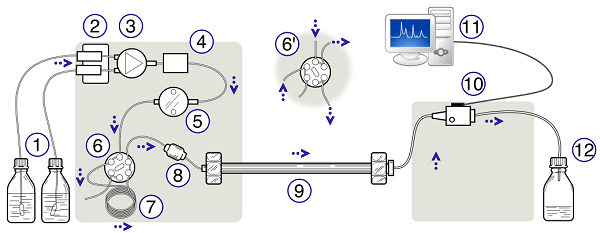
Modeling High-Performance Liquid Chromatography
High-performance liquid chromatography involves mixing a solvent from a reservoir with a sample zone containing the analytes to be separated and then pumping the mixture into an injector.
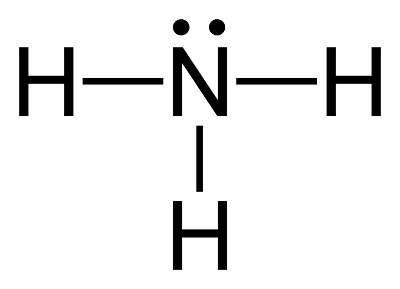
Ammonia Synthesis, a Complex and Nonlinear Process
In the final installment of our Chemical Kinetics blog series, we discuss the complex and nonlinear process of synthesizing ammonia. Get an overview of the equations and modeling considerations.
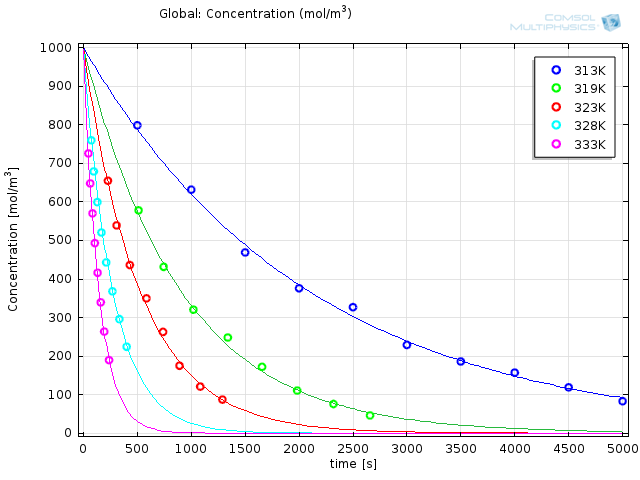
Chemical Parameter Estimation Using COMSOL Multiphysics
In this installment of our blog series on chemical kinetics, we discuss how to estimate the chemical parameters of your model in COMSOL Multiphysics®.
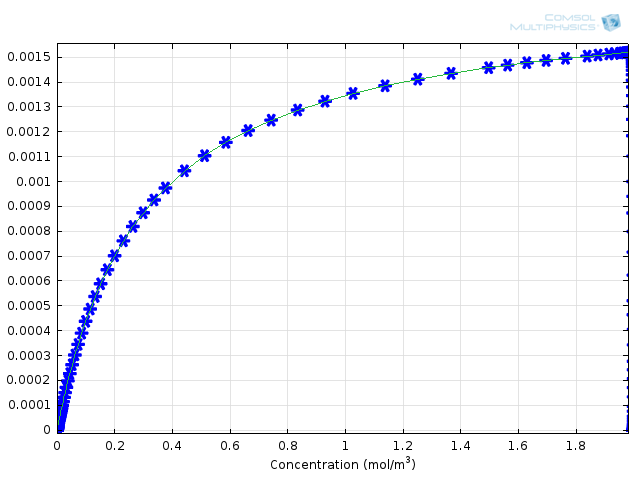
Enzyme Kinetics, Michaelis-Menten Mechanism
For the 100-year anniversary of the Michaelis–Menten mechanism, we honor the trailblazing publication the best way we know how — with simulation.
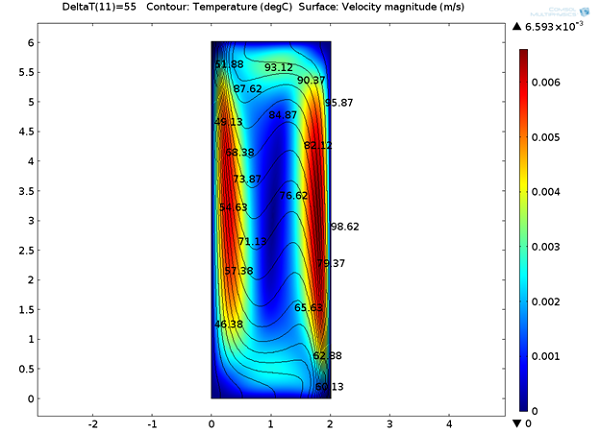
Buoyancy-Driven μPCR for DNA Amplification
True crime + simulation: The more DNA in a sample, the easier it is to accurately test and identify biomolecules, cells, and even an entire person during forensic investigations.

A General Introduction to Chemical Kinetics, Arrhenius Law
Countless complications and pitfalls make chemical simulations challenging. Here, we give an introduction to chemical kinetics and Arrhenius law to help >>
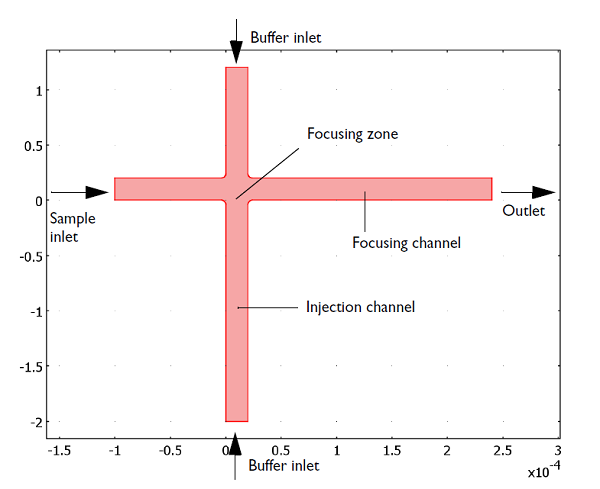
Using a Microfluidic Valve to Separate Charged Particles
When you think of a valve, what is the first thing that comes to mind? Electromagnetic waves, or perhaps, Stokes flow separating charged chemicals in a microchannel system? Maybe neither. The truth is, when researchers try to separate small (in the picoliters region), well-defined sample volumes of chemicals, the dispensing accuracy provided by a mechanical regulator probably won’t suffice. An electrokinetic valve, a type of microfluidic valve, on the other hand, provides the perfect solution by giving researchers the flow […]
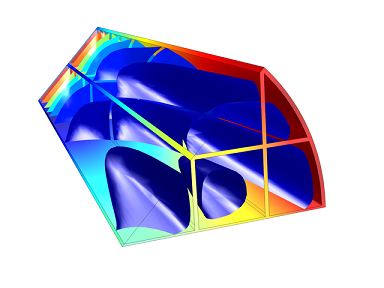
Modeling Chemical Reactions: Thermal Stress Analysis
The beauty of COMSOL is that it provides a unified modeling platform no matter what type of simulations you are performing. This is almost unique to the CAE market. Recently we showed you how to model chemical reactions using a monolith reactor as our example. First we walked you through solving the reaction kinetics and then involving plug flow, next we created a full-scale 3D model of the reactor. A chemical engineer may feel comfortable using a software optimized for […]

Optimal Distribution: Tree Roots and Microreactors
I love trees and my favorite is definitely the ficus, all varieties included. A few weeks ago I had the chance to admire a stately ficus microcarpa (see figure below). What struck me above all were its aerial roots. Roots are designed to absorb water and nutrients, sustaining the tree and synthesizing substances responsible for its growth. A thought crossed my mind right away: the shape of those roots and the way they coalesce have surely been optimized by Mother […]
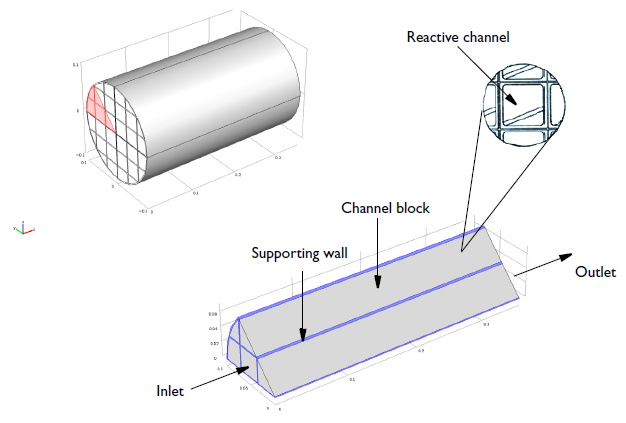
Modeling Chemical Reactions: 3D Model of a Monolith Reactor
In a previous blog post we dealt with the reaction kinetics and modeled plug flow of a monolithic reactor in the exhaust system of a car. The goal was to determine the ideal dosage of ammonia to reduce the nitrogen oxide levels emitted into the air. After understanding the chemistry of our problem, it is now time for the second part in our “Modeling Chemical Reactions” blog series. Here, we will go through the steps of generating a 3D model […]
Modeling Chemical Reactions: Kinetics
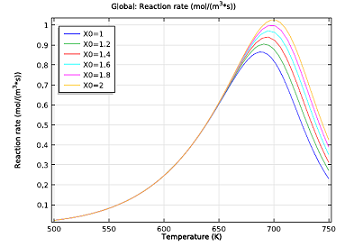
In chemical reaction engineering, simulations are useful for investigating and optimizing a particular reaction process or system. Modeling chemical reactions helps engineers virtually understand the chemistry, optimal size and design of the system, and how it interacts with other physics that may come into play. This is the first of a series of blog posts on chemical reaction engineering, and here we will have a look at the initial stages of modeling the application: the chemical reaction kinetics.
Injectable Microbubbles in Hydrology and Healthcare
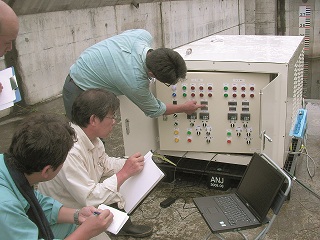
Microbubbles filled with oxygen can be injected into contaminated lakes to restore the water quality. Typically, water is purified via water-treatment plants, but this microbubble technique is both inexpensive and more environmentally-friendly in comparison. As seen in a COMSOL News 2011 article, oxygen microbubbles are a researcher’s way of copying nature’s own self-restoration mechanism for cleaning contaminated lakes.
Modeling Static Mixers
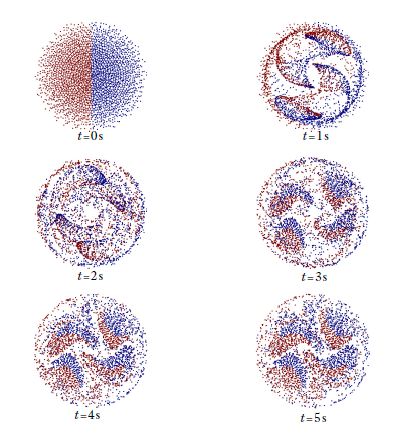
A mixer that doesn’t move may sound like an oxymoron, but it’s not. Used in various chemical species transport applications, static mixers are inexpensive, accurate, and versatile. Still, there is always room for improvement. Optimizing the design of static mixers calls for computer modeling, but traditional CFD methods may not be the best way to model these mixers. How do these motionless mixers work and how can their performance be simulated?


