AC/DC Module

Simulate Low-Frequency Electromagnetics and Electromechanical Components

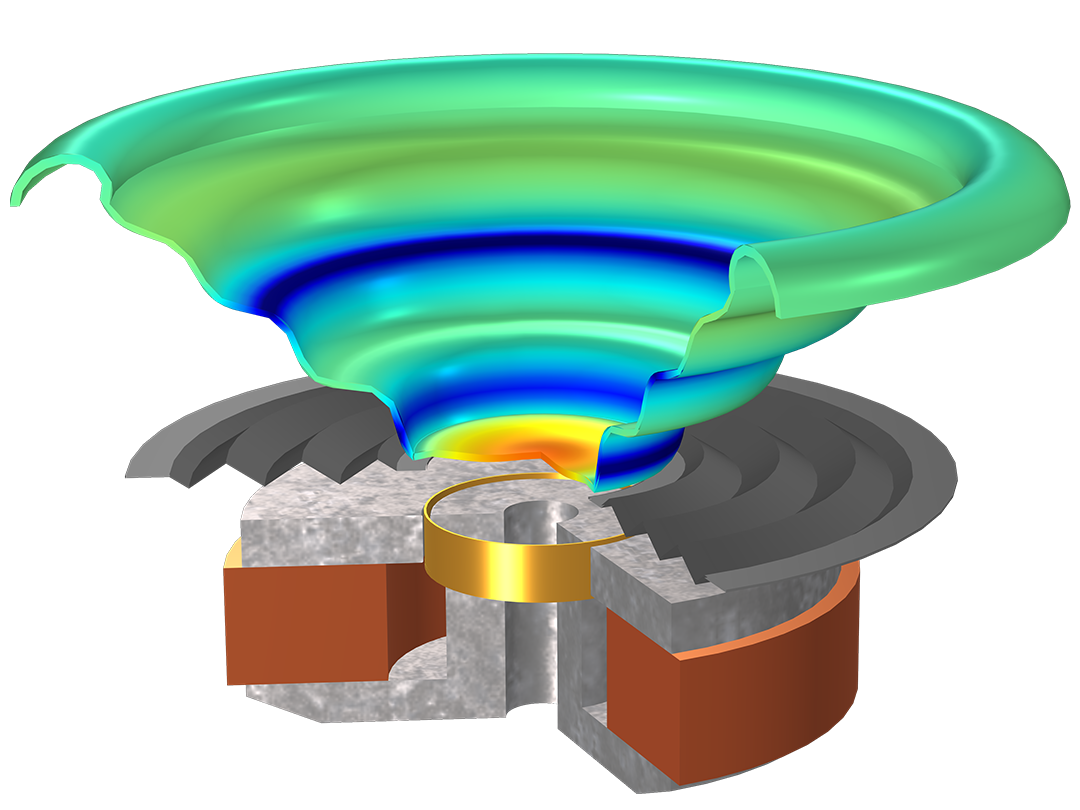
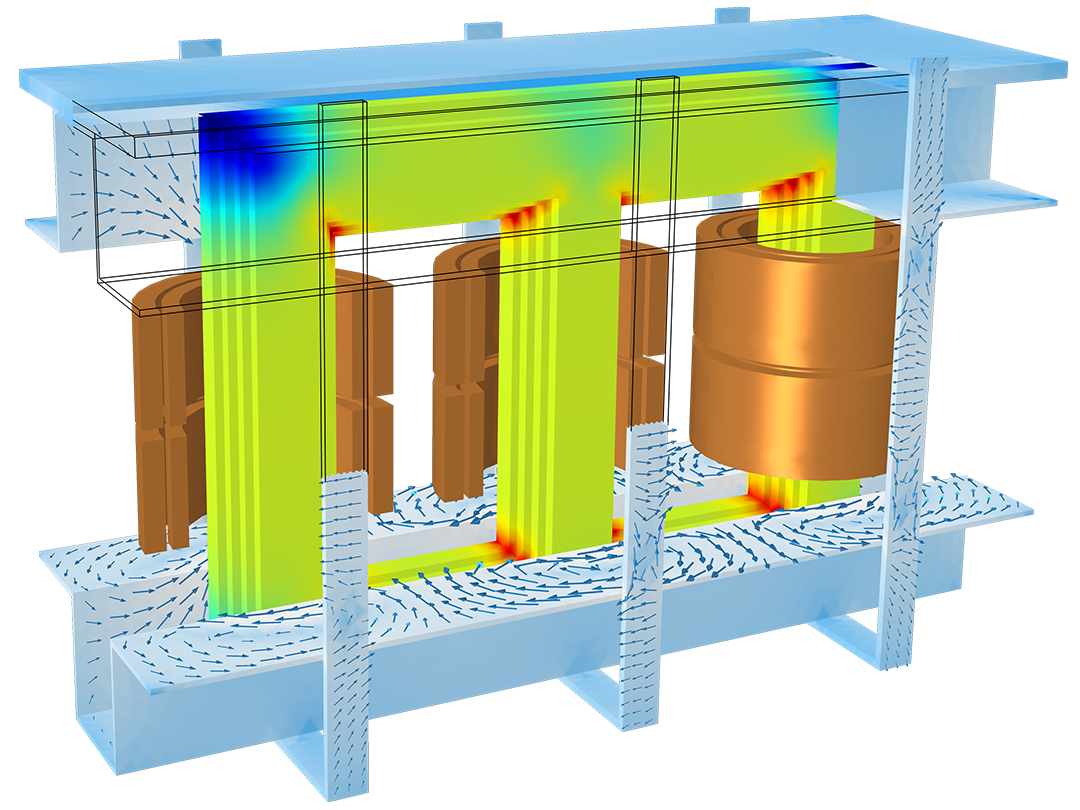
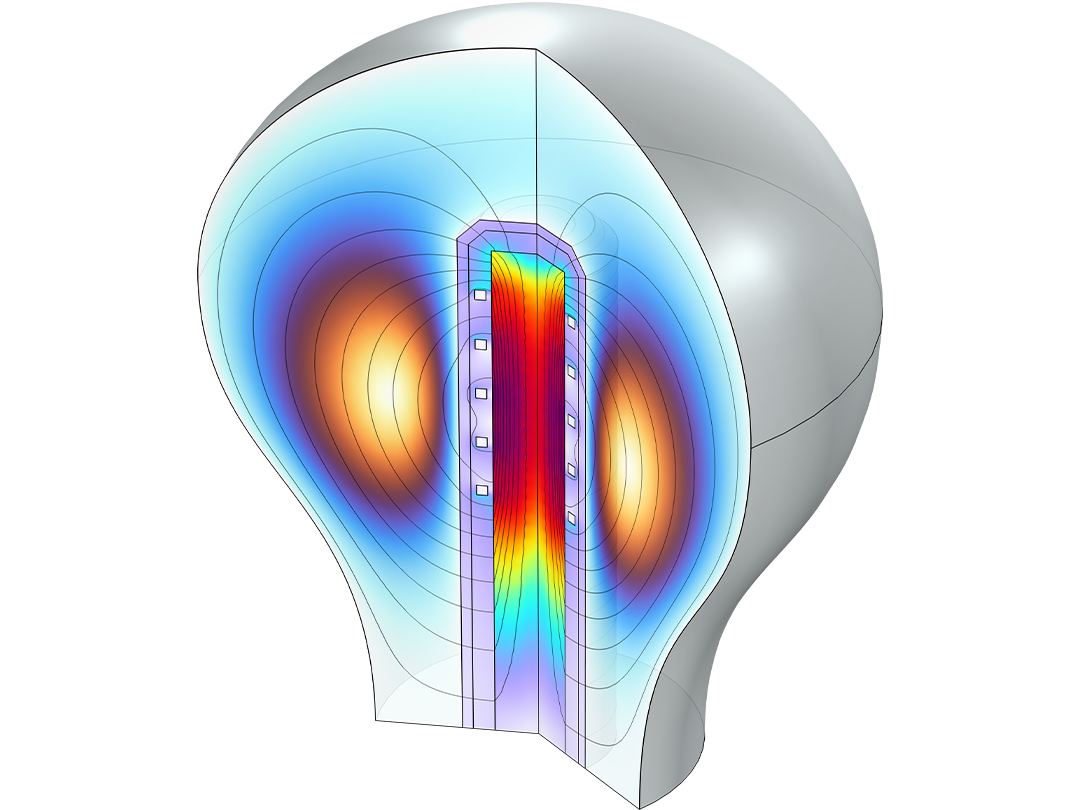
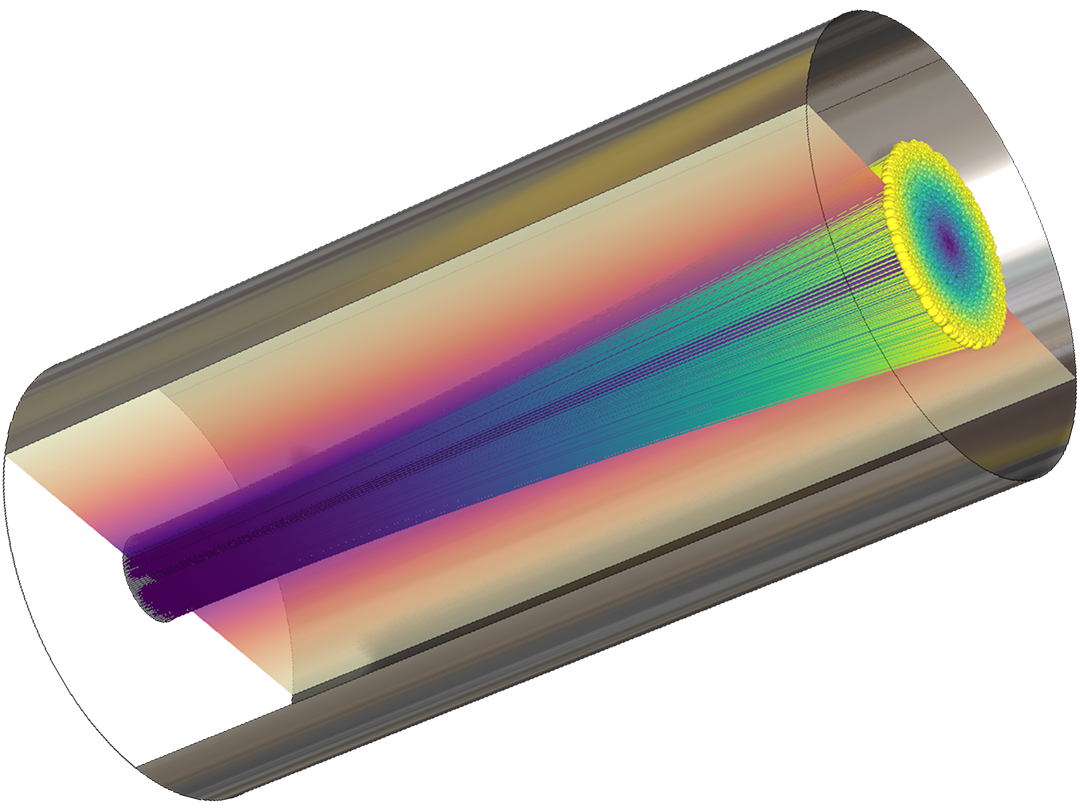
The AC/DC Module, an add-on to the COMSOL Multiphysics® platform, provides modeling tools and numerical methods for analyzing static and low-frequency electromagnetic fields. Its applications range from capacitive, resistive, and inductive devices used in electrical components and power electronics to actuators, vehicle electrification systems, power systems, and electromagnetic interference and compatibility (EMI/EMC).

With its multiphysics simulation capabilities, the AC/DC Module can also be used to analyze how heat transfer, structural mechanics, acoustics, and fluid flow interact with electromagnetics. This makes it possible to evaluate real-world performance, reliability, and safety in motors, transformers, cables, high-voltage equipment, sensors, and many other electromagnetic devices throughout the product development cycle.

Contact COMSOL
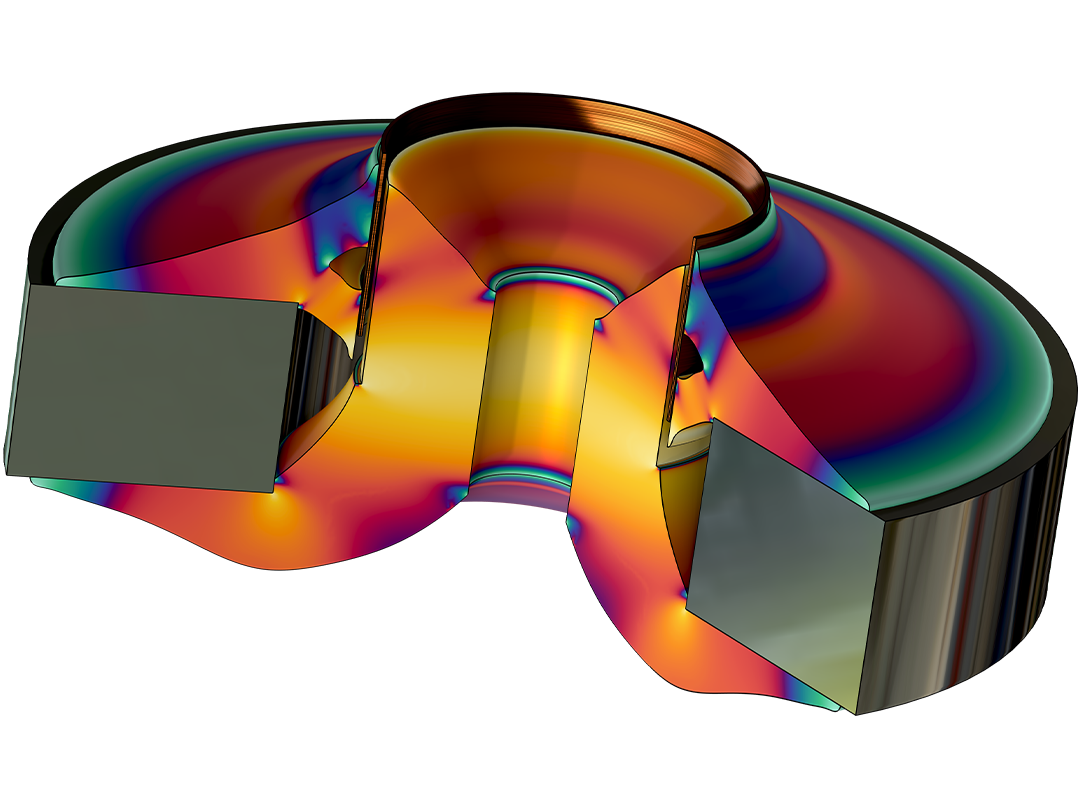
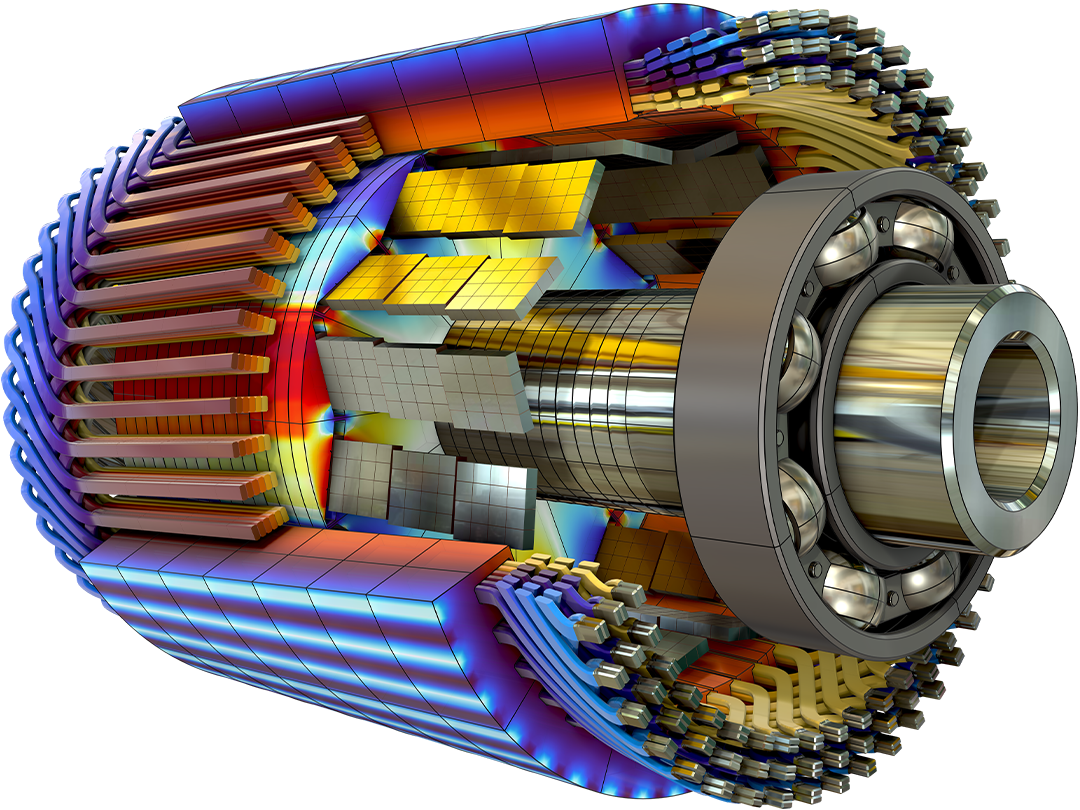
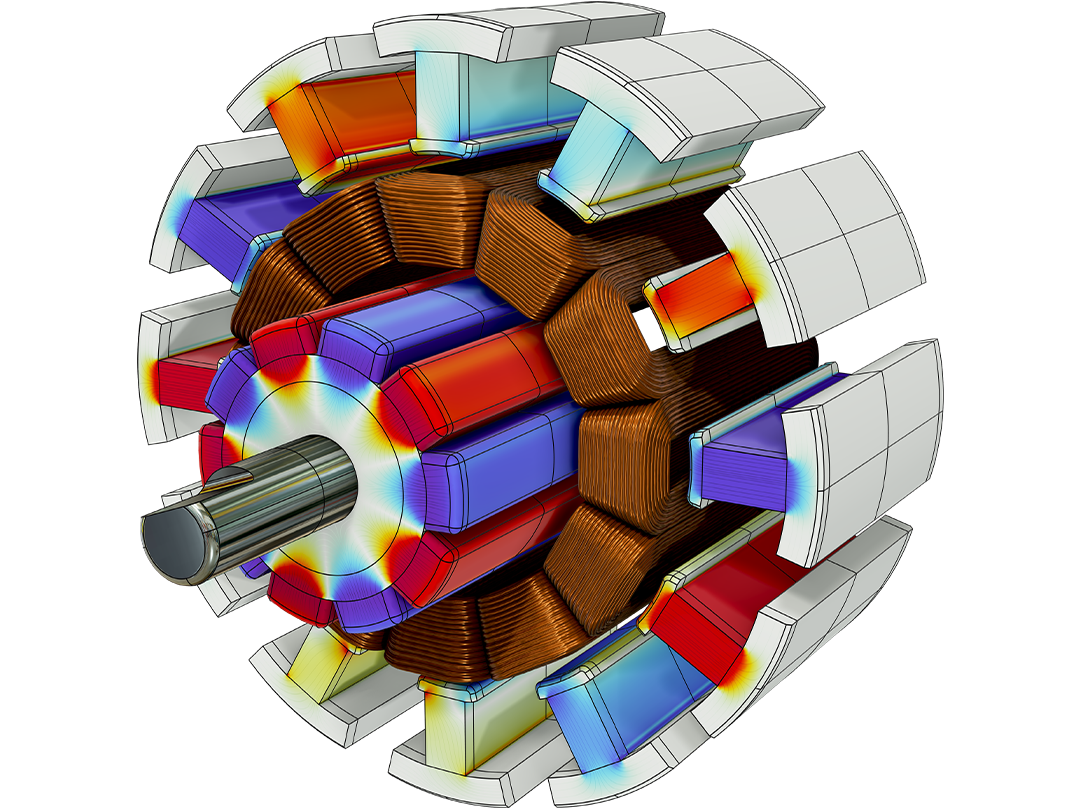
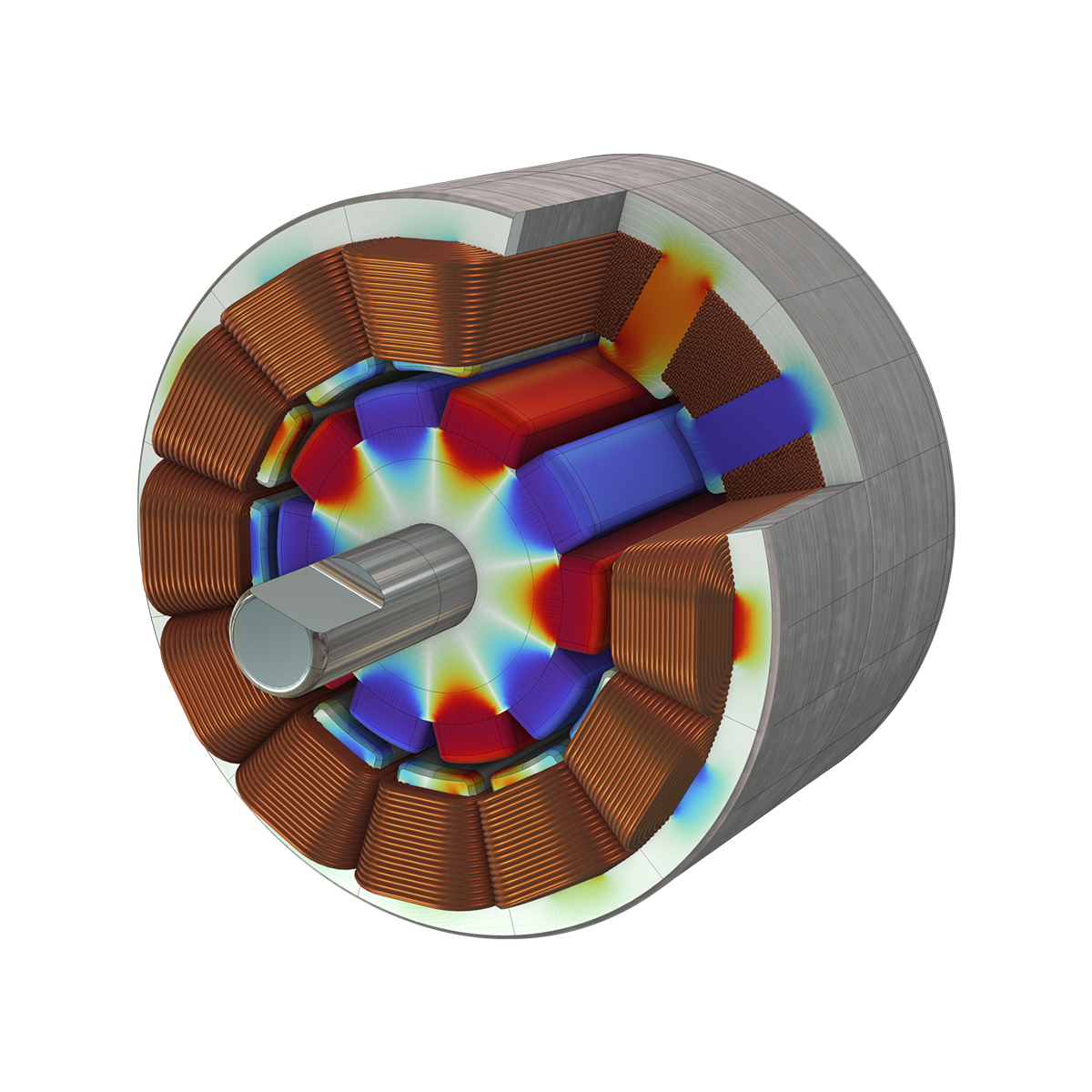
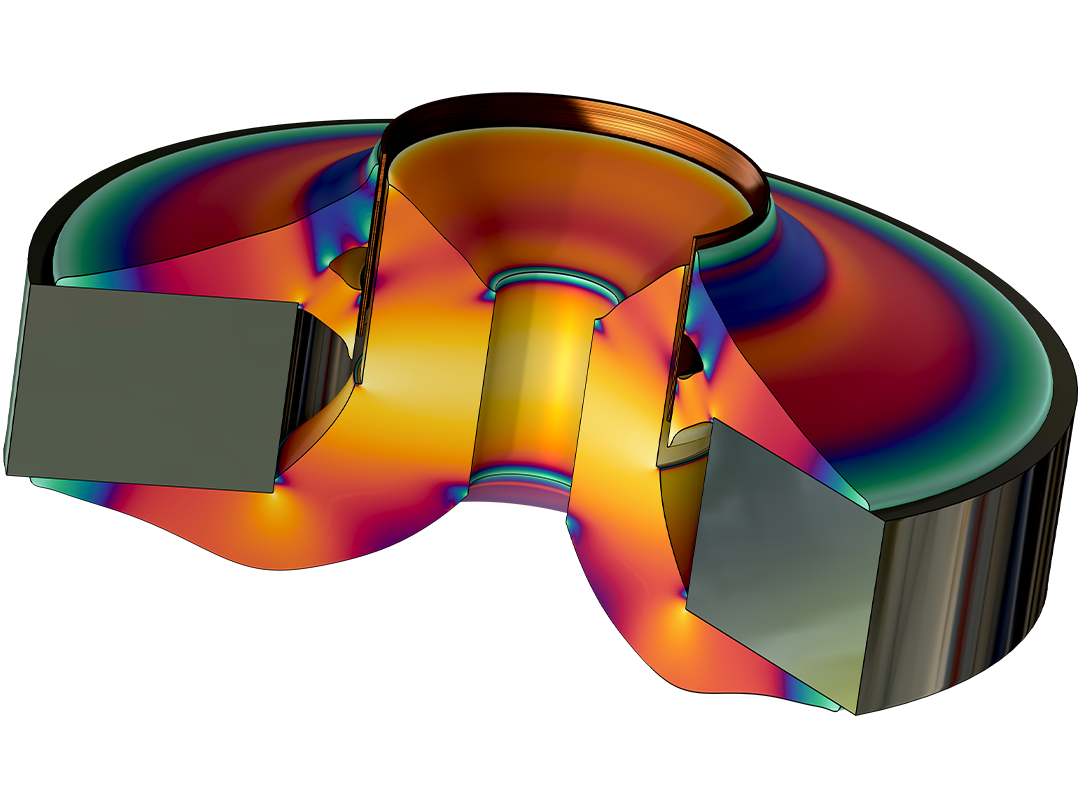
Synchronous electric motor in 3D, with skewed rotor and hairpin stator conductors showing the radial magnetic flux density in the laminated core and the axial current density in the copper stator conductors.

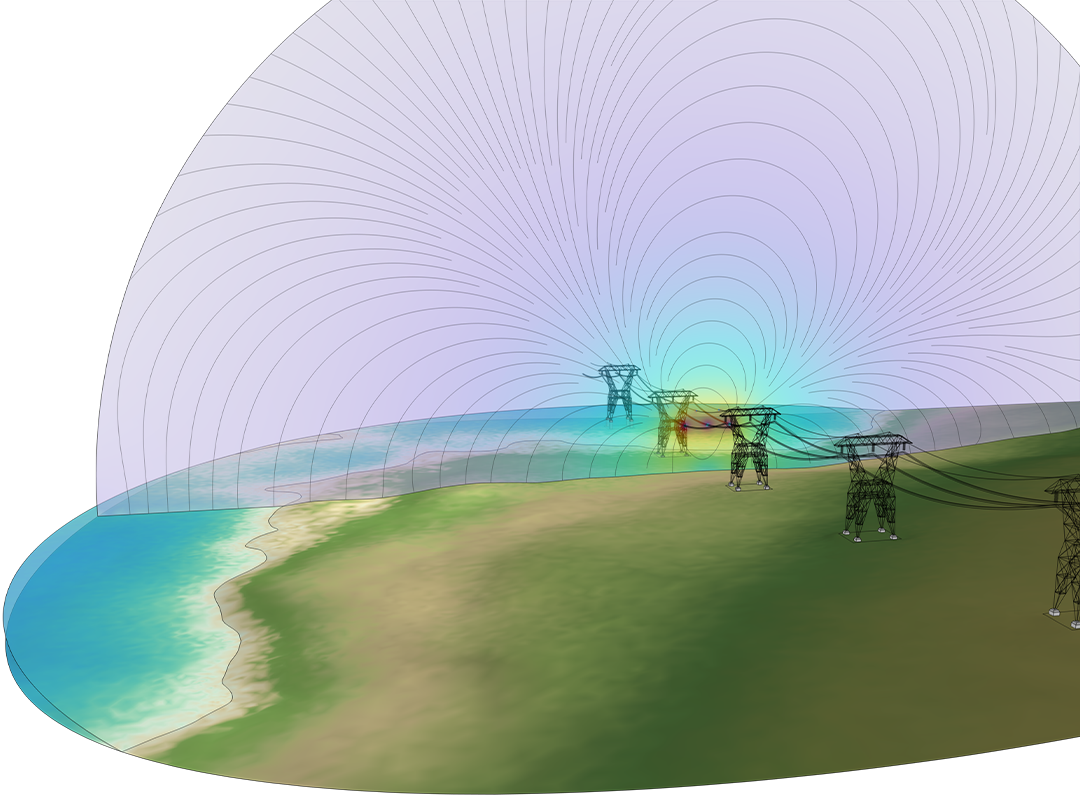
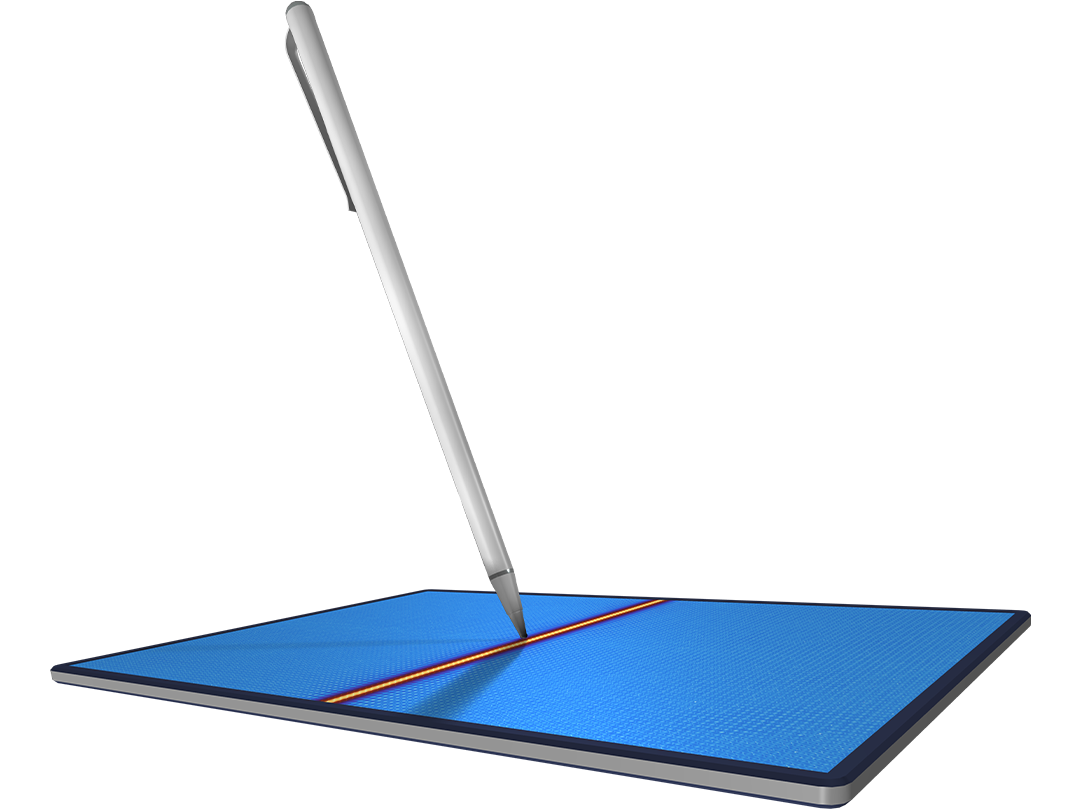
Electrostatics

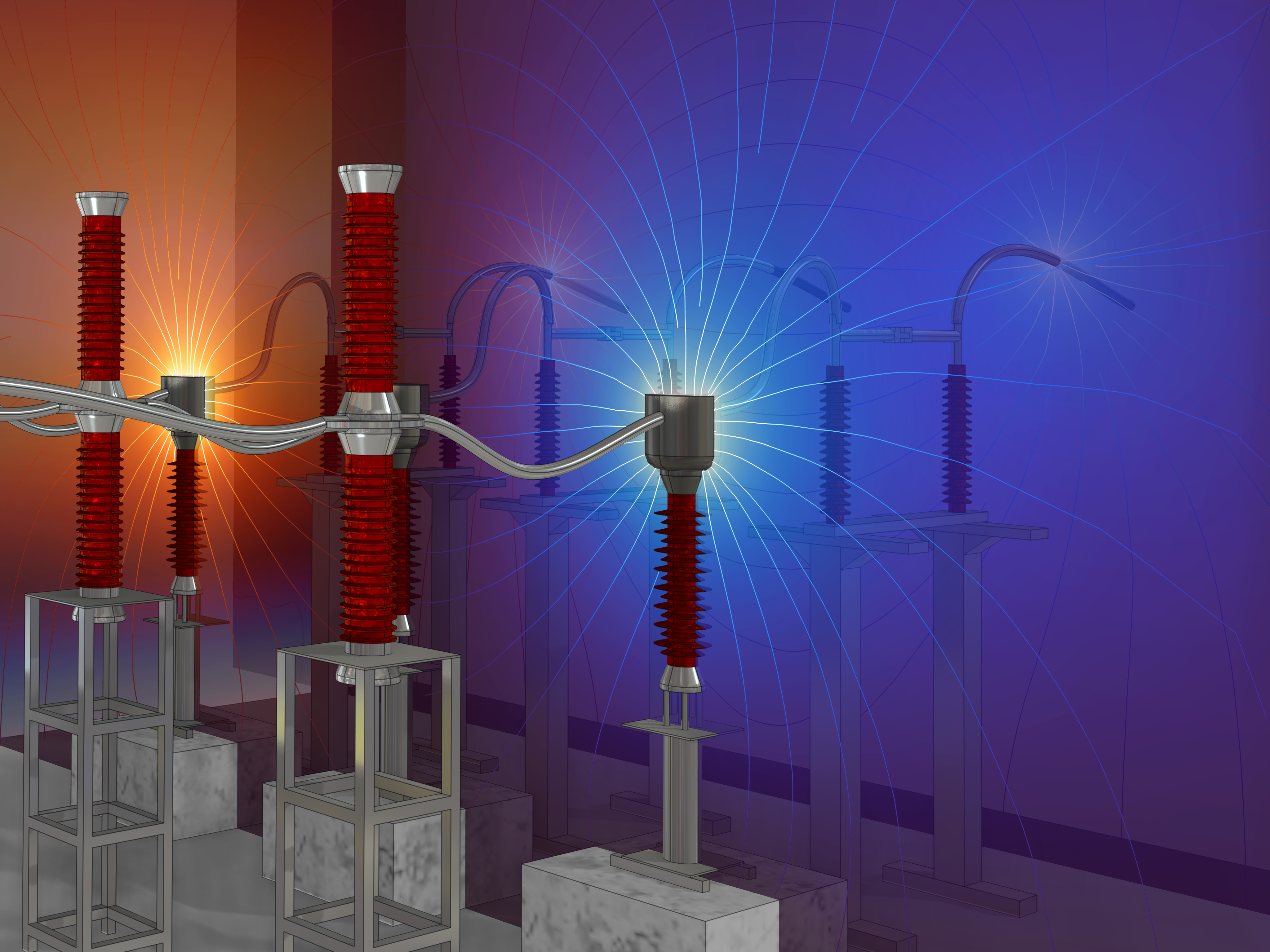
Electrostatic modeling is used to analyze the capacitive properties of devices and systems. Capacitance matrices, charge densities, electric fields, torques, and forces can be computed. Applications include high-voltage components, insulators, touch screens, sensors, and actuators.

The AC/DC Module provides both the finite element method (FEM) and the boundary element method (BEM), which can also be combined in hybrid methods. This enables reliable design and optimization across applications such as capacitors, switchgears, and actuators.

In high-voltage systems, electrostatic analysis is typically used to assess and reduce the risk of an electric discharge occurring. If the conditions are such that a discharge cannot be avoided, the phenomenon can be studied using the dedicated functionality of the Electric Discharge Module.

For modeling MEMS devices, the AC/DC Module provides electromagnetics modeling capabilities, while the MEMS Module adds specialized functionality for electrostatics–structure interactions.
Electric Currents

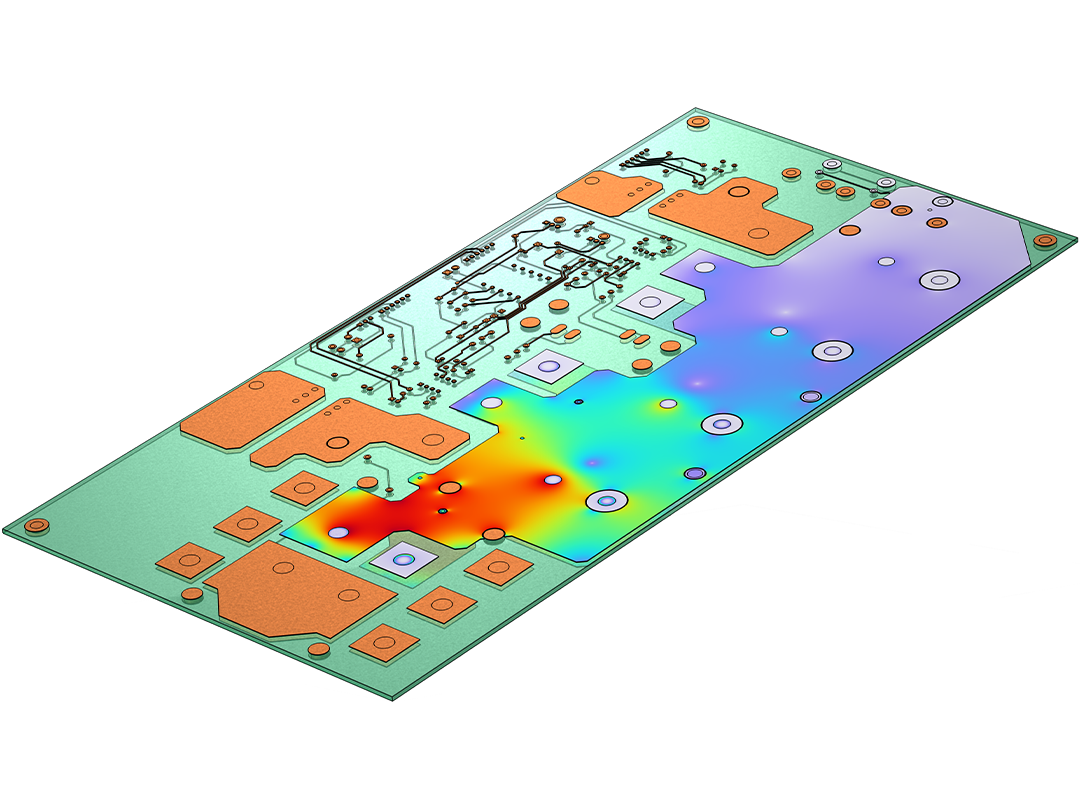
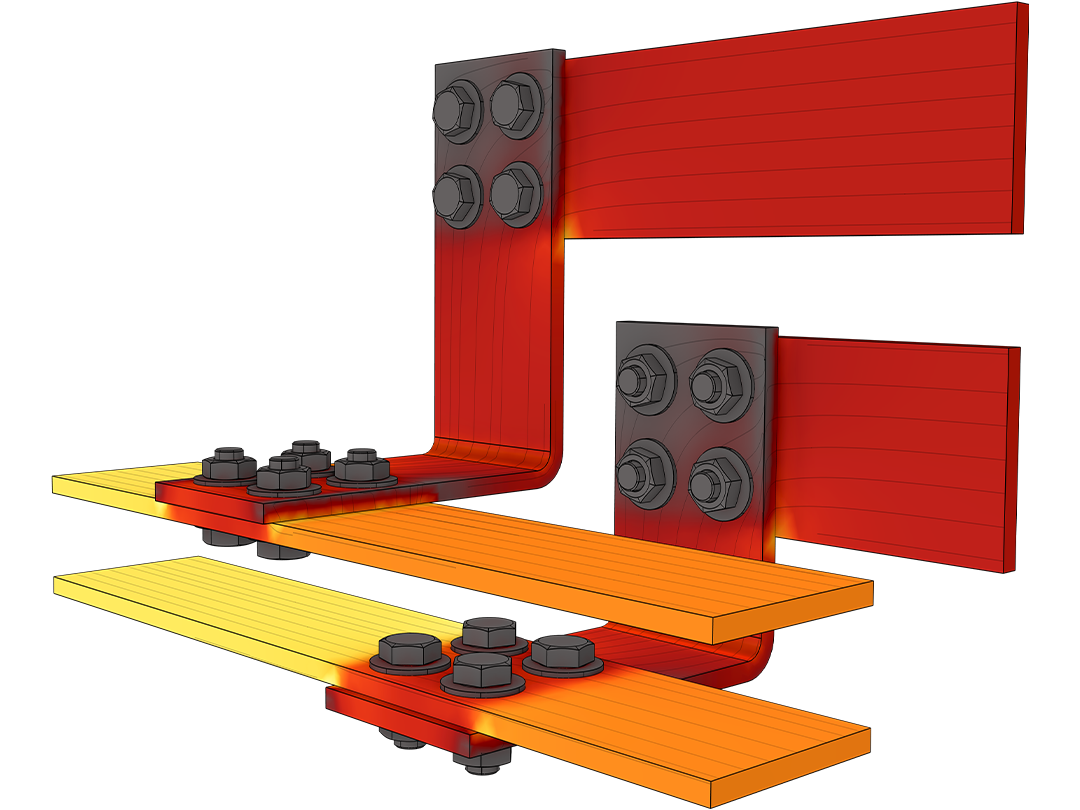
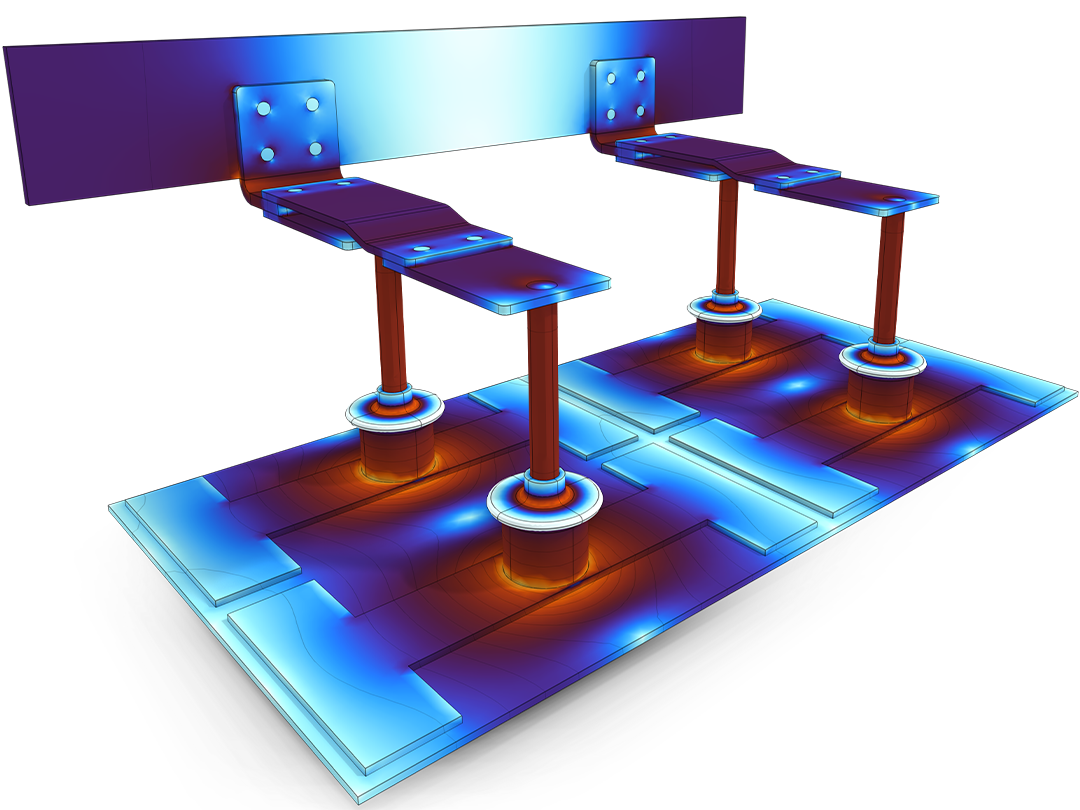
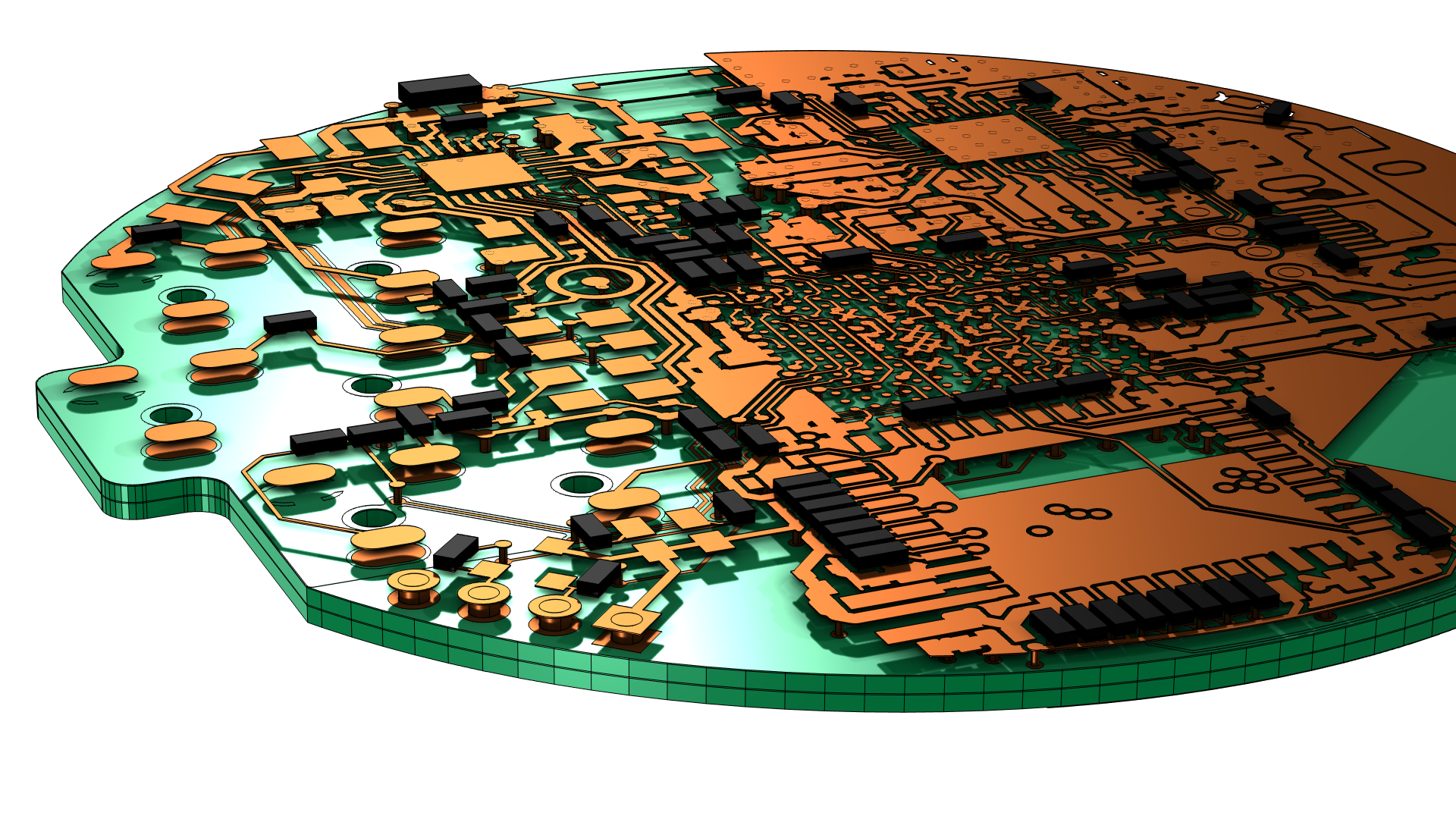
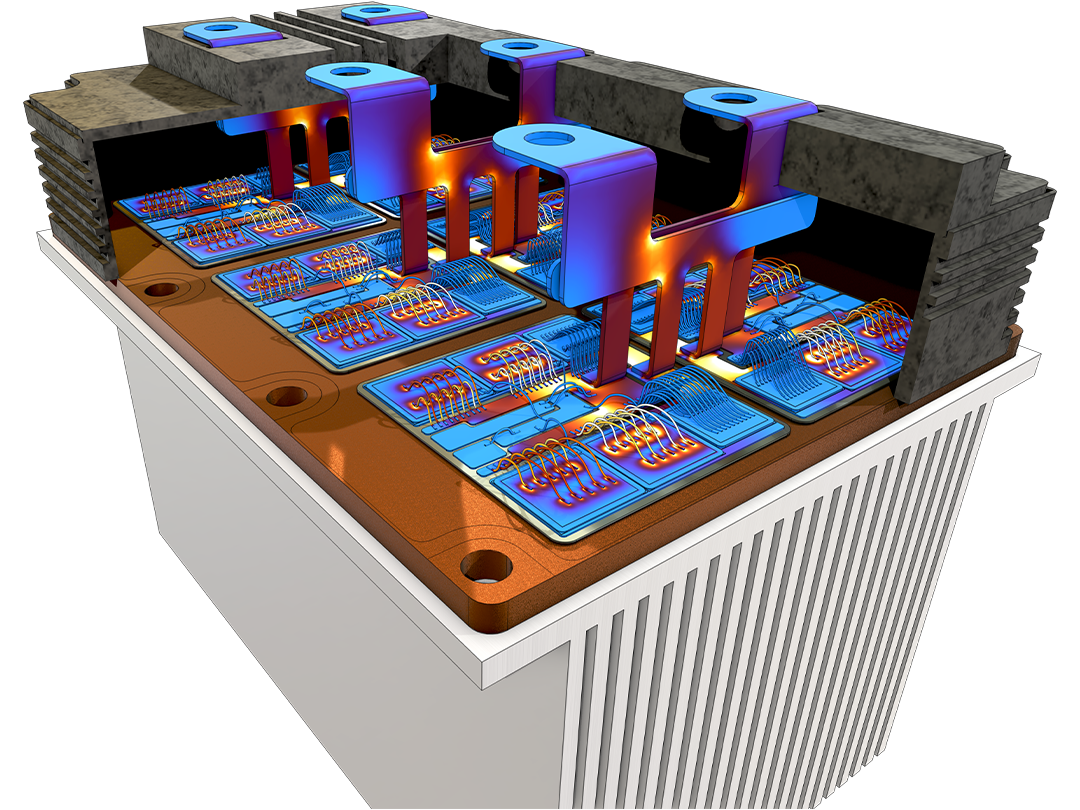
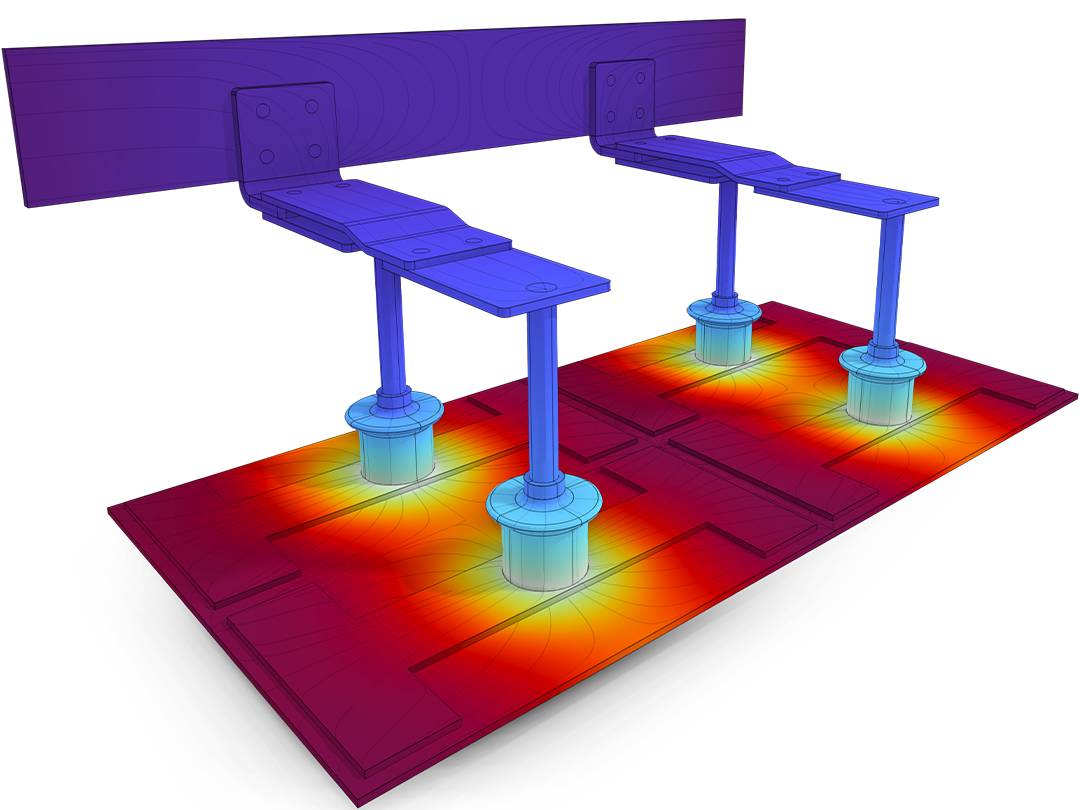
Electric current modeling is used to analyze resistive and conductive devices and systems with DC, transient, or AC currents where magnetic fields can be neglected. Results include resistance, conductance, electric fields, current densities, and power dissipation. Applications range from optimizing PCB tracks, busbars, and connectors to improving power electronics, cables, electroplating processes, and power distribution systems.

With the AC/DC Module, it is possible to run stationary, transient, frequency-domain, and small-signal analyses. Time- and frequency-domain analyses are used to capture resistive and capacitive effects simultaneously.

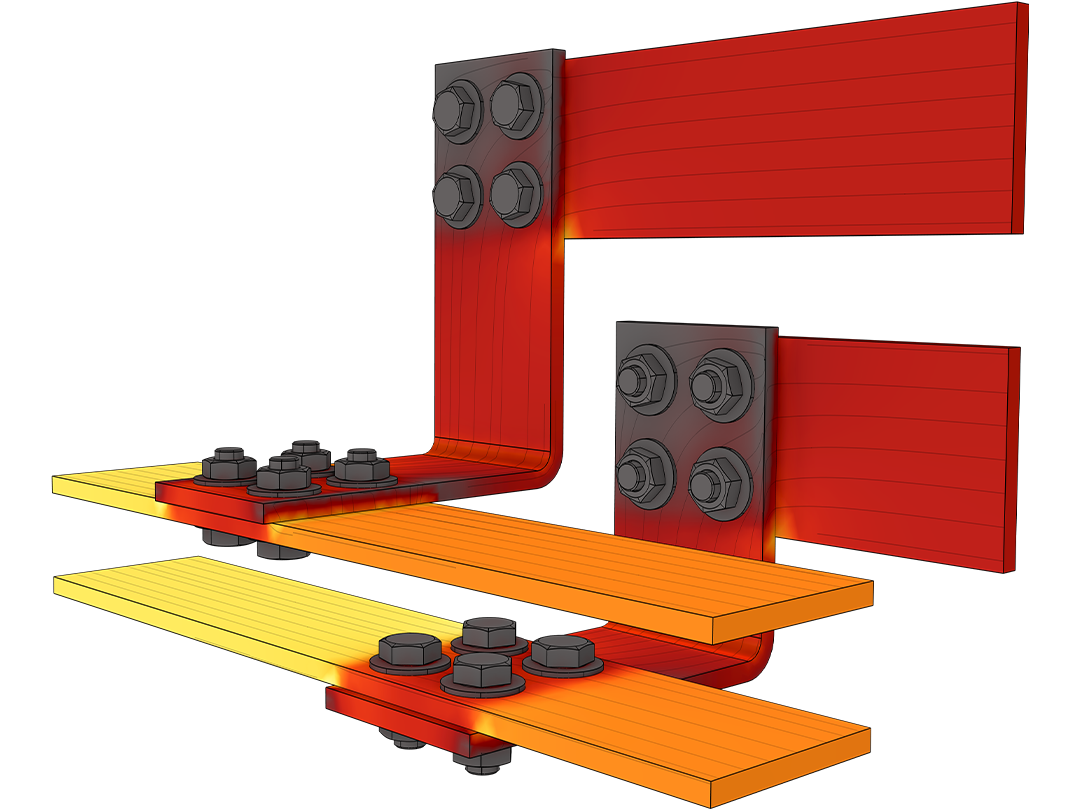
Electric current simulations are often coupled with thermal analysis to improve thermal management, avoid hot spots, and reduce material costs. Such multiphysics studies help optimize device durability, efficiency, and safety. Therefore, the AC/DC Module is frequently used together with the Heat Transfer Module, and when thermal expansion effects need to be included, it is combined with the Structural Mechanics Module or the MEMS Module. More detailed studies of individual charge carriers are performed separately using the Semiconductor Module or the Plasma Module.

Magnetostatics

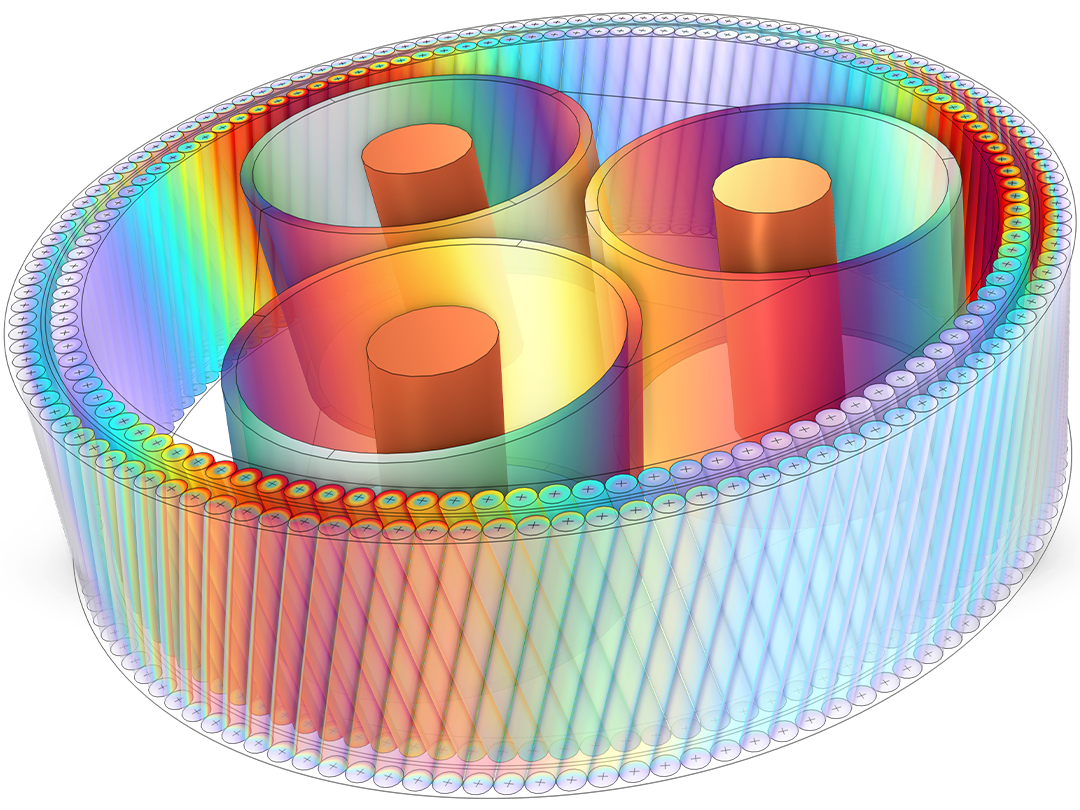
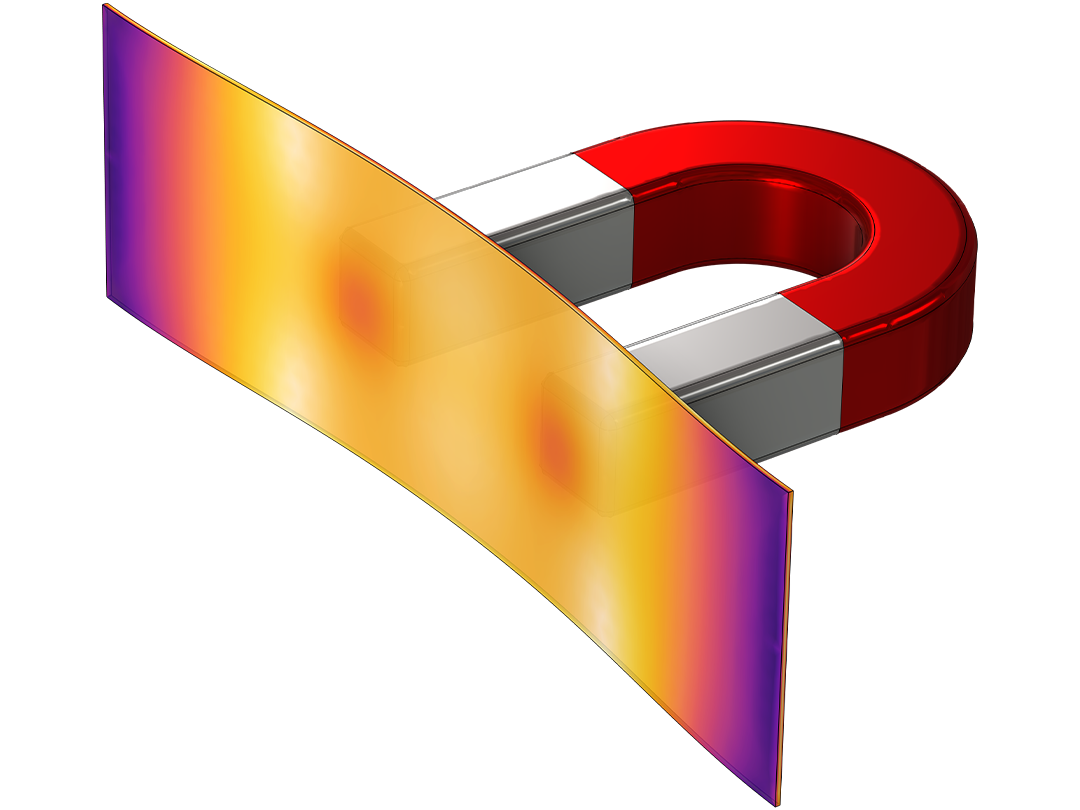
Magnetostatic field analysis is used to study forces on coils, conductors, and magnets, as well as field distributions and parasitic inductances. The FEM, BEM, or a hybrid FEM–BEM approach can be applied, with dedicated tools for inductance matrix extraction and circuit coupling. Coils can be modeled explicitly or in a homogenized sense, with automatic handling of current flow in complex geometries.

Supported materials include soft (B–H curves), hard (permanent magnets), lossy, and anisotropic types, as well as custom temperature-dependent models with hysteresis and Curie point effects. Full vector hysteresis is also supported through the Jiles–Atherton material model.

For multiphysics studies, the AC/DC Module can be combined with, for example, the Structural Mechanics Module or the MEMS Module to analyze the mechanical response to magnetic forces, including nonlinear magnetostrictive effects.

Electromagnetics

Full electromagnetics modeling is used to analyze electrical components where electric currents and magnetic fields are coupled. In time-varying problems with significant induction effects, magnetic fields induce currents, and those currents in turn generate magnetic fields.

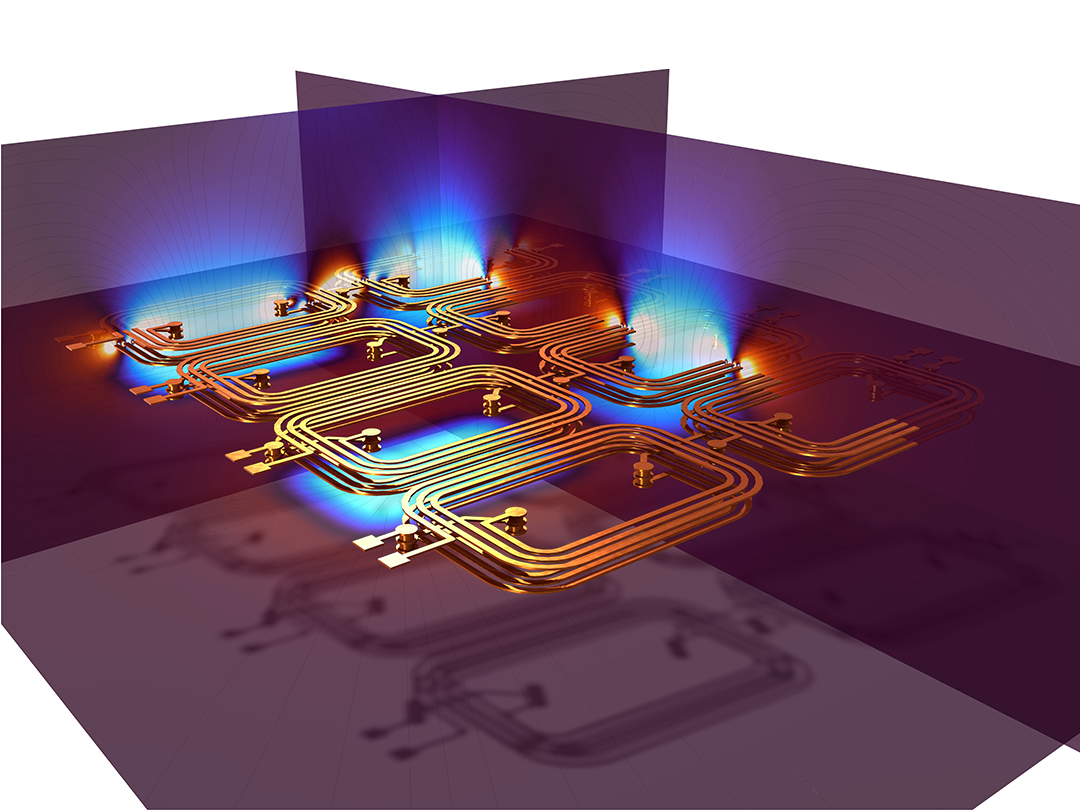
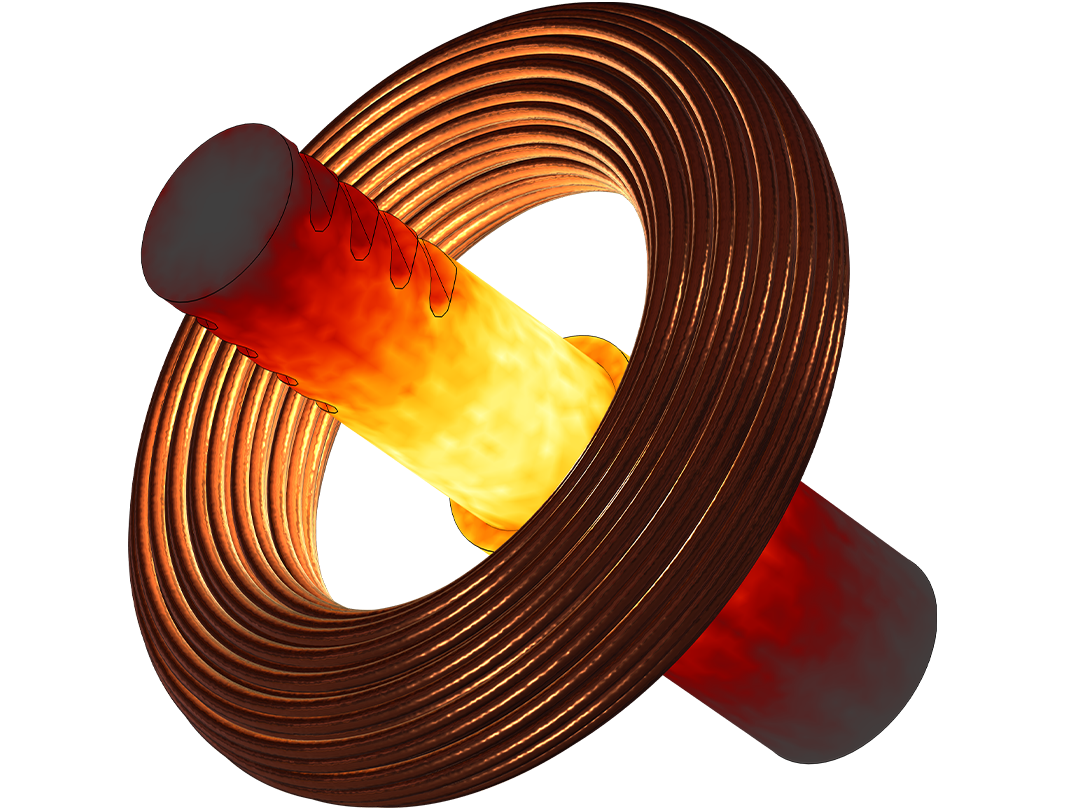
Electrodynamic effects can be investigated, including skin and proximity effects, Lorentz forces (induction through motion), resonance, and crosstalk. Both frequency-domain and time-domain modeling are supported in 2D and 3D. Specialized formulations are also available for transient magnetic modeling of superconductors.

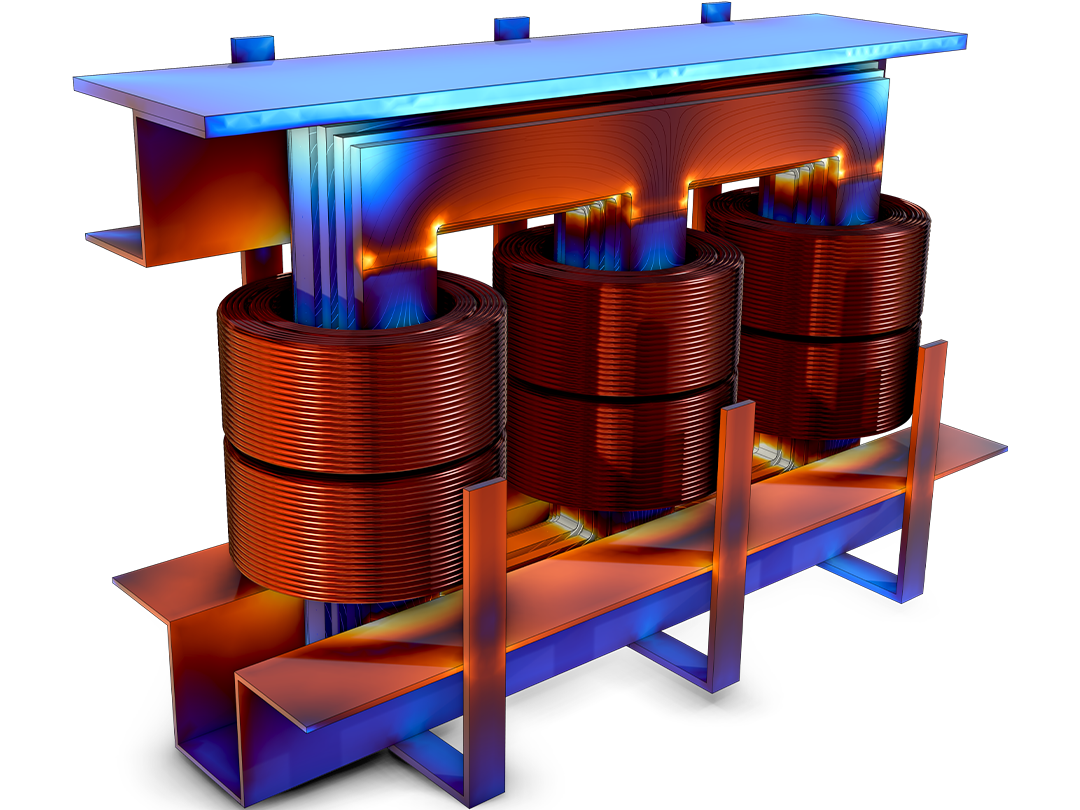
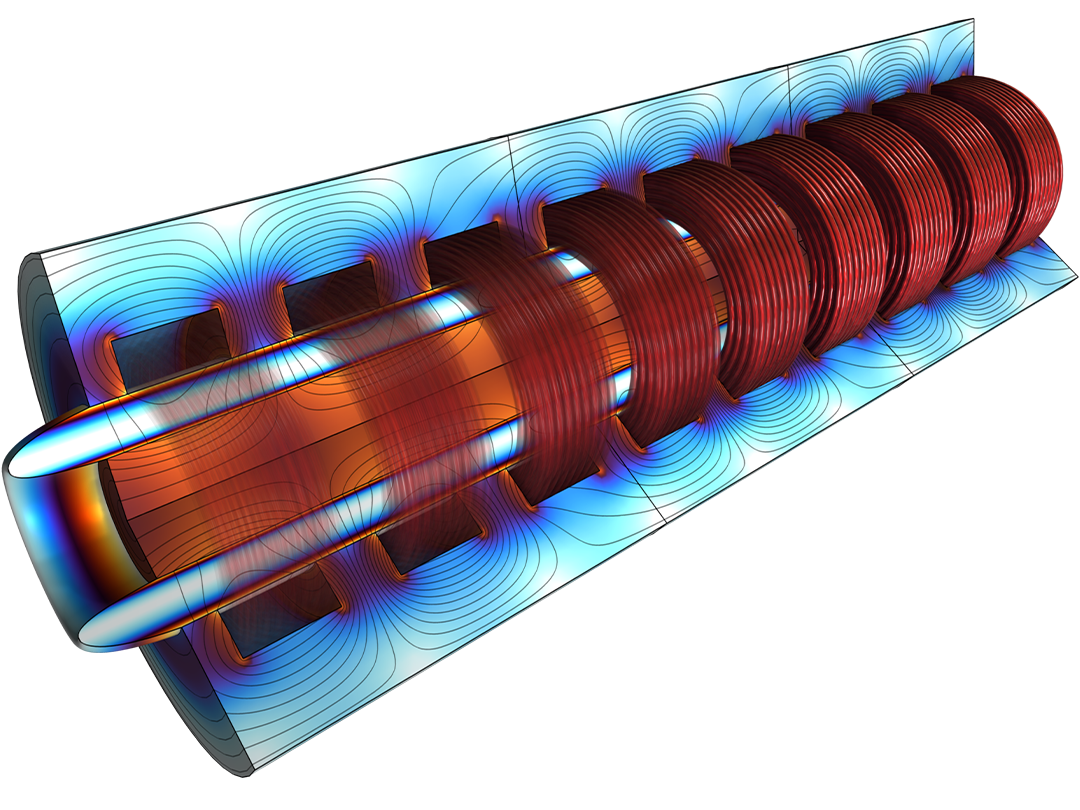
Typical applications include coils, induction chargers and heaters, switches, busbars, transformers, PCB transient effects, shielding, crosstalk, superconducting devices, magnetohydrodynamics, and nondestructive testing (NDT).

Electromagnetics simulations can be coupled to any other add-on product, such as the Heat Transfer Module, the Structural Mechanics Module, or the CFD Module.

Electric Machinery

Modeling of electric machinery enables optimization of motors, generators, and actuators. Built-in functionality makes it possible to investigate induction and permanent magnet motors, including the evaluation of torque, eddy current losses in magnets, forces, induced currents, and the impact of mechanical loads. Both rigid and flexible body dynamics can be studied under the influence of electromagnetic forces and torques.

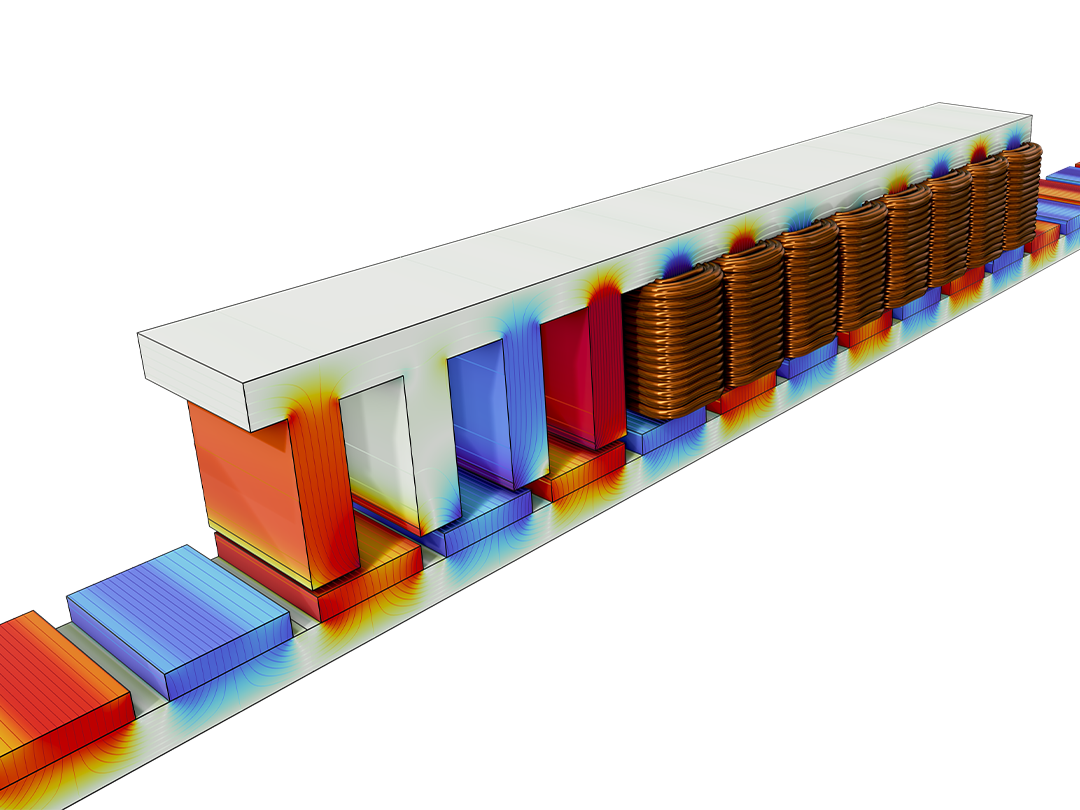
Specialized features support the design of various machine types, from radial flux motors to hybrid axial–radial flux rotors, claw-pole rotors, and tubular linear machines. Linear motion can also be modeled using moving mesh functionality, which is important for devices such as plungers, solenoids, switches, and actuators.

By combining the AC/DC Module with other physics modules, multiphysics analyses — including structural mechanics for deformation, rotordynamics, heat transfer for thermal management, acoustics for noise and vibration, and CFD for cooling channel optimization — can be performed.

Electrical Circuits

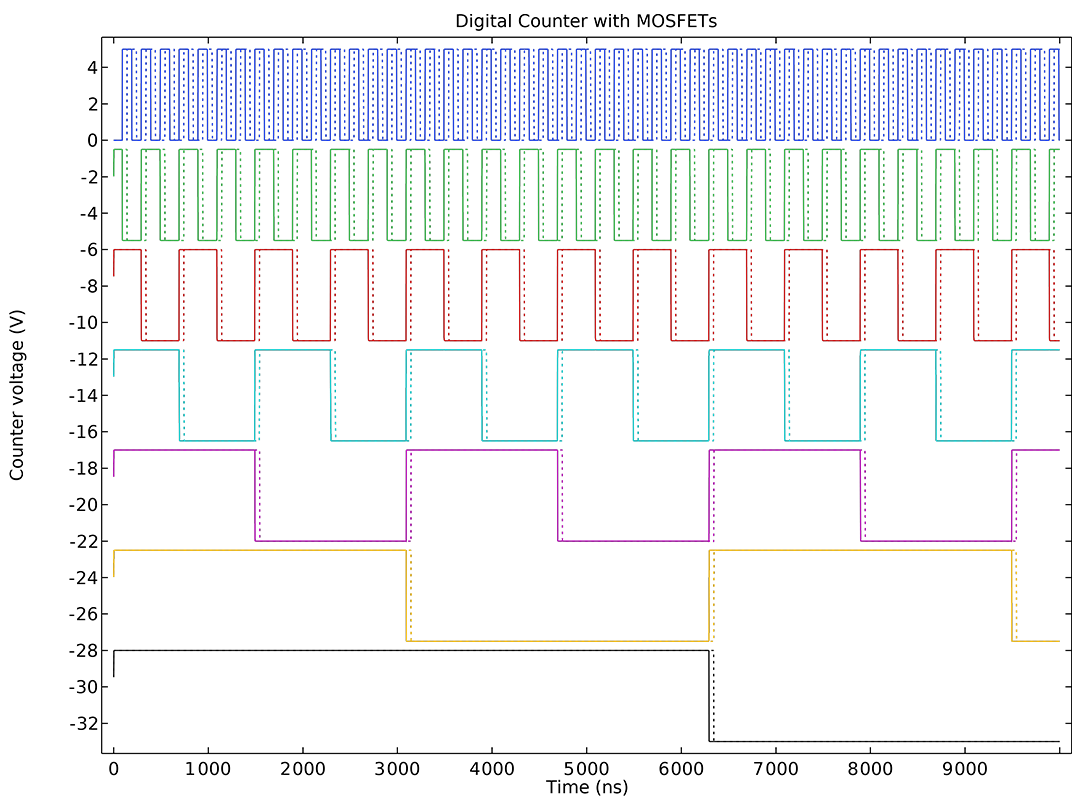
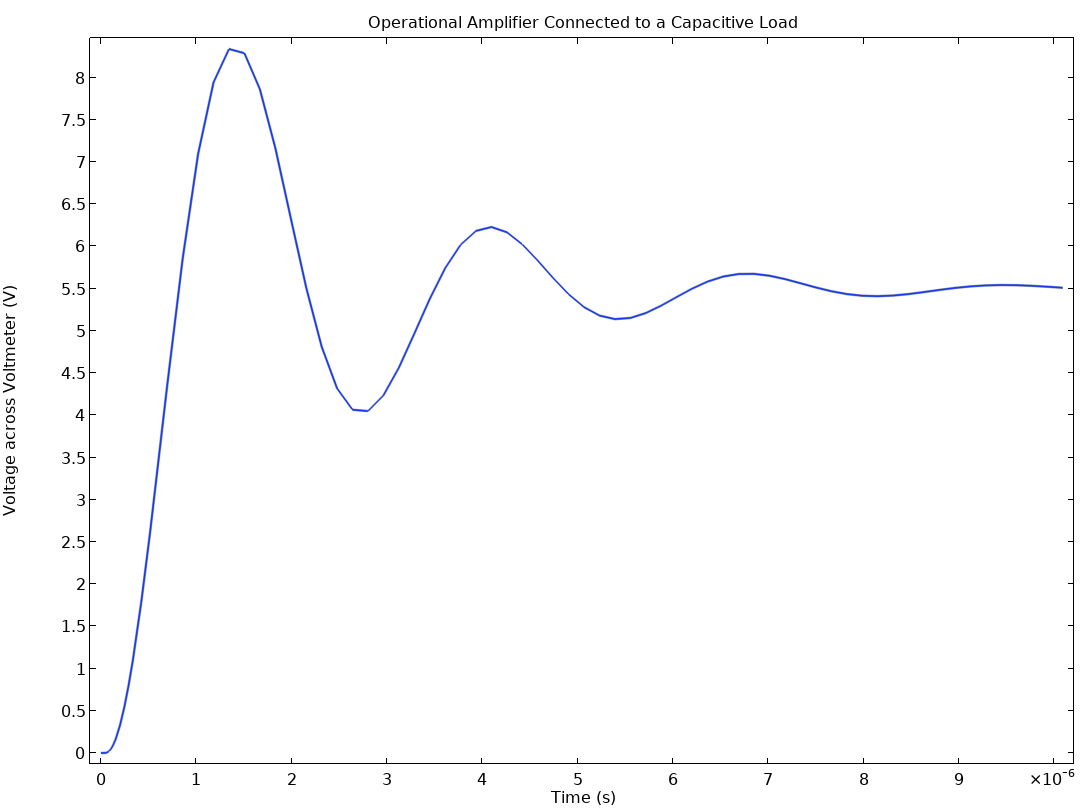
The AC/DC Module provides a dedicated physics interface for analyzing lumped systems and circuits. Using this interface, common components such as voltage and current sources, resistors, capacitors, inductors, transformers, diodes, and transistors can be modeled. More complex elements can be added using subcircuits. Circuits can also be imported and exported in the SPICE netlist format.

Circuit models can be combined with 2D or 3D finite element models. Resistance, capacitance, and inductance matrices can be extracted from finite element models, which can then be used to create efficient lumped circuit representations. The direct coupling between circuits and finite element models enable simulation of, for example, motor control circuits or oscillator circuits in induction chargers. Hybrid submodeling is possible as well, where detailed finite element regions are reduced to circuit representations for efficient simulation.

Features and Functionality in the AC/DC Module

The AC/DC Module supports modeling of electrostatics, electric currents, magnetostatics, electromagnetics, electric machinery, and electrical circuits.

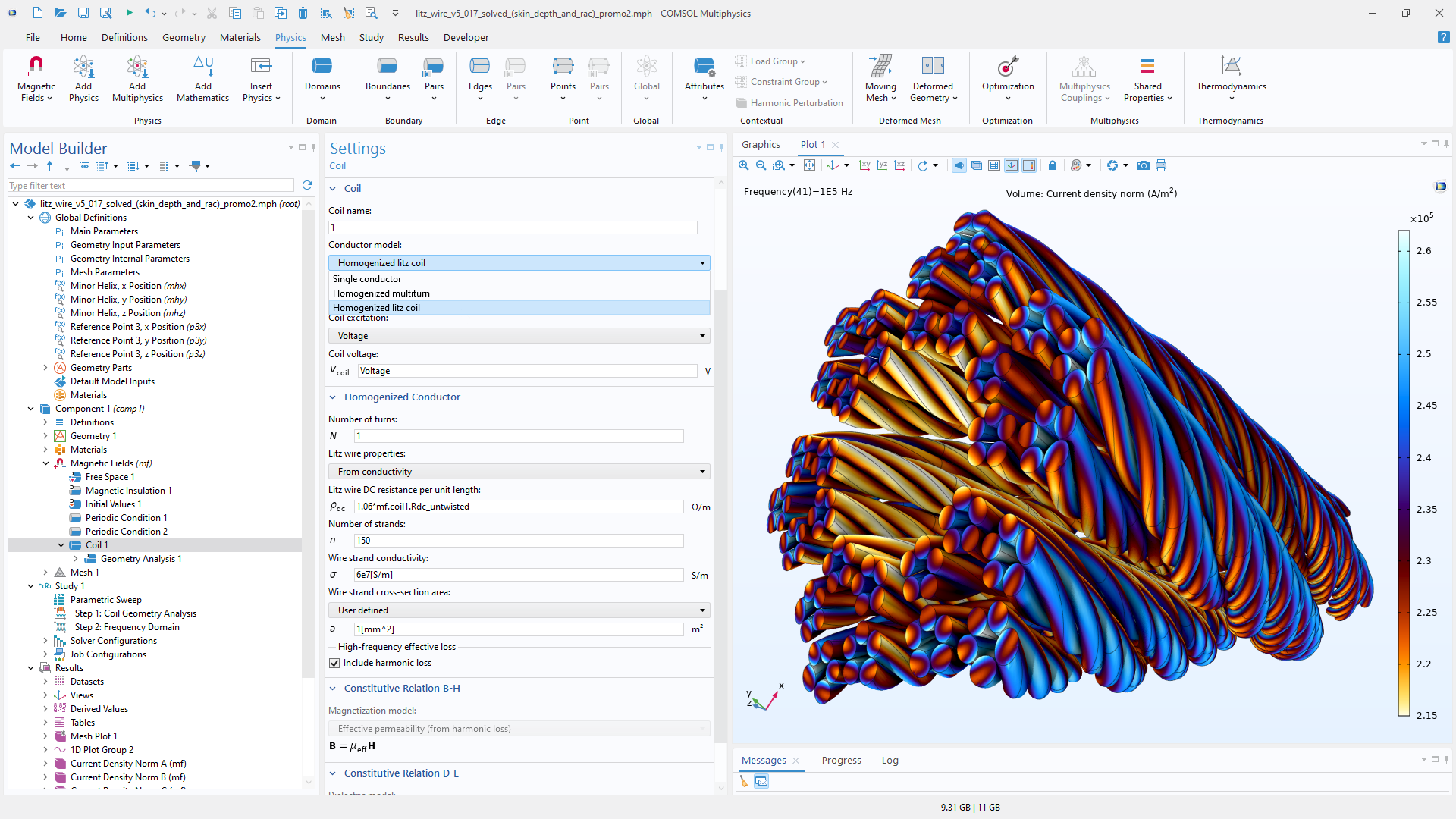
A close-up view of the Model Builder with the Coil node highlighted and a litz wire model in the Graphics window.

Built-In User Interfaces and Study Types

The AC/DC Module provides built-in user interfaces for each of the electromagnetics areas detailed in the previous sections, as well as interfaces specialized for specific modeling purposes. These physics interfaces define their own sets of equations, boundary conditions, predefined mesh settings and studies, as well as predefined plots and numerical evaluations.

The predefined studies include solver settings for steady, transient, and frequency-domain analyses. Advanced study types are also available, including combined-frequency transient, time-periodic, perturbation, and eigenfrequency analysis, as well as parameter extraction through quasistatic auxiliary sweeps. In addition, built-in multiphysics couplings enable seamless integration between interfaces within the AC/DC Module and those from other add-on modules.

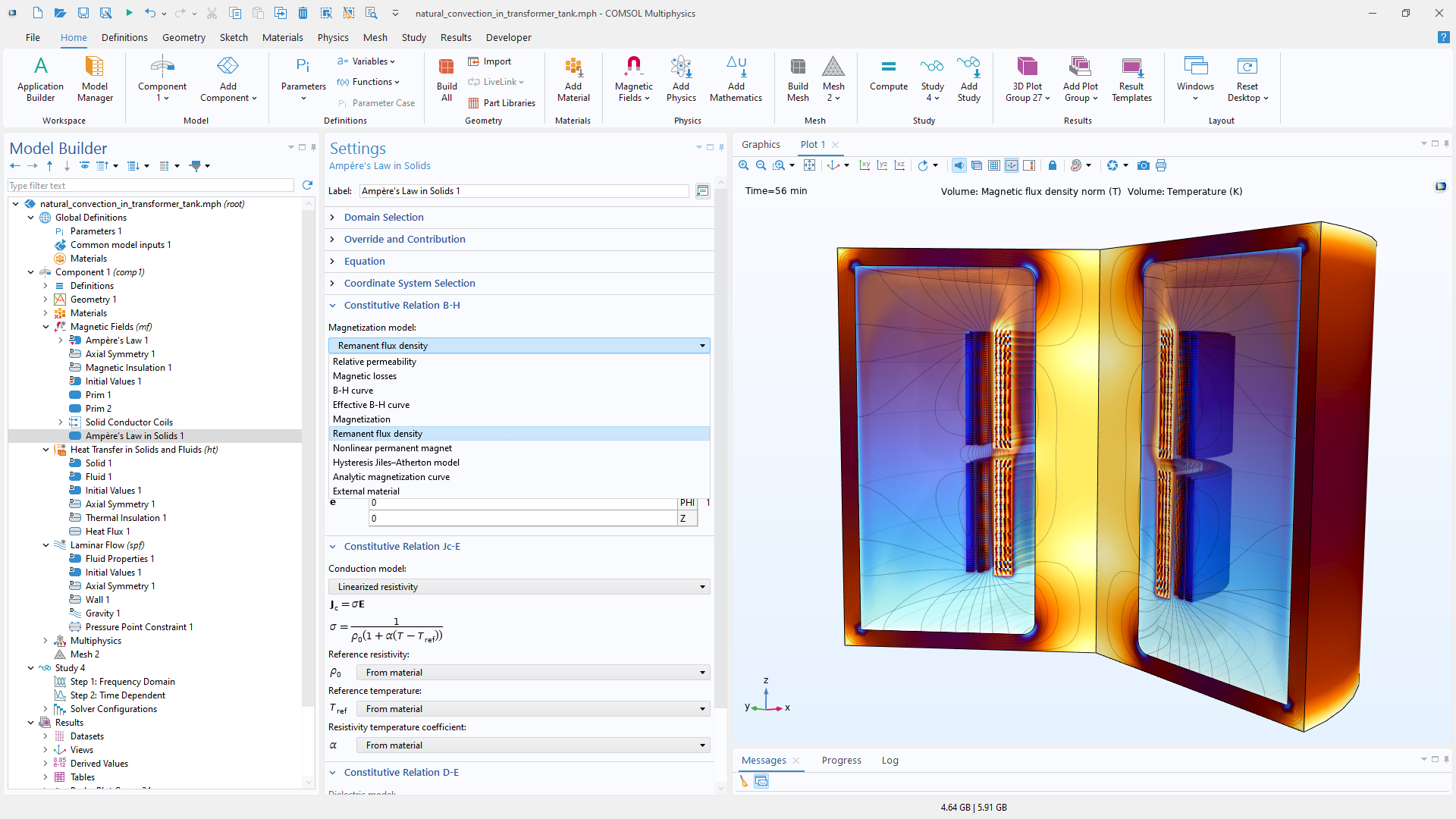
A close-up view of the Ampère's Law in Solids settings and a transformer tank model in the Graphics window.

Magnetic Materials

A comprehensive database of magnetic materials is included in the AC/DC Module, covering ferromagnetic, ferrimagnetic, soft magnetic (B–H curves), and hard magnetic materials (permanent magnets). Support is provided for nonlinear material models, magnetic loss modeling in the frequency domain using effective B–H curves and complex permeability, as well as anisotropic hysteresis based on the Jiles–Atherton model.

Specialized capabilities for modeling laminated electrical steel include laminated core modeling features and empirical loss models such as Steinmetz and Bertotti, which enable realistic loss estimation without resolving individual lamina.

Materials can be defined as spatially varying, anisotropic, time varying, or field dependent. Full support is provided for user-defined properties and modeling of custom behaviors, including anisotropic nonlinearity, permanent demagnetization, and Curie effects.

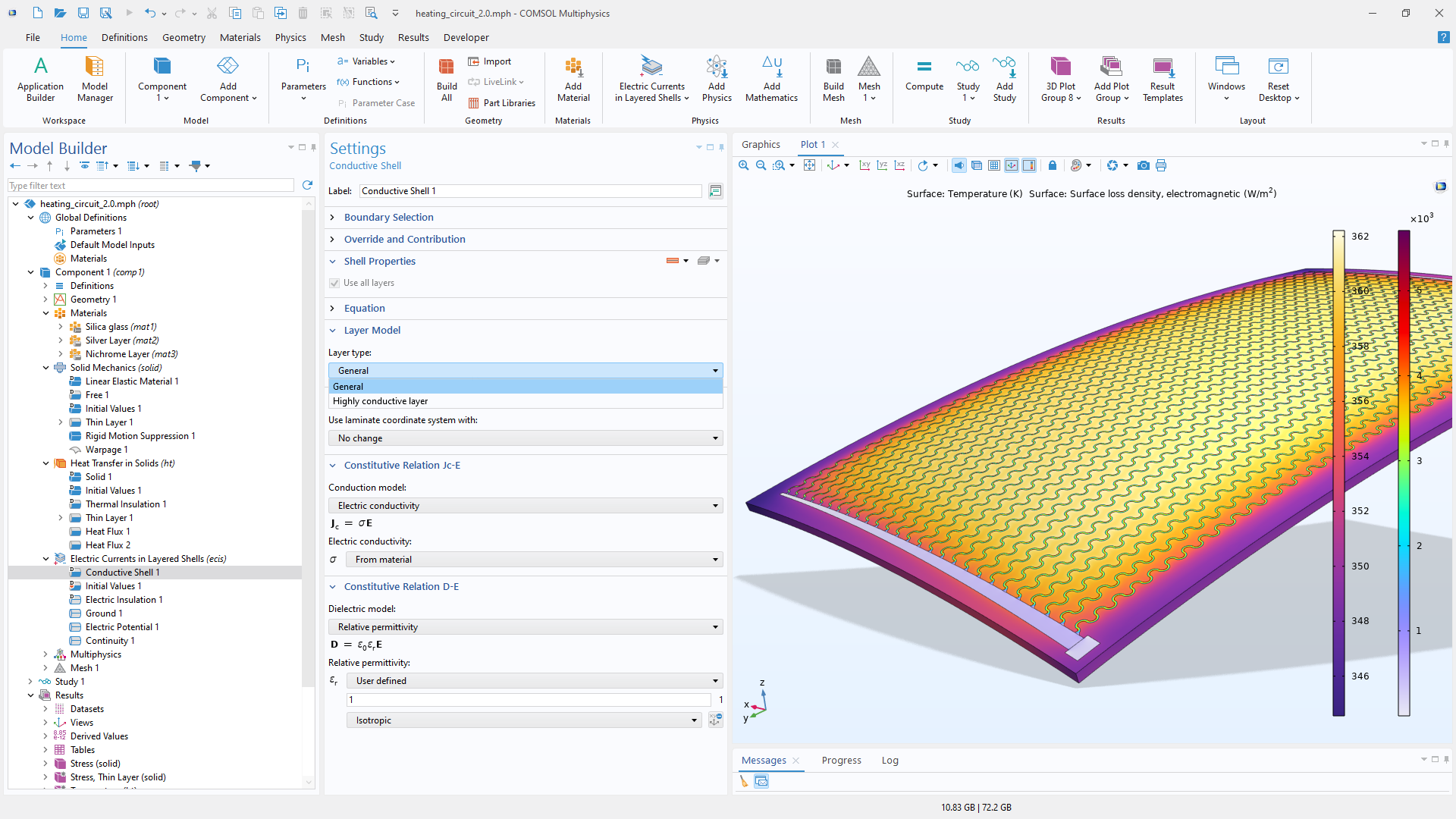
A close-up view of the Conductive Shell settings and a heating circuit model in the Graphics window.

Thin Structures and Layered Materials

Very thin structures can be efficiently modeled using shell formulations for direct current, electrostatic, magnetostatic, and induction analyses. In addition, specialized functionality supports the modeling of direct currents in multilayer shell structures. The electromagnetic shell modeling capabilities allow thin volumetric domains to be replaced by zero-thickness boundary conditions with equivalent physical behavior, significantly simplifying geometry preparation, meshing, and solution procedures.

At higher frequencies, where the skin depth becomes small and currents are confined to the conductor surface, specialized boundary features provide a more efficient conductor representation.

For dielectric and weakly conducting materials, the framework supports:

  • Polarization effects and remanent electric displacement
  • A wide range of complex loss models, including ferroelectric behavior
  • Dispersion models in both the frequency and time domains

Built-in dispersion formulations include multipole Debye, Cole–Cole, and Havriliak–Negami models. These capabilities are especially important for tissue modeling and bioengineering applications.

The same level of flexibility available for magnetic materials also applies to conductors and dielectrics. Through user-defined formulations, the material library can be easily extended to incorporate custom material models.

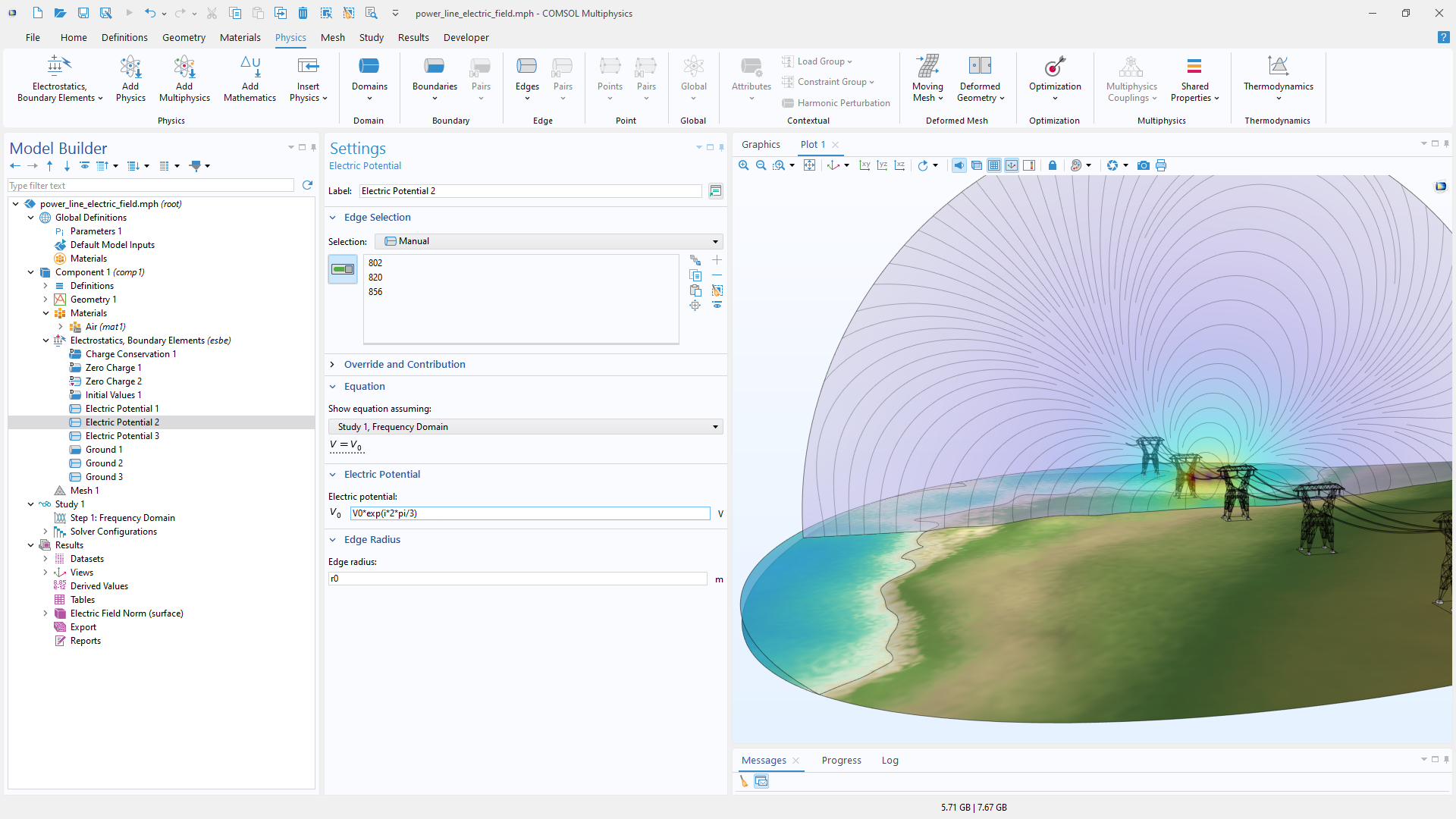
A close-up view of the Model Builder with the Electric Potential node highlighted and a power line model in the Graphics window.

Unbounded or Large Domains

To accurately model unbounded or large domains, infinite elements are available for both electric and magnetic field formulations. For electrostatic and magnetostatic analyses, the boundary element method (BEM) provides an alternative approach for representing large or infinite regions. In addition, the BEM can be coupled with finite element–based physics interfaces to enable hybrid BEM–FEM simulation.

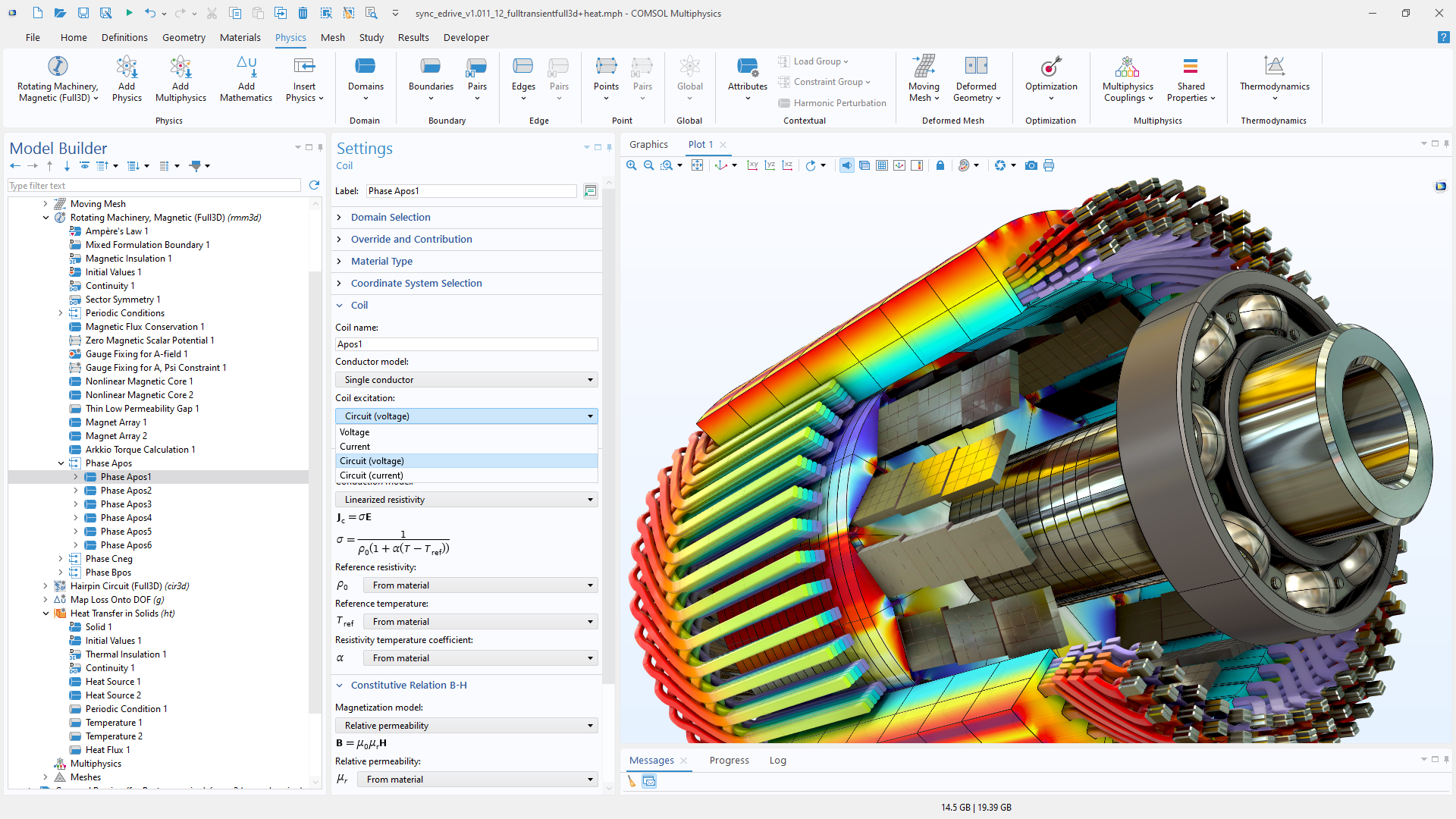
A close-up view of the Coil settings and a motor model in the Graphics window.

Coils, Terminals, and Device Excitations

The AC/DC Module's electromagnetics modeling capabilities include specialized functionality for accurate simulation of electromagnetic excitations, loads, and device behaviors.

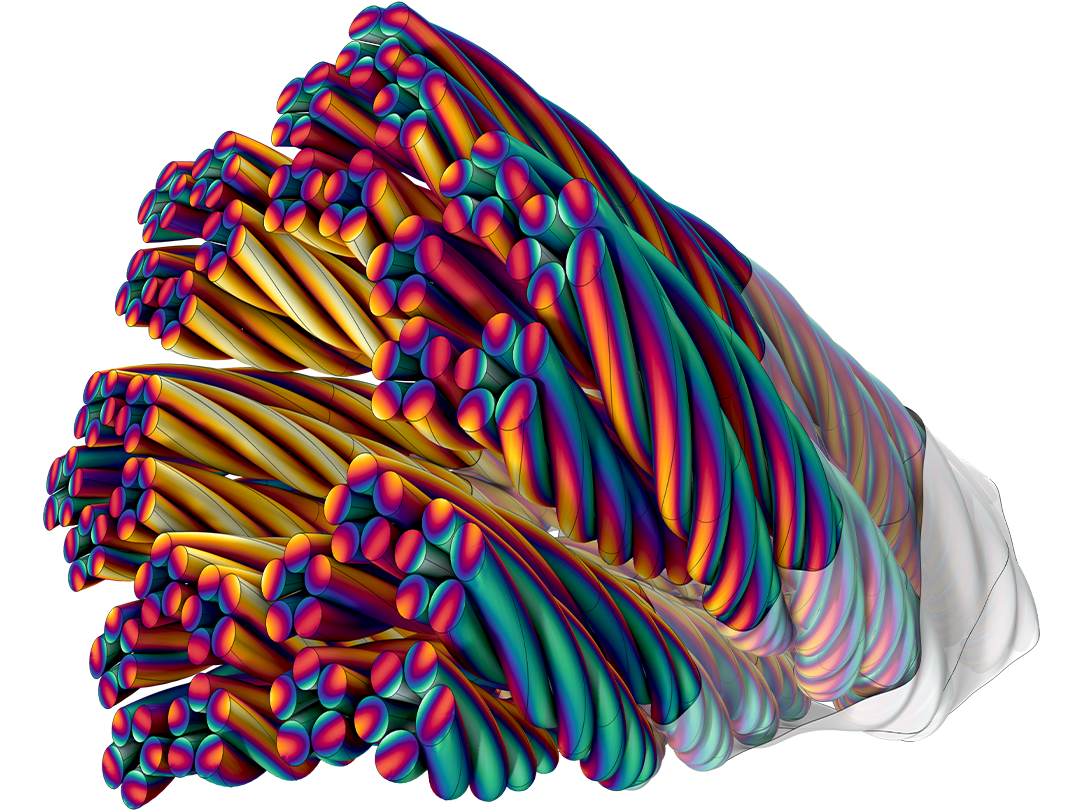
The coil modeling tools handle everything from solid conductors with skin and proximity effects to stranded wire bundles designed to minimize AC losses. They also support designs such as litz wires, tightly wound coils, and segmented high-voltage conductors.

Terminal definitions make it easy to specify voltages, currents, or charges while also supporting floating potentials, measurement points, and electrical circuit connections. Options for distributed capacitance and impedance modeling enable accurate representation of electrodes with dielectric or resistive coatings.
A range of general-purpose excitation methods is also available, which includes support for voltage constraints, for example, ground planes, and the ability to define surface currents directly.

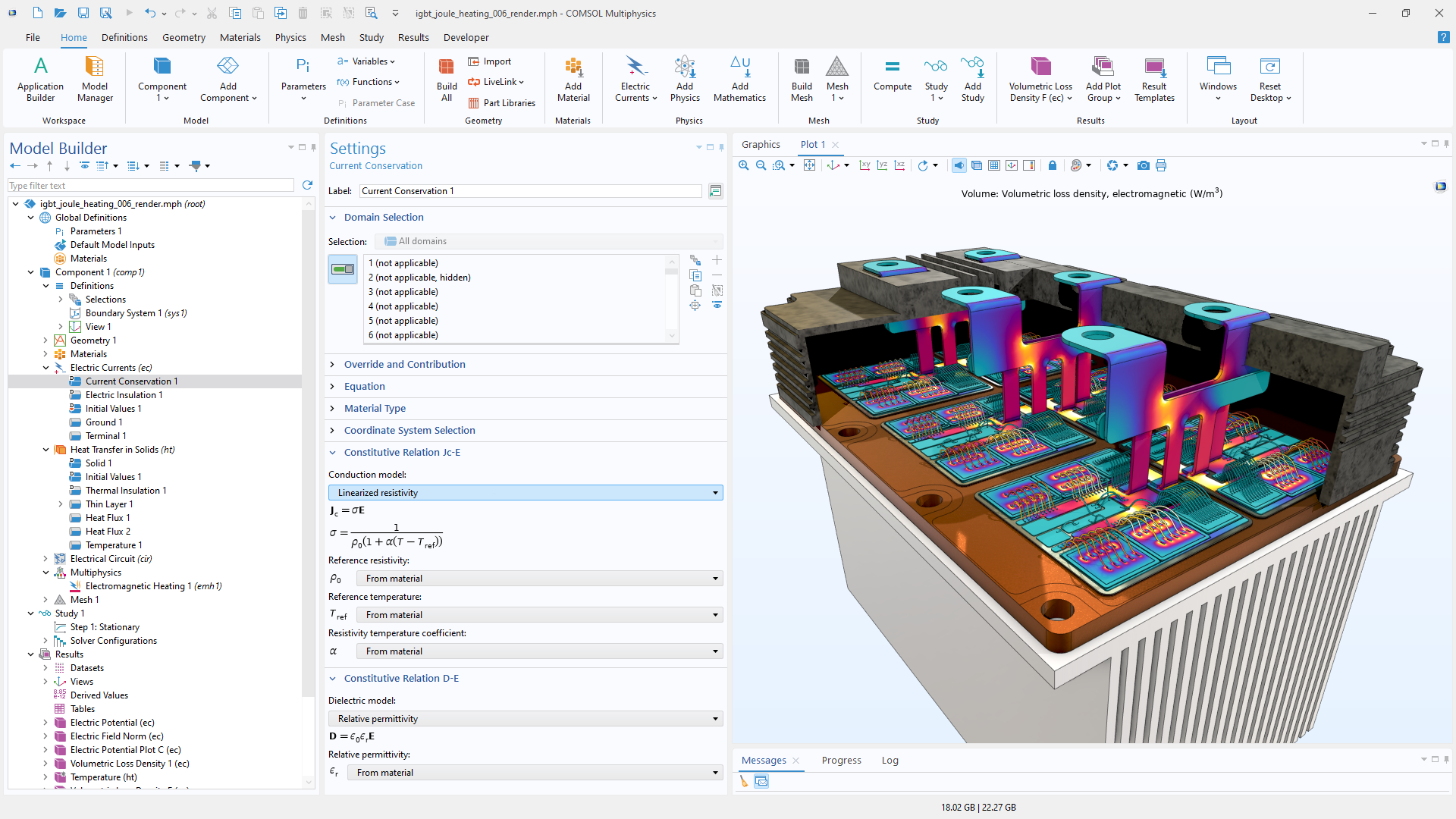
A close-up view of the Model Builder with the Current Conservation node highlighted and an IGBT model in the Graphics window.

Electric and Dielectric Materials

Conducting materials support both temperature- and electromagnetic-field-dependent behavior. Under electrodynamic conditions, skin and proximity effects can be included or selectively suppressed, enabling efficient modeling of laminated steel, wound coils, and twisted wire bundles. In particular, litz cables can be modeled at or above their design frequency without resolving individual strands.

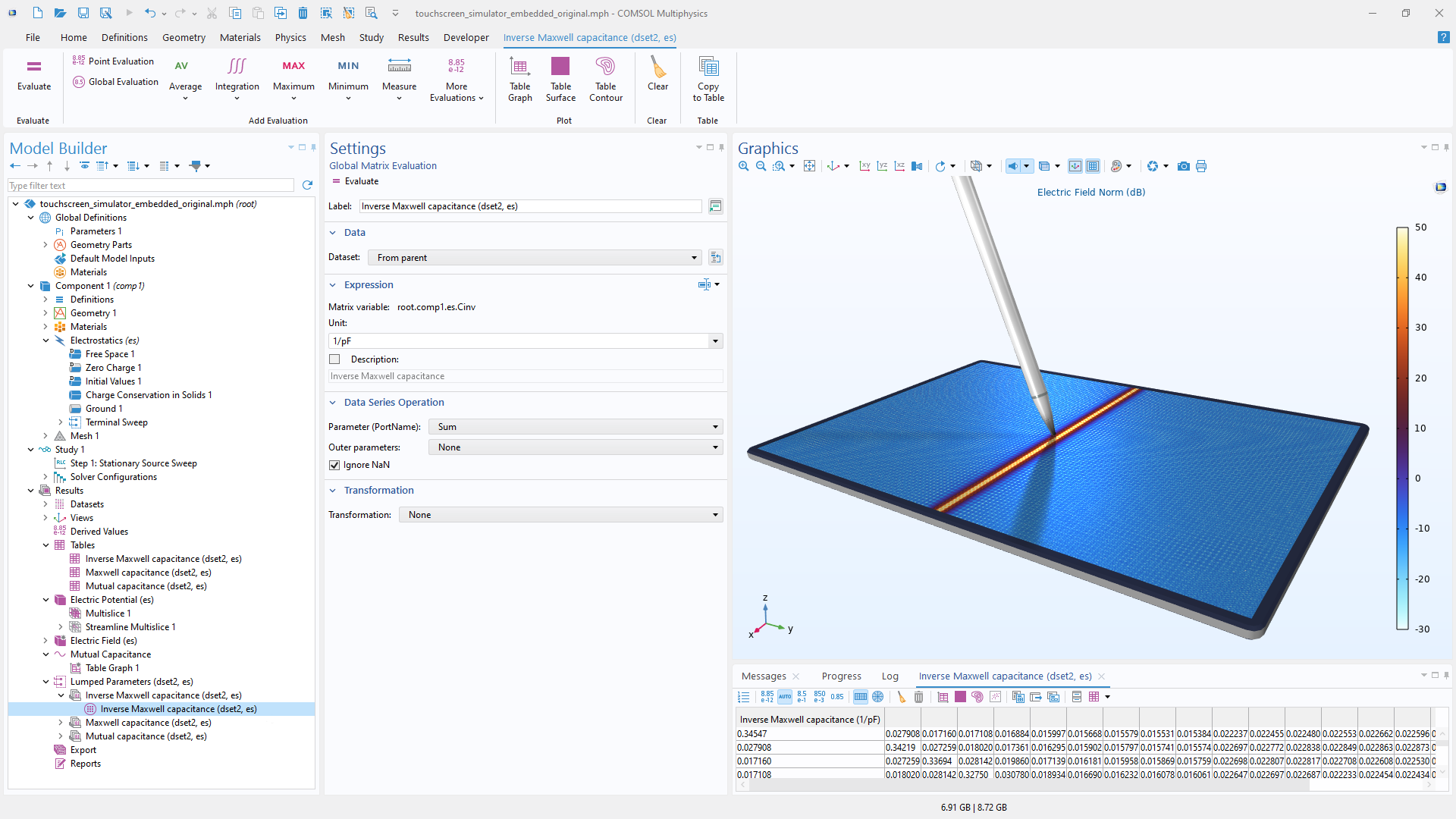
A close-up view of the Global Matrix Evaluation node highlighted and a touchscreen model in the Graphics window.

Data Extraction and Results Evaluation

Excitation features, such as Coil, Terminal, and Port, automatically provide output variables for various electrical quantities, including:

  • Voltage, current, and charge
  • Resistance, inductance, and capacitance
  • S-parameters

Dedicated frequency-sweep functionality, together with optimized solver settings, enables efficient extraction of capacitance, resistance, and inductance matrices. This functionality makes it straightforward to convert a detailed finite element model into a simplified lumped electrical circuit representation.

Specialized features are also available for computing specific physical quantities, such as electromagnetic forces and total losses.

Extensive customization options make it possible to evaluate, integrate, or differentiate any quantity derived from the solution. A wide range of results-evaluation tools enables precise extraction of the data required for analysis.

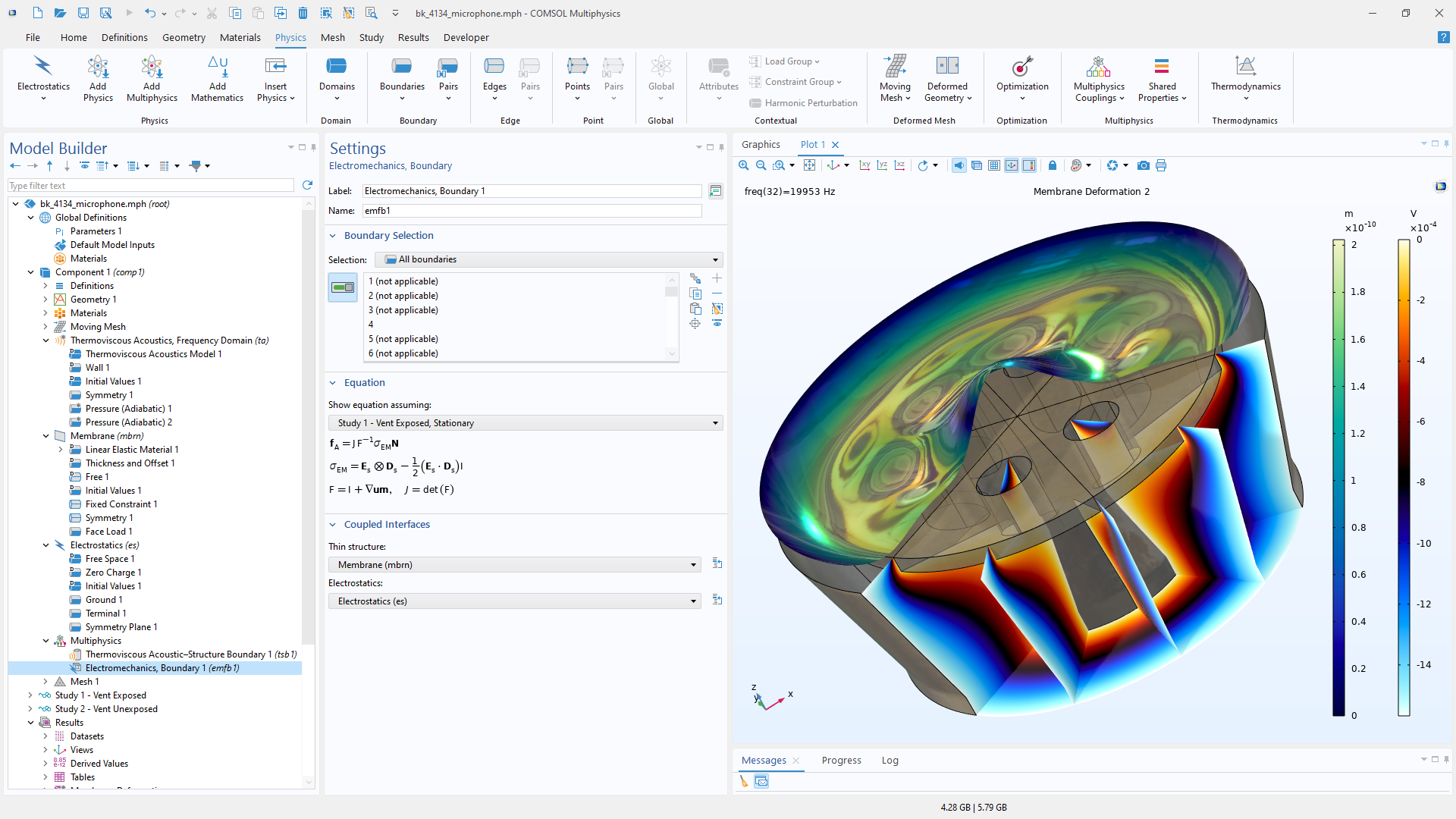
A close-up view of the Electromechanics, Boundary node highlighted and a microphone model in the Graphics window.

Multiphysics

Because electromagnetic phenomena typically occur in a multiphysics context, the AC/DC Module offers extensive options for coupling its physics with those from other add-on products, such as the:

  • Structural Mechanics Module
  • Heat Transfer Module
  • Acoustics Module
  • CFD Module
  • Plasma Module
  • Electric Discharge Module

Built-in multiphysics couplings provide functionality for modeling magnetomechanics, electromechanics, Joule heating and thermal expansion, induction heating, piezomagnetism, piezoelectricity, piezoresistivity, nonlinear magnetostriction, electrostriction, ferroelectroelasticity, the thermoelectric effect, pyroelectricity, and magnetohydrodynamics.

In addition to these predefined couplings, manual multiphysics couplings can be defined and solved using fully coupled or sequential approaches.

Low-Frequency Electromagnetics and Multiphysics Modeling

Electromagnetic components affect and are affected by multiple physics phenomena. In COMSOL Multiphysics®, this is no different than modeling a single-physics problem.

A close-up view of a busbar–anode assembly showing the distribution of electromagnetic heat sources.

Joule Heating, or Resistive Heating1

Model Joule heating (also known as resistive heating) in solids, fluids, shells, and layered shells.

A close-up view of a workpiece model showing industrial induction heating.

Induction Heating

Simulate heating in inductive devices and metal processing applications.
A close-up view of bolted busbars showing electrical contact points.

Electric Contact Resistance

Capture currents flowing between metallic pieces brought into contact and combine with thermal2 and mechanical3 contact effects.

A close-up view of a permanent magnet model showing the deformation in an iron plate.

Electromagnetic Force and Torque

Compute electromagnetic stress, force, and torque using finite-element- and boundary-element-based methods.

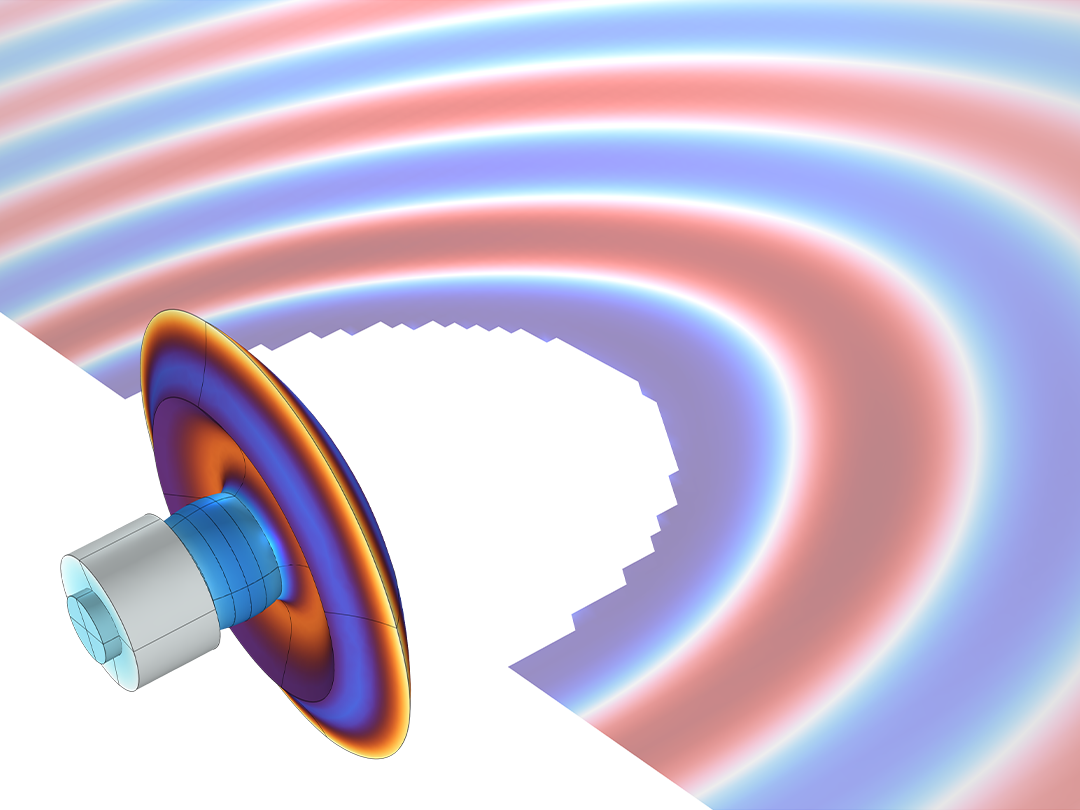
A close-up view of a loudspeaker model showing the magnetic circuit and electric driving coil.

Lorentz Forces

Apply current-induced Lorentz forces as volumetric structural loads for modeling electroacoustic transducers and more.

A close-up view of a transformer model showing the vibrations from magnetostrictive forces.

Magnetostriction4

Simulate changes in the shape of magnetic materials when subjected to a magnetic field, important for sonar and transformer noise.

A close-up view of a tonpilz transducer showing piezoceramic rings.

Piezoelectricity1

Model piezoelectric devices, including metallic and dielectric components.

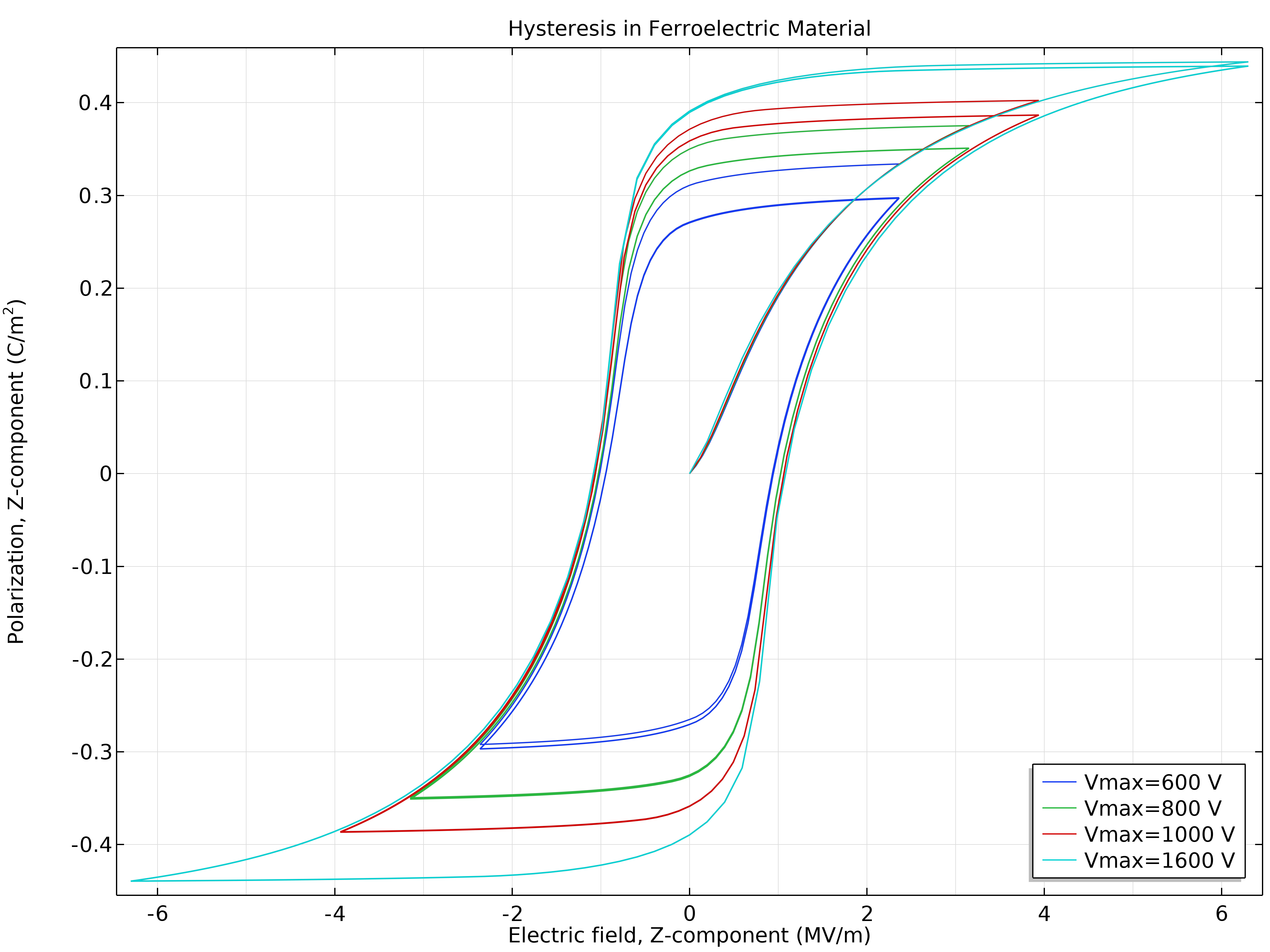
A 1D plot with electric field on the x-axis and polarization on the y-axis.

Ferroelectricity

Apply ferroelectricity functionality to model a time-varying polarization that may exhibit hysteretic behavior.

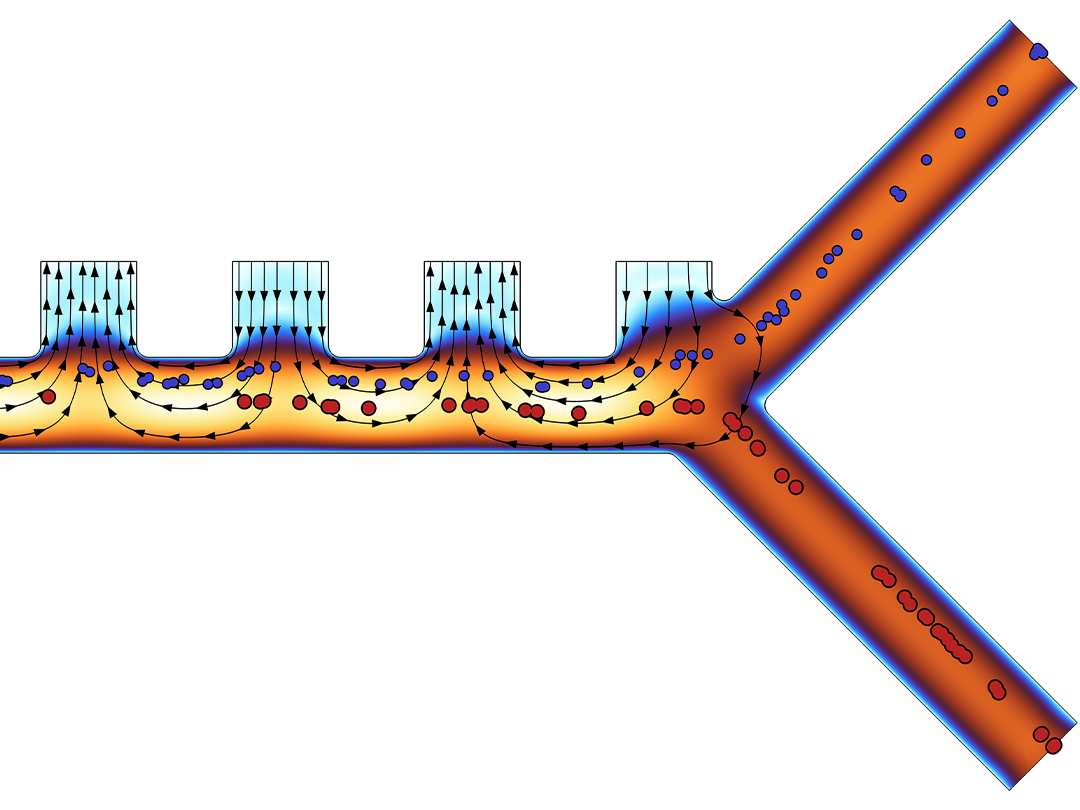
A close-up view of a magnetohydrodynamic pump showing the flow of electrically conducting fluids.

Magnetohydrodynamics

Model the interaction between electromagnetic fields and electrically conducting fluids.

A close-up view of an electrode-less lamp model with plasma acting as the secondary winding.

Inductively Coupled Plasma5

Simulate inductively coupled plasmas used in semiconductor processing.

A close-up view of an electron beam model diverging due to its own space charge.

Charged Particle Tracing6

Analyze the motion of electrically charged or magnetic particles due to electromagnetic forces.

Dielectrophoresis6

Model the motion of neutral particles due to electric field gradients.

A close-up view of a loudspeaker core model with  optimized topology.

Optimization7

Combine electromagnetic analysis with parameter optimization, shape optimization, and topology optimization.

  1. Does not require the AC/DC Module
  2. Requires the Heat Transfer Module
  3. Requires one of the MEMS Module or Structural Mechanics Module
  4. Requires one of the Acoustics Module, MEMS Module, or Structural Mechanics Module
  5. Requires the Plasma Module
  6. Requires the Particle Tracing Module
  7. Requires the Optimization Module

Using Third-Party Software with COMSOL Multiphysics®

If using the MATLAB® software, it is easy to drive COMSOL Multiphysics® simulations with MATLAB® scripts and functions. The LiveLink™ for MATLAB® interfacing product provides access to COMSOL® operations directly within the MATLAB® environment and blends them with existing MATLAB® code.
To make it easy to analyze the electromagnetic properties of CAD models and electronic layouts, COMSOL offers the ECAD Import Module, the CAD Import Module, the Design Module, and LiveLink™ products for several leading CAD programs as part of the product suite.

It is also possible to synchronize Microsoft Excel® spreadsheet data with the parameters defined in the COMSOL Multiphysics® environment via the LiveLink™ for Excel® interfacing product.

Every business and every simulation need is different.

In order to fully evaluate whether or not the COMSOL Multiphysics® software will meet your requirements, you need to contact us. By talking to one of our sales representatives, you will get personalized recommendations and fully documented examples to help you get the most out of your evaluation and guide you to choose the best license option to suit your needs.
Just click on the "Contact COMSOL" button, fill in your contact details and any specific comments or questions, and submit. You will receive a response from a sales representative within one business day.

Next Step

Request a Software Demonstration